|
Back to Vetty Creations website |
|
|||
|
It’s been a while since I’ve done one of these posts. I’ve been a little busy doing dreadfully hard things like cruising, then getting back to normal at home, and getting on with some work. 😉 Firstly, take a look at the embroidery on the linked page and try to keep your jaw shut. I sat here with my mouth open, marvelling. Eventually all the members of the family came over and marvelled too. You’ll need to run it through a translator to read the words, but it’s the pictures that are the main attraction anyway. Another one for the online translator is this blog post about an antique cloth with Punt ‘e Nù (Sardinian knotted embroidery). It has beautiful embroidery with some really interesting motifs that I hadn’t seen before. With the birth of the new English princess, Charlotte, the ACT (Australian Capital Territory) Embroiderers Guild has been commissioned by the Australian Government to embroider a woollen baby blanket for the little princess. It will feature Australia’s national flower, the wattle. Best wishes to all the embroiderers – I’m sure you’ll do all Australian embroiderers proud with your beautiful embroidery! I found this beautiful example of Cypriot lace within the Metropolitan Museum of Art’s online collection. It doesn’t say that it is Lefkara lace, but I suspect it might be. That’s one of the things that sometimes annoys me about catalogue information for museum items: unless the curator has intricate knowledge of many different styles of embroidery or lace, sometimes they’re very vague in their descriptions. The skirt of this makes me very happy. When I’m not finding interesting and inspiring things on the internet, I’ve been doing a lot of stitching and finishing. I’ve finished a small Mountmellick piece ready for a class submission and I’ve been working on several projects for the book. Trying to bring a sense of completion to a lot of mostly done projects! Have you found any interesting things you’d like to share with us? Are you working on some interesting embroidery? Some time last year my mother tipped me off about an Indian fashion designer named Rahul Mishra. He had just won the International Woolmark Prize, an award that focuses on wool in fashion. Mishra had submitted a collection of clothing for the award that featured beautiful hand embroidery in wool. I spent hours drooling over his work, knowing that I’d never own any, but that wouldn’t stop me from admiring it! You can see more of his work (his most recent collection) in an album he’s posted on Facebook. Yesterday I learned that there is currently an exhibition at the New England Regional Art Museum (that’s the New England in NSW, Australia, not the one in America) called The Art of Wool. It features garments from the International Woolmark Prize (including some by Rahul Mishra) and artworks from national collections which focus on the significance of wool in Australian art.  Rahul Mishra Collection AW 14/15 Image © Rahul Mishra, used under fair dealings provision of copyright law. The exhibition runs until 2nd August at 106-114 Kentucky Street, Armidale, New South Wales. Bizarrely, it isn’t featured on the NERAM website. Maybe it is too new, having only opened on 1st May. But it doesn’t feature in their “upcoming exhibitions” either. However, it is mentioned on their Facebook page, so therefore it must be true. 😉 News report in the Land Newspaper about the exhibition: www.theland.com.au After yesterday’s post on Mountmellick embroidery, I was talking about it with my husband. He was trying to remind me of a visit we paid to a lady in Mountmellick who showed us a large embroidered bedspread that she’d borrowed from An Grianan to clean. I remembered the bedspread (probably because I have photos of it) but not meeting the lady or being at her house. About 6 years ago, I had Chronic Fatigue Syndrome for about 9 months. During that time, some of my memory was wiped. There’s whole slabs of time before then that I don’t remember. I’ve now divided my life (and my memories) into before CFS and after CFS. Obviously the part where I visited this lady’s house was wiped from my memory. Whenever we travel, we write diaries of the trips as they are really useful for aiding the memory later. I even wrote one of the cruise I just went on. So yesterday I went looking for my diary of the trip. I found the diary (and my husband’s) and spent a bit of time reading through it last night. I was reminded of all sorts of things! Apparently a large part of the holiday was trying to get The Reader (who was about 2 at the time, and therefore obviously not yet known as The Reader!) to eat vegetables other than hot chips! I even saw a hedgehog. I’ve never seen a hedgehog before or since. It was roadkill (fresh, but not horribly maimed) so therefore I didn’t take a photo of it. Now I wish I had, so that I could remind myself of what it looked like (not the maimed bit!). Anyway, yes, we did in fact visit Annie Kelly‘s house and she was the one who showed us a bedspread from An Grianan in Termonfeckin, which is run by the Irish Countrywomen’s Association as a place for learning, and recreation. “Annie was lovely. She showed us the absolutely amazing bed quilt and told us how she came to have it. It had been on display and had gone a taupe colour and looked awful. She had asked if she might be able to borrow it to wash it – and they agreed. So wash it she did, and it came up beautifully white. She said she had prayed many prayers before doing it though! She then showed me some of her own work. She obviously loves it. She showed me a clever way of doing a fringed buttonhole. I got out my needle and thread and tried it, and then she showed me a few other stitches too. It was time well spent!” I also wrote about my morning with Sister Teresa Margaret McCarthy at the Presentation Convent. She showed me many wonderful examples of embroidery and we spent a delightful few hours together. After we had finished with the embroidery, she showed me around the convent and I saw the famous Pim trunk. The Pim trunk was a trunk given to the convent by the Pim family. At first they just stowed it away, thinking it was a gift of another trunk. Some time later, someone opened it and discovered it was full of Mountmellick patterns! “I had arranged for The Husband to pick me up at midday, so at that time when we saw the car drive in, I had to go out and greet them while [Sister Teresa] arranged for some morning tea in the dining room. I was expecting them all to be there, but as it turned out The Reader was asleep and Mum (my mother in law joined us on this holiday) was minding her. I brought The Husband in and introduced him. She was disappointed not to meet The Reader and “Granny”. We went into the dining room, where there was a pot of tea, and some plates of cakes already laid out. She insisted we have tea and some cakes. I got The Husband just to pour me half a cup, which I then bravely struggled through (I don’t drink tea or coffee!). The Husband finally refused a THIRD cup, obviously not feeling it was polite to stop before then.” In Mountmellick I also visited Bridie Conroy’s The Old Pump Craft Shop, where we discovered many delights. I purchased some balls of cotton, some fabric, and a book. I spent some hours with some ladies at the Mountmellick Development Association who had put out a display of their Mountmellick work and some old pieces. I wandered around and looked at the display, asking questions about the stitches. While in Ireland I had appointments at a number of museums where I was able to view the Mountmellick work in their collections. It was a really valuable trip, and helped me to really properly understand what Mountmellick embroidery is and about the culture that it comes from. Having my diary to reacquaint myself with all the finer details of the trip, and all the notes I took during my meetings and appointments has also been invaluable. I’ve been wondering about posting something like this for quite literally years. It will probably be controversial. It will probably put some noses out of joint. For that, I am sorry, as I do not want to hurt anyone. However, the reason why I’ve decided to speak up about this is because of the integrity of the style of embroidery. Mountmellick is a historical style of embroidery. Historical. Traditional. That means that over the years, the accepted style has included some things, but definitely not others. It could have developed to include certain things, but as it happened, it didn’t.
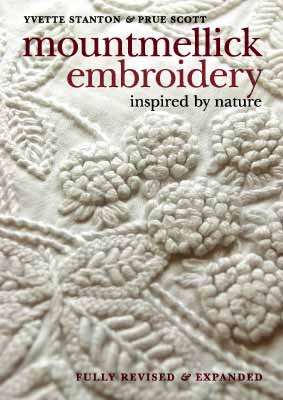
So, let me come out and say it bluntly: Mountmellick embroidery does not have toadstools. Mountmellick embroidery does not have frogs, fairies, owls, Australian native flowers, cars, trucks, horses, wheelbarrows, forks, spoons, pianos… Ok, I got a bit carried away there, but you get the point. It does not have any of those motifs in its historical selection. If you’re dealing with a historical style of embroidery, how do you know what is historically correct? You go back to the historical examples (found in museums, family collections etc) from the heyday of the style, and you look across the range of examples. You see which were the common motifs, stitches, style of combining stitches etc. They are the historically accurate elements because they are found on the historical examples – within the Mountmellick “cannon”, if you like. You see which motifs did not show up regularly – perhaps only once – and you notice that they are probably outliers. These are probably fanciful additions to the style by a single person, just because they liked them. You could not really say that they are “of the style”. Mountmellick embroidery developed in the town of Mountmellick from roughly about the mid 1820s onwards. Because it developed there, it features the plants that grew there, such as oak, blackberries, fern, dogroses, thistles, and shamrocks. Despite the fact that they would not have grown naturally within the town, lilies and passionflowers were also a favourite motif. Why are these two plants accepted, but not others? Because they were accepted by a large number of the contemporary stitchers of the day. They are part of the “cannon”. They were not introduced by someone in a studio or lounge room on the other side of the world 100 years later, and stitched in the Mountmellick style and therefore said to be Mountmellick. You can’t do this; you can’t make changes to a historical style. It is what it already is. You can stitch something “different” in the Mountmellick style, but that doesn’t make it Mountmellick embroidery. In the same way that I could dress in full Thai costume, and move in the same way they do in their traditional styles of dancing, that doesn’t make me Thai. Where can I learn more about what Mountmellick really is?Firstly, if you have the opportunity, explore the museum collections of the world that contain historical examples of Mountmellick embroidery. I realise that’s a little bit out of reach of most people though. You can explore my Mountmellick Embroidery pinterest page, which has images of Mountmellick embroidery. Learn more about Mountmellick embroidery from people who have seriously researched the style by going back to the historical examples, or grown up with it as part of their local heritage. Try these websites: Learn it from a reputable teacher who teaches in the historical style, not just something that has chunky white stitches on white fabric. Just because someone says it is Mountmellick, doesn’t mean it is. You can see this on Ebay all the time. Most of the “Mountmellick embroidery” on Ebay has nothing to do with Mountmellick embroidery!
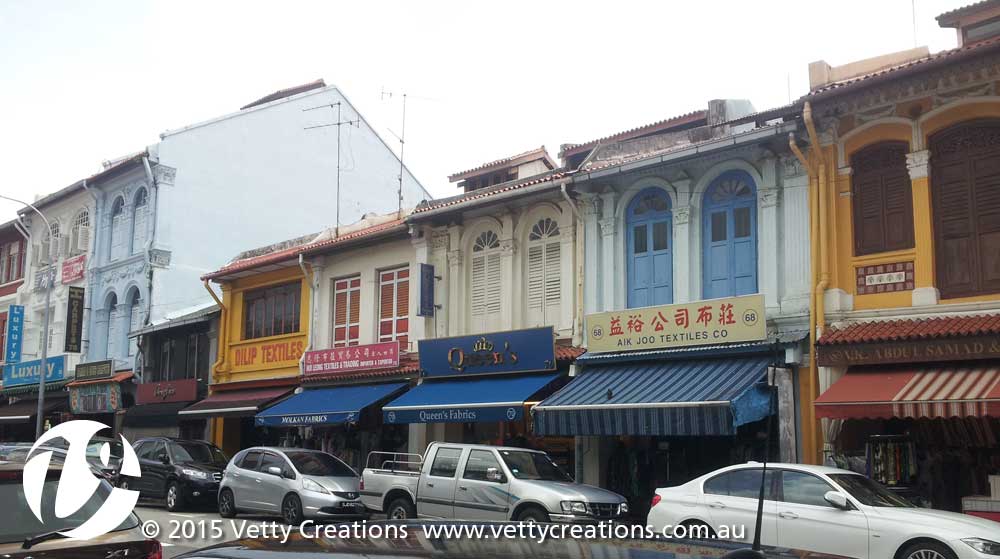
A few years ago, I received an email from one of the ladies in Mountmellick who is very much involved in keeping Mountmellick embroidery alive in the town. She wrote, “My mum was taught Mountmellick work from a very young age from her mum who had been taught by old Mrs Jacobs. As such, mum was very fortunate as she is one of the few who was “passed down” the skill and did not have to research it to learn it. There have been quite a few modern books written about Mountmellick Work and as a general rule, my mum is unimpressed with all – yours being the one exception. Would it be possible to get a signed copy for her?” I felt very honoured to have such a request, and realised that we must have done a good job of presenting their precious embroidery in a way that they felt proud of it. Finally, you can ask me questions. I have researched the embroidery by looking at many, many historical examples in collections around the world. I am very happy to continue to educate people on what Mountmellick embroidery actually is, as well as what it is not. And one more important thing about Mountmellick embroidery: It is not Montmellick, Mt Mellick, Mountmellic, or even Montmellic. Mountmellick is the correct spelling as it is taken from the name of the town in County Laois (pronounced leash) in Ireland. (Just another of my little bugbears… 😉 ) The cruise finished in Singapore, where we were met by family members who live there. It was lovely to spend some time with them, especially as it was all organised in a rush the night before (they thought we were arriving on the Friday!). The main thing I wanted to do in Singapore was go shopping in Arab Street (THE place to buy textiles and beads in Singapore). And then we just planned to have an explore and wander around the city. Both of us had been to Singapore before, so it was not new to us in the way that Bangkok and Saigon were. We only had 12 hours in Singapore before flying home to see our girls again, so there wasn’t that much time to fit things in.
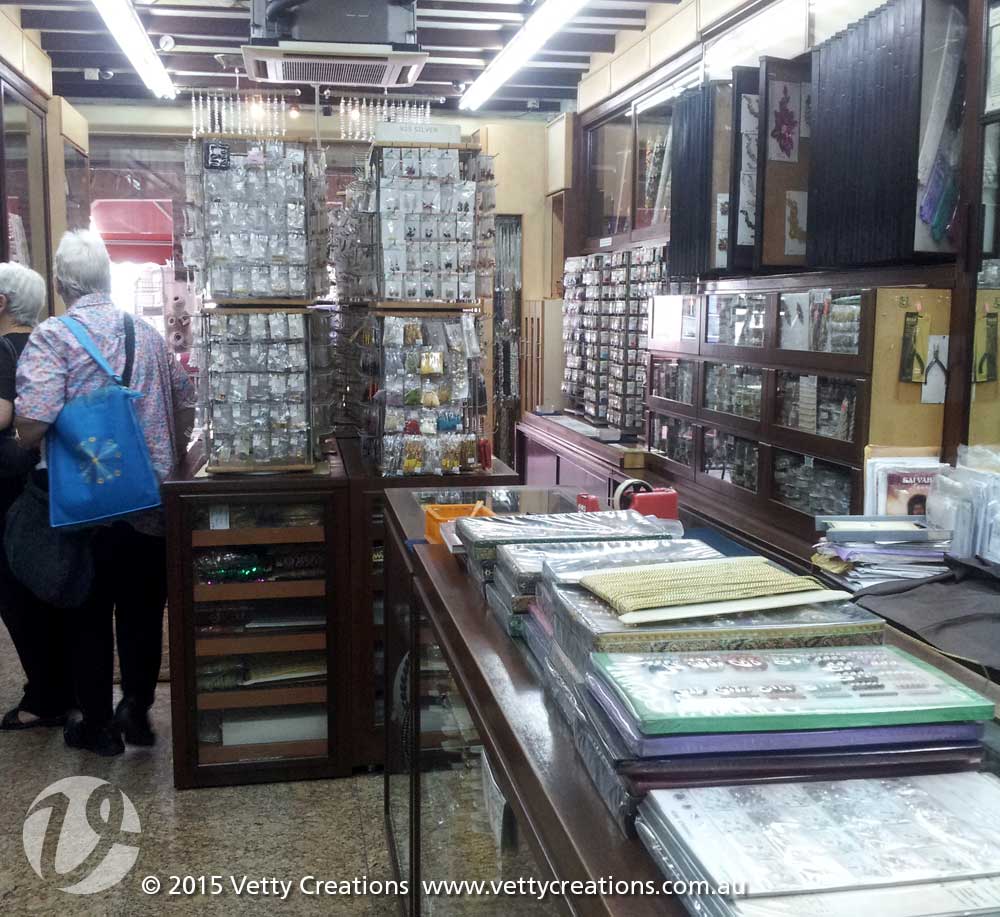
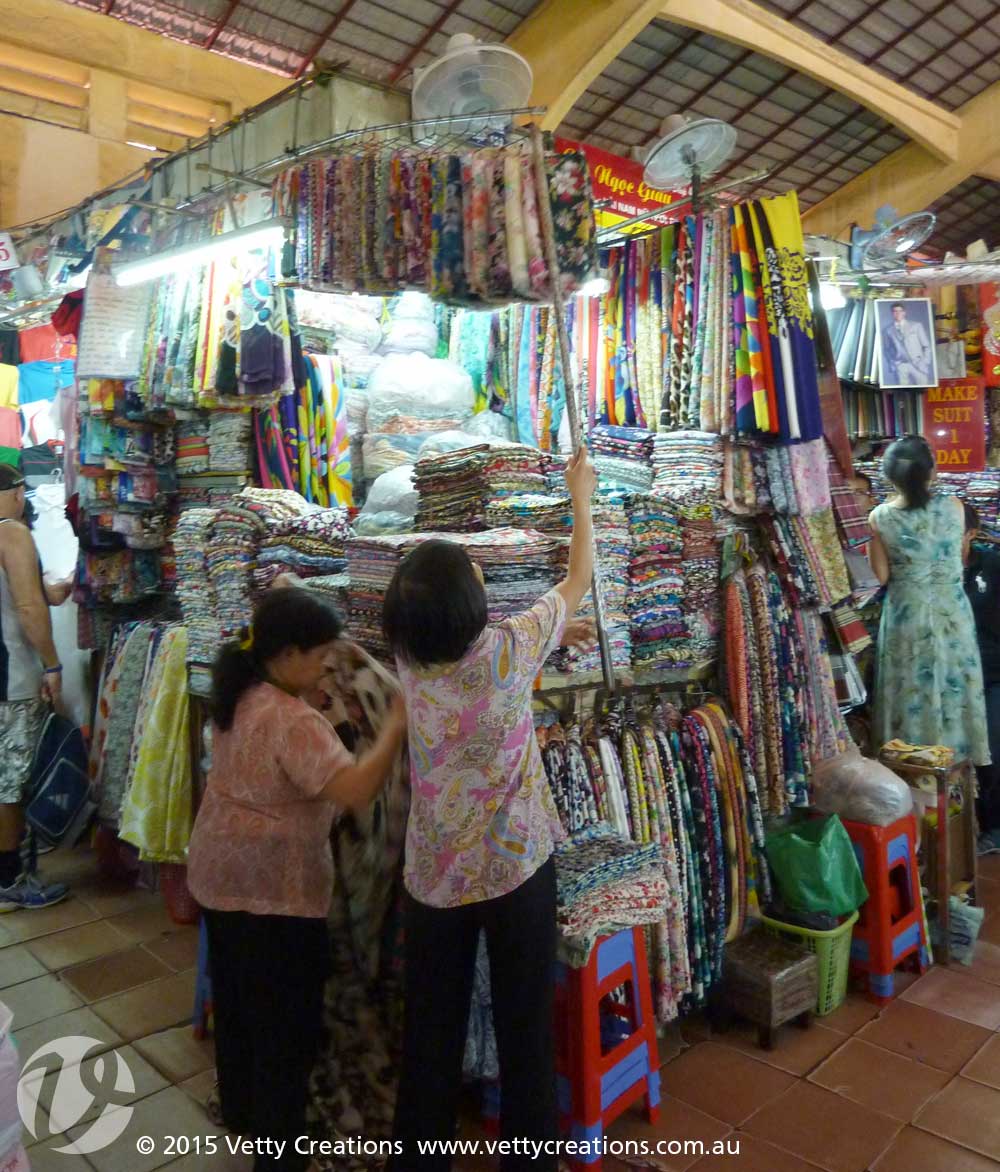
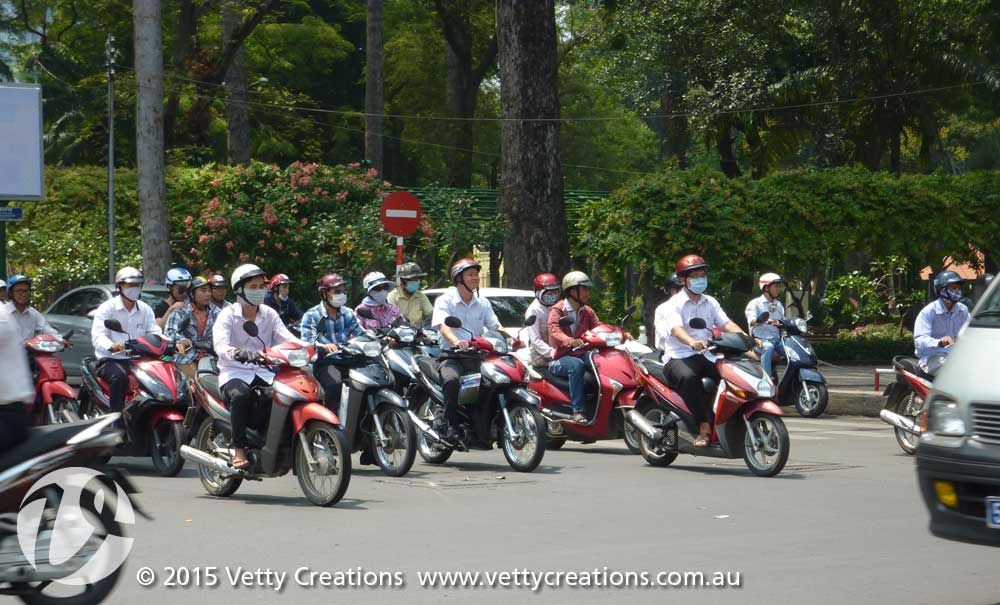
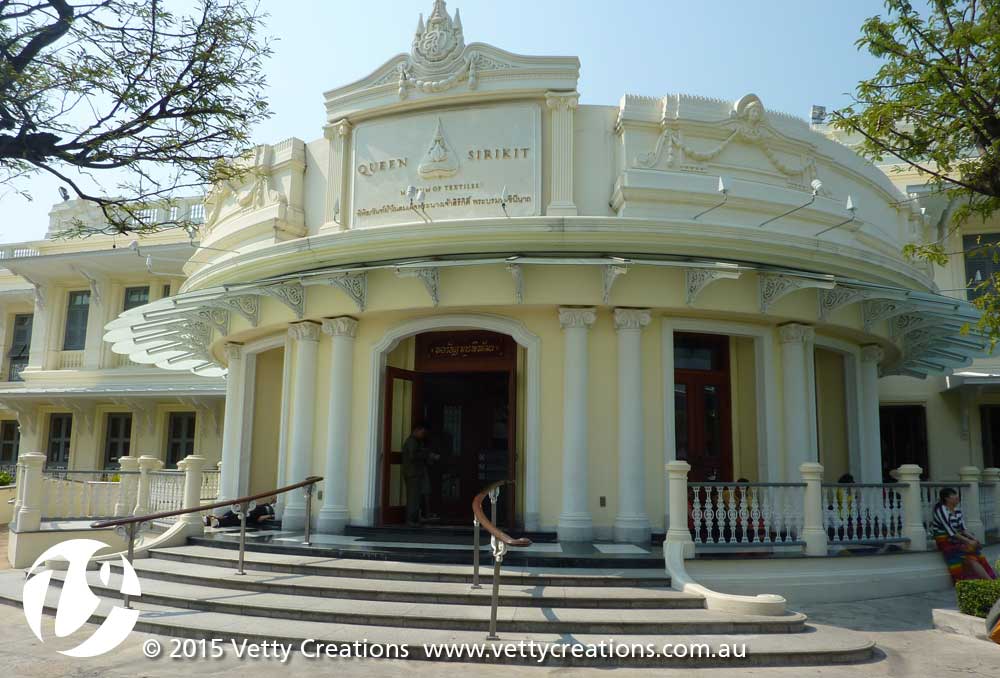
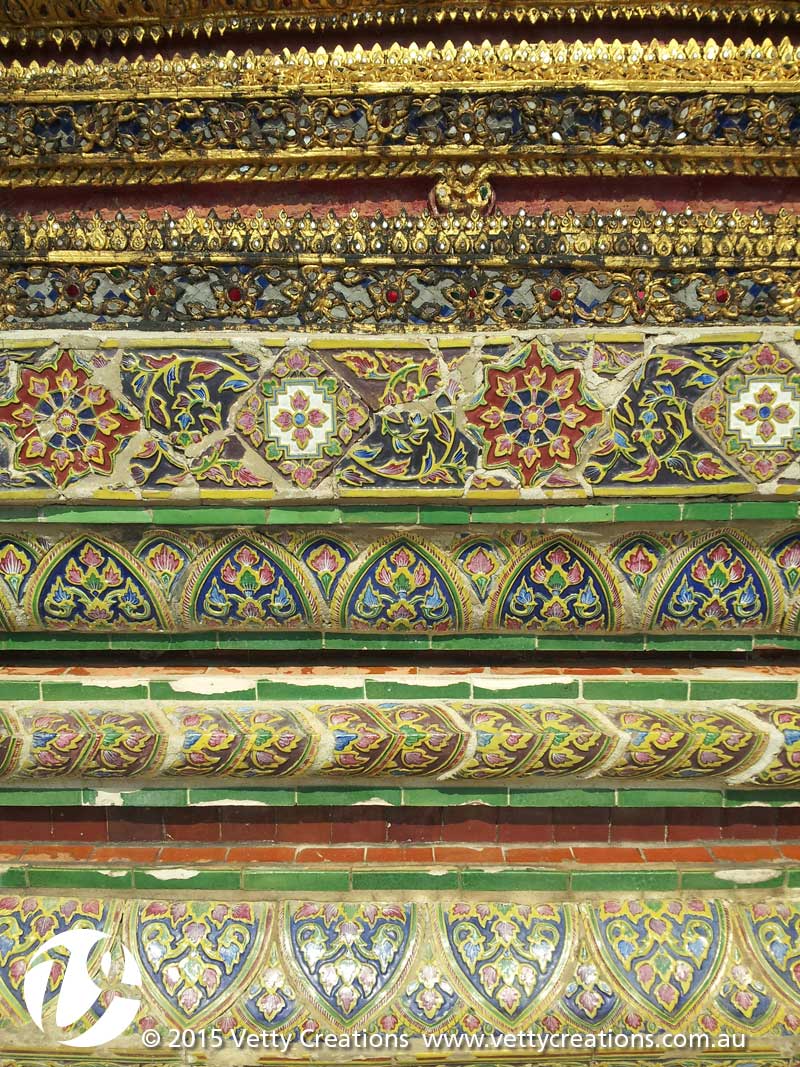
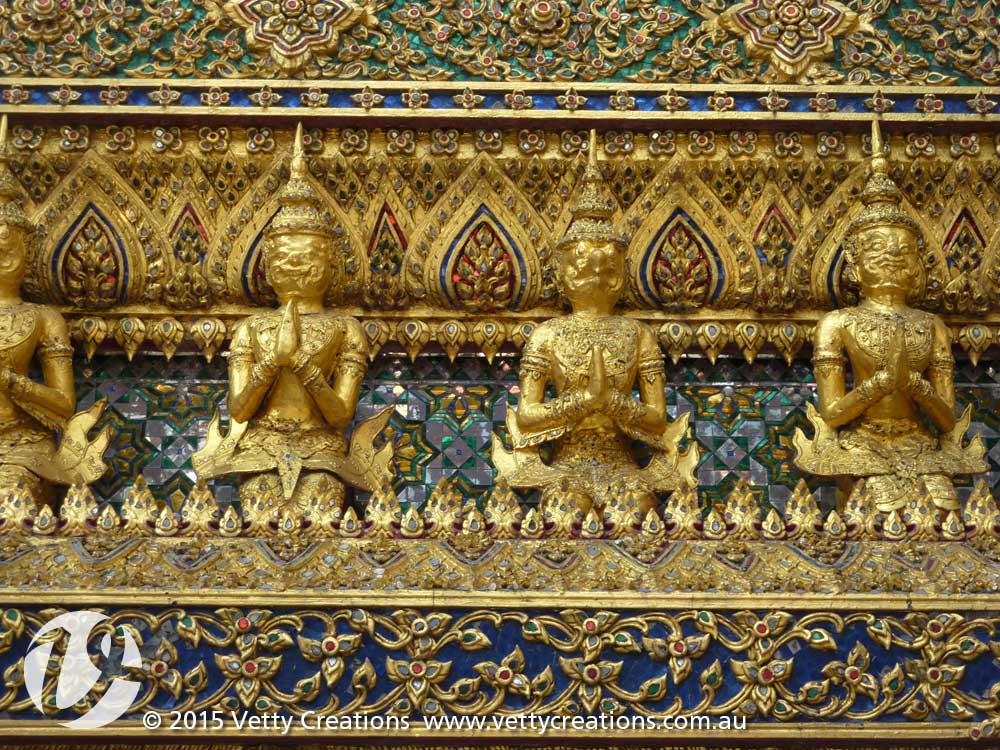
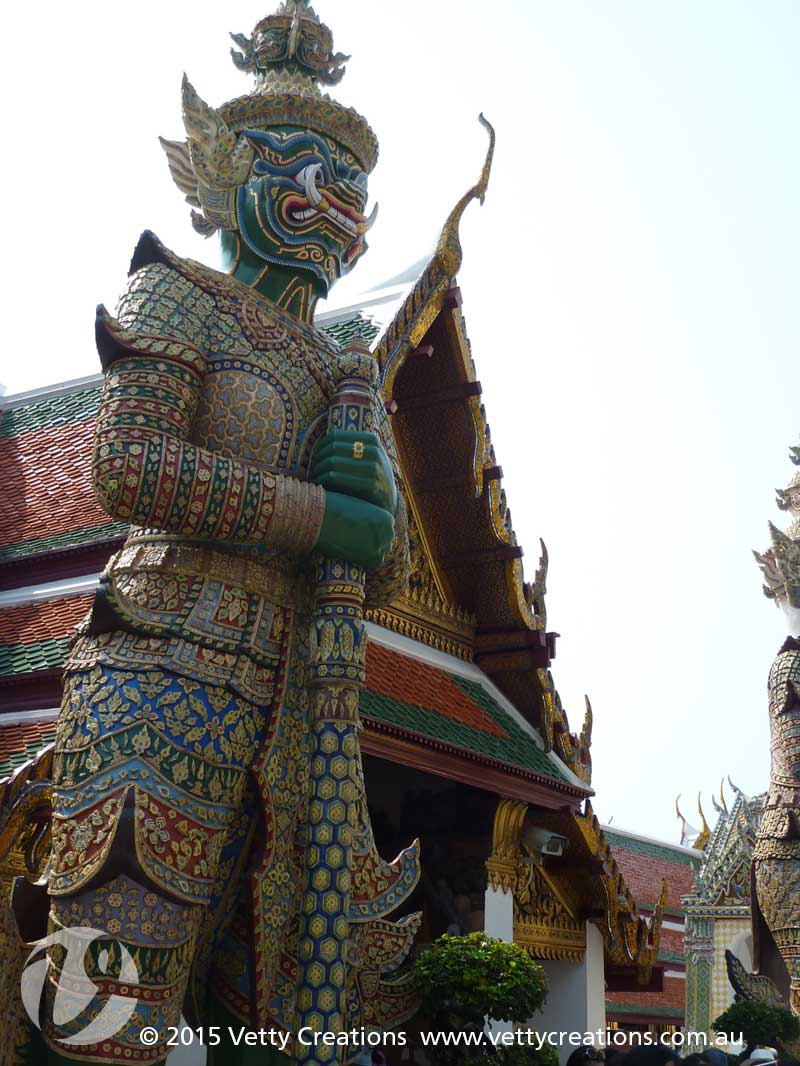
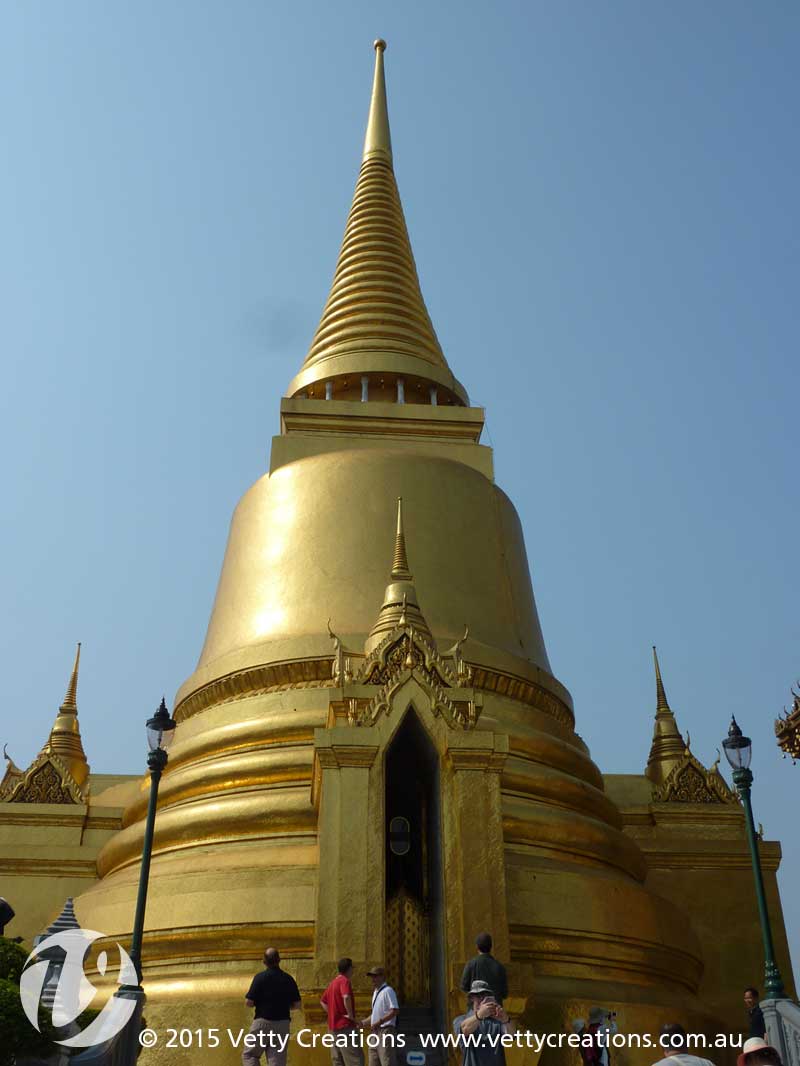
Part way along the second side, I decided that I shouldn’t go into any more shops as it was becoming a bit expensive! If I didn’t see the fabric, then I wouldn’t feel the need to add it to what I was taking home with me as souvenirs…! As well as fabric shops, there were also a few bead shops, from which I sourced some beads for a project that I have in mind. C Rashiwala Bros was the first bead shop I went into, and it had an excellent selection of beads. I purchased quite a few there. The second one we went into, I had a packet of tiny seed beads in my hand, and as I was looking at another one, I accidentally dropped it! I split open into the container below. I was so embarrassed and so apologetic. At least it was all contained and didn’t go *everywhere*. After our Arab Street sojourn, we wandered towards the Marina Bay area, and went across the Helix pedestrian bridge to the Marina Bay Sands and the shopping centre at its base. The Marina Bay Sands wasn’t built last time I was in Singapore (about 10 years ago) so it was rather an amazing sight. In the afternoon we went back to our relatives’ place to collect our luggage. We missed seeing their kids after school by about twenty minutes which was disappointing, but we had to get to the airport. All in all, our whole trip was really enjoyable. Neither of us are sure that we would want to go on a cruise if we didn’t have something to *do* on it. The three cruises I’ve been on now, I had something to do on all of them – two I was teaching needlework, and the other I used as a writing retreat so I was writing all the time. However, most cruises leaving from Australia don’t have 5 consecutive days at sea, either. We loved the introduction to new parts of the world, and can see that we might go back to Vietnam some day. When we visited Saigon, the ship was again way out of town, and the bus trip took about 1.5 hours there and back. Our first destination was the Southern Vietnamese Women’s Museum. This museum had a display of 20 different types of regional and traditional clothing, including ao dai, which is a traditional Vietnamese outfit of long pants with a tunic over the top. There was also a display of weaving and other traditional Vietnamese crafts such as woven mats. The museum was free to visit. 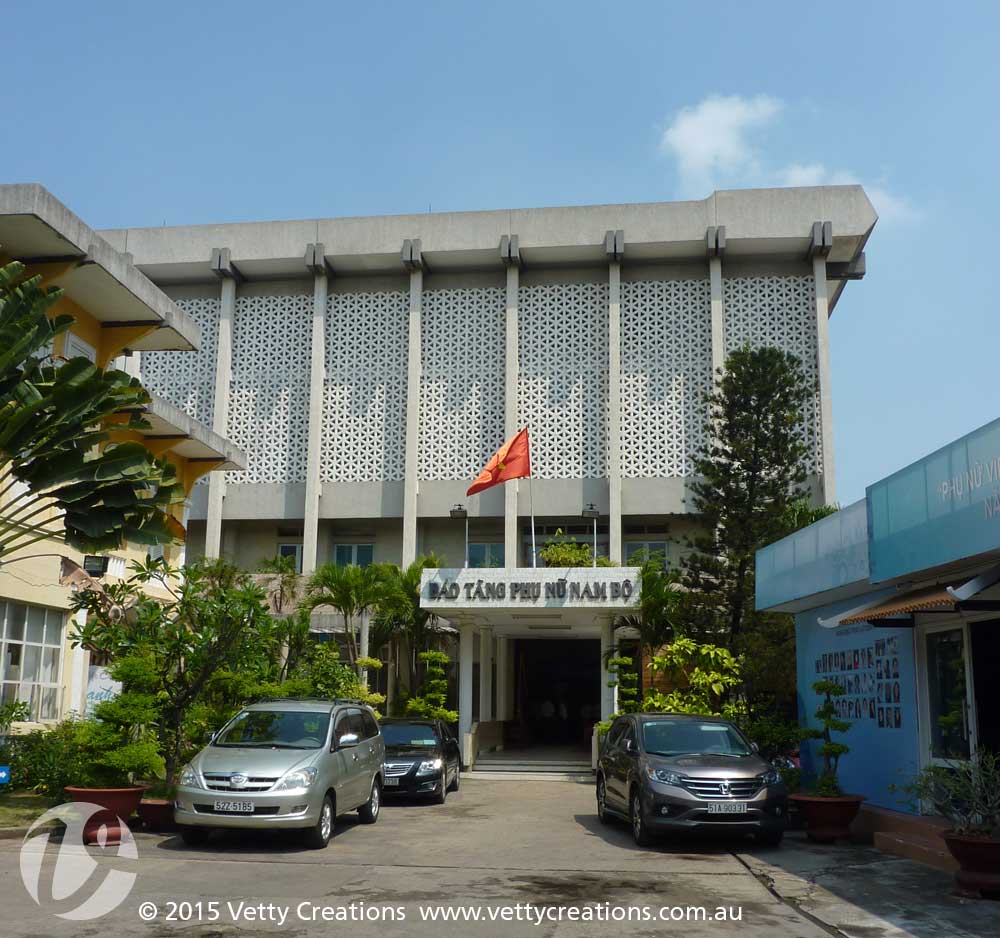 The Southern Vietnamese Women’s Museum is set back off the street. 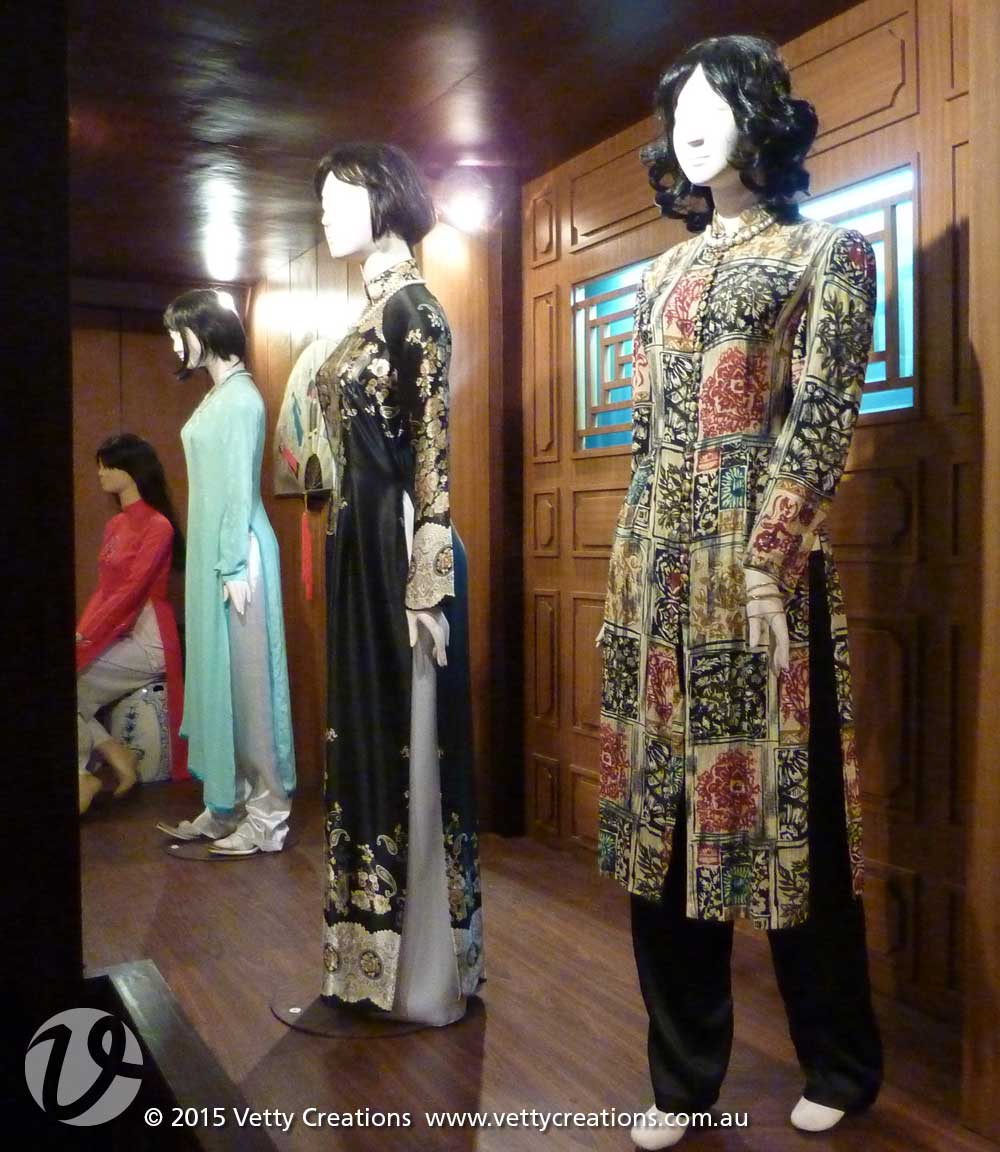 Vietnamese Ao dai 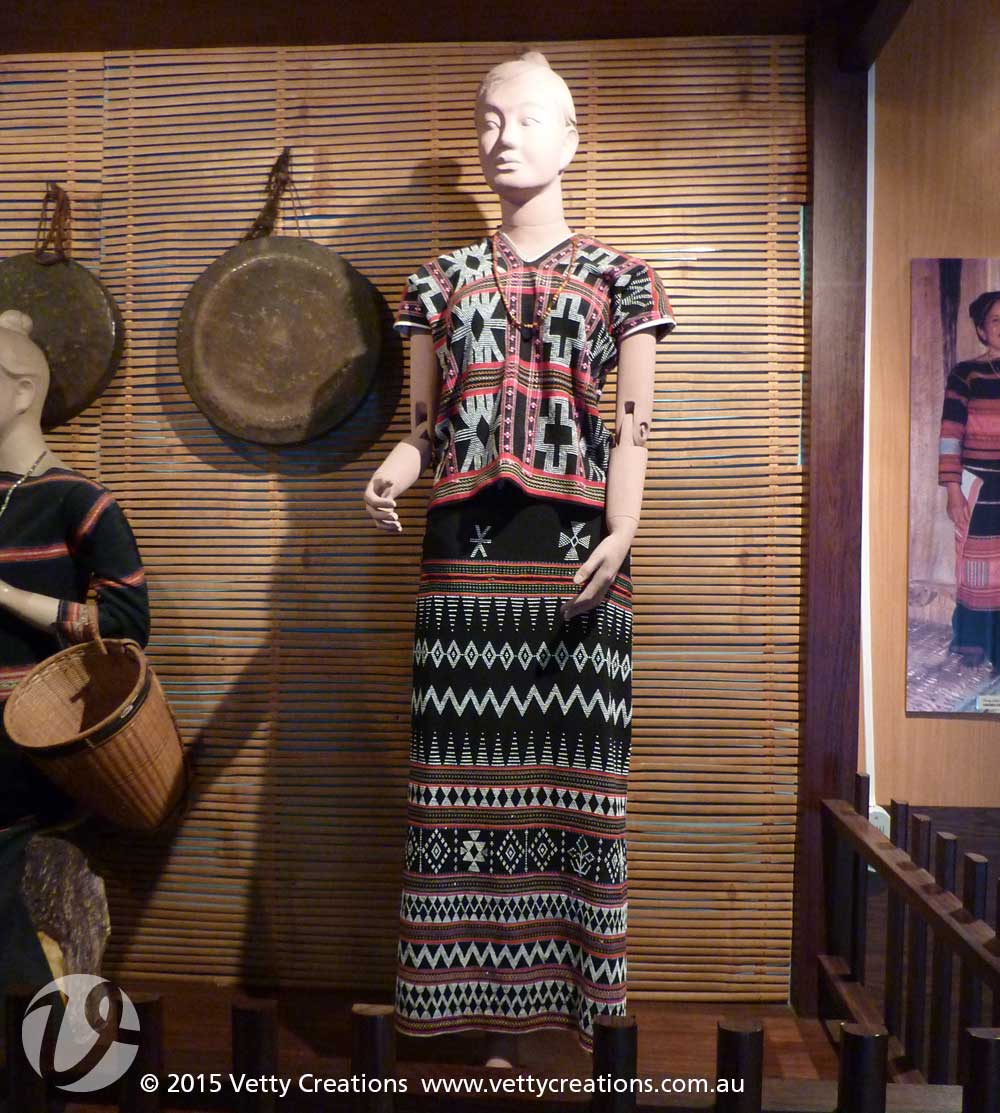 Clothing from a region in Southern Vietnam 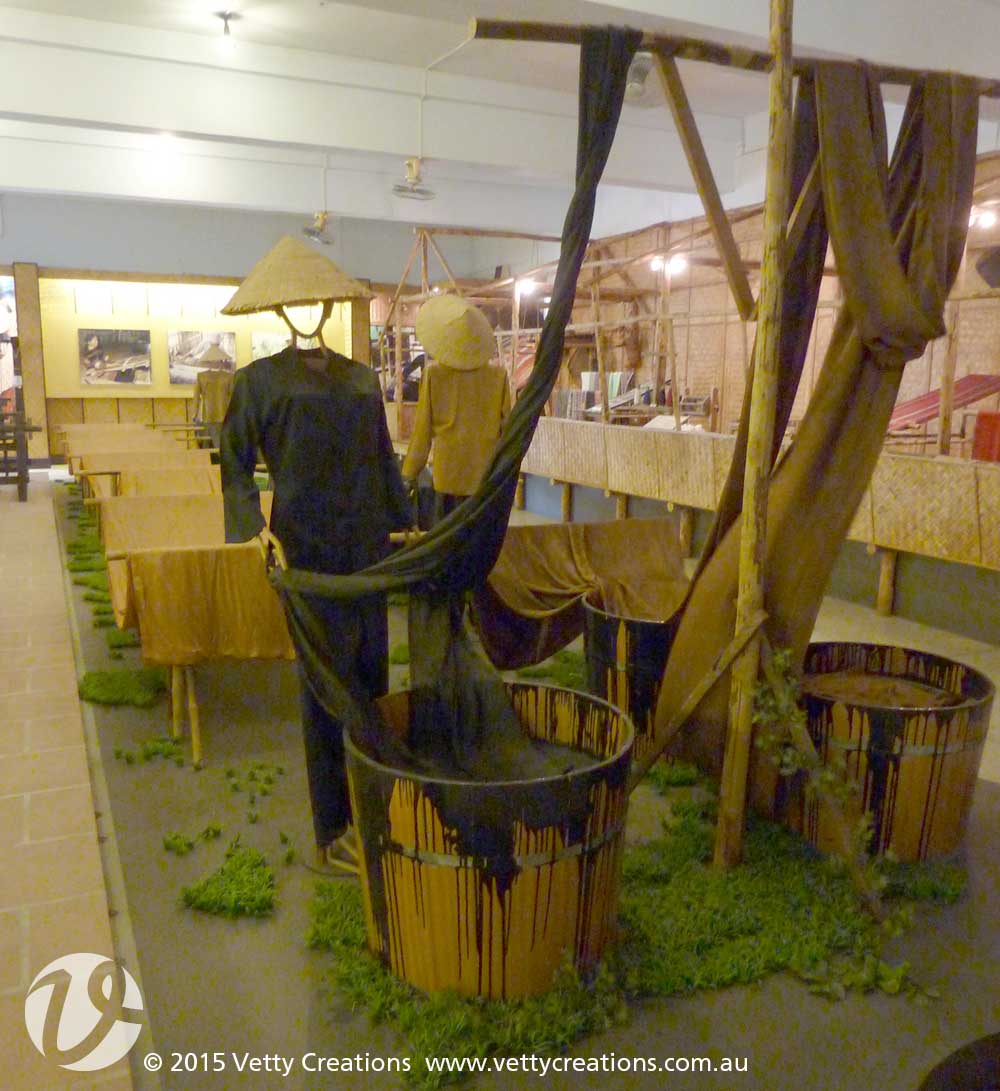 Fabric dyeing display We then went shopping, this time looking particularly for Vietnamese silk and textile souvenirs. We visited the Ben Thanh markets which was a sight to behold. The sounds include the bustling of people everywhere, and “can I help you?” type questions from any vendors who can see you! The stalls are full, where every square inch of space displaying something to sell. There is food, souvenirs, fabric, clothing, bags, etc. Kim Phuong Embroidery and Mekong Quilts are businesses that provide hand embroidery and sewing work to village women, thereby providing them with a means of supporting their families. They produce high quality work so it is a pleasure to buy it as souvenirs and support the local economy. These are not mass-produced tourist souvenirs! 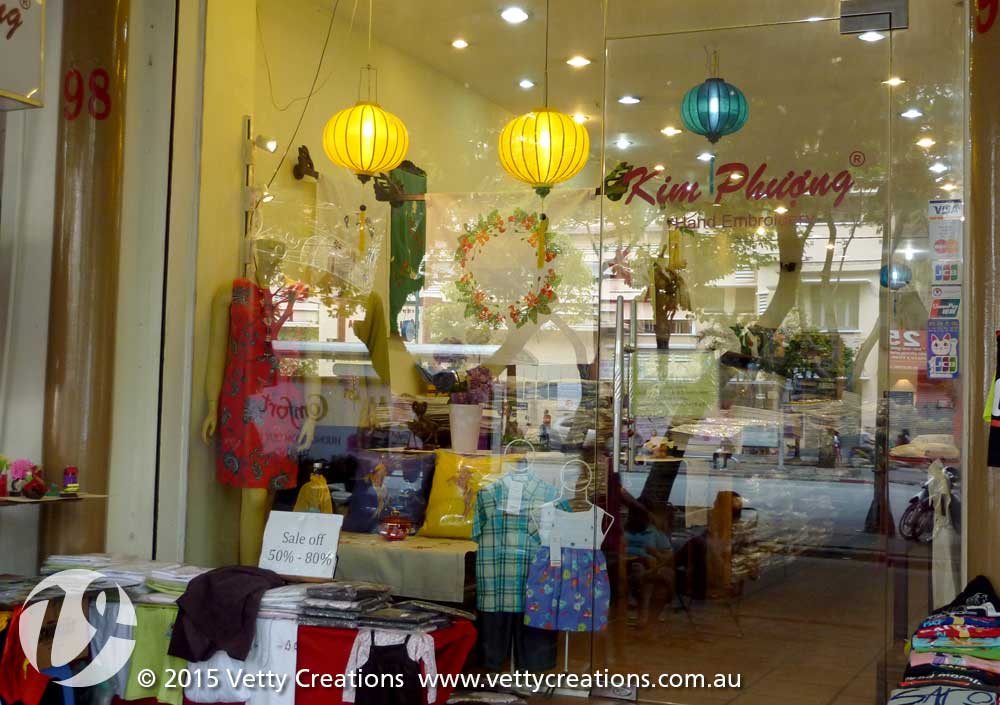 Kim Phuong store 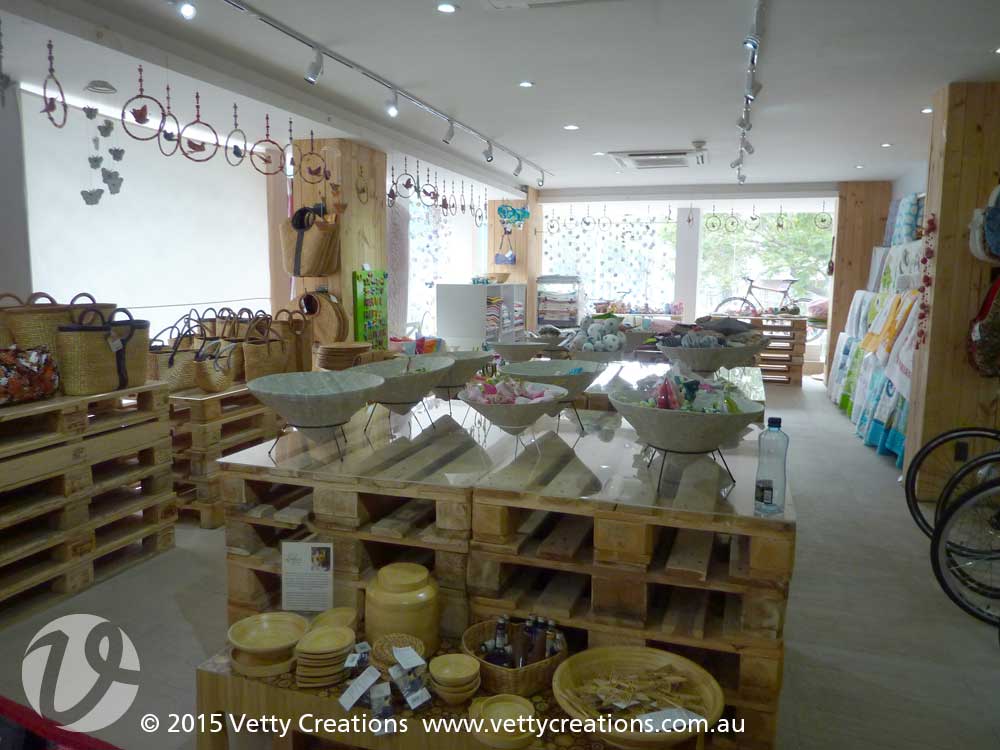 Mekong Quilts store We enjoyed Saigon very much. It is a very pretty city, with gardens along many streets and a mix of new and old colonial buildings. It was full of people on motorbikes, which made crossing streets challenging. However, we survived! Our second stop on the needlework cruise was Bangkok, where we had two days. We docked at a port about two hours away from Bangkok. Apparently the ship is too big to dock in Bangkok itself. For the first day we signed up to take a bus into and out of town. The Husband and I spent the day exploring on our own. We had about 5 hours in the city, to race around and see what we could see. As you can imagine, it was extremely hot and humid in Bangkok. Our guide on the bus said that they have three seasons there: hot, hotter and hotter again. We were there in the hotter again season, so we dripped our way around town. We were dropped off in town and caught the Skytrain and then a boat up the river to the Grand Palace complex, including the Temple of the Emerald Buddha. 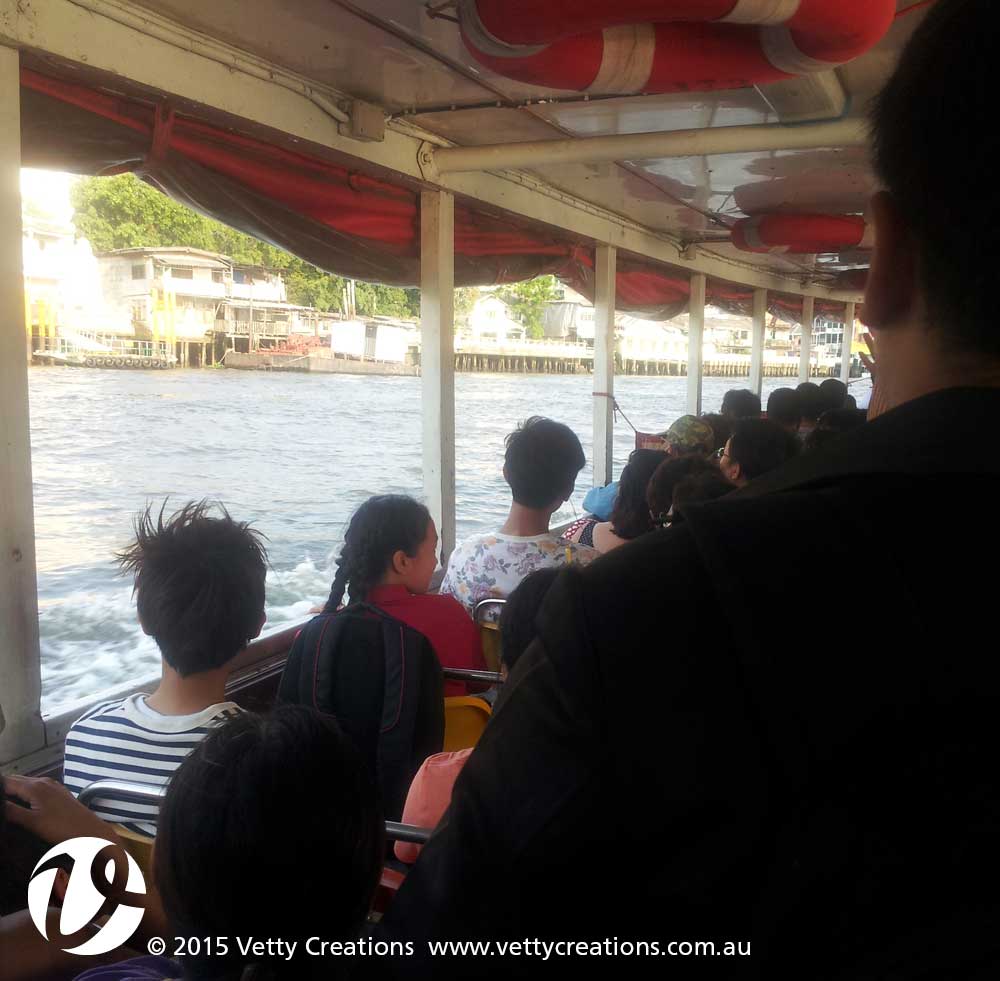 Catching a boat up the river to the Grand Palace. We visited the Grand Palace complex including Queen Sirikit’s Museum of Textiles, which was wonderful with so many exquisite outfits. Over the years, the Queen has done a wonderful job of promoting Thai fashion and culture by wearing beautiful clothing while attending state functions etc. She has also set up a foundation called Support Foundation, which doesn’t have a website, but I found a good explanation of what it does and why, on the Singaporean Thai Embassy webpage. I would have taken photos inside the museum, but unfortunately it was not permitted. The museum’s website has a great selection of images though. As this was really our first time in Asia (apart from Singapore), we had not previously experienced Asian architecture. The buildings around the Temple of the Emerald Buddha were therefore spectacular and amazing.
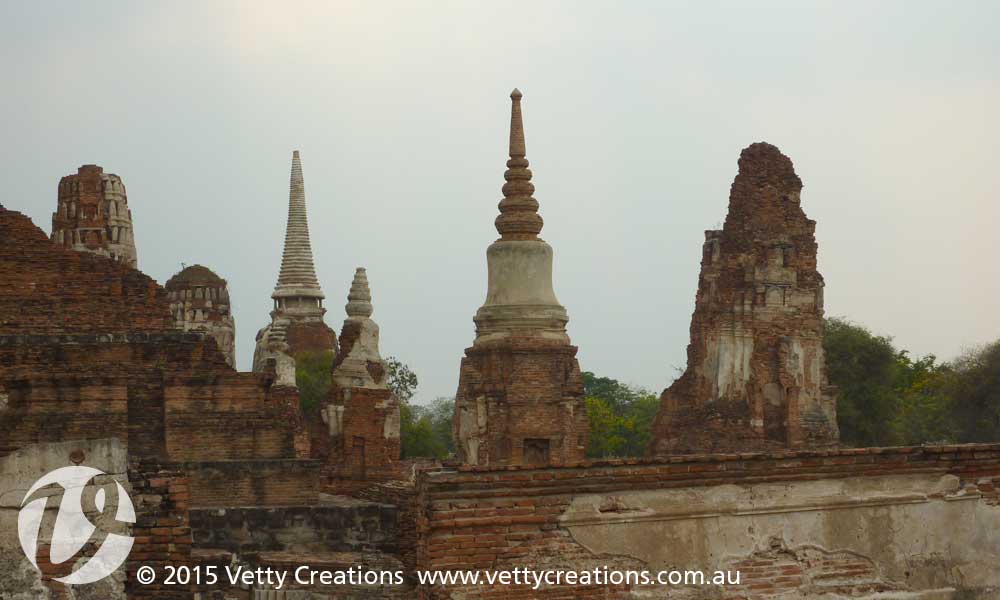
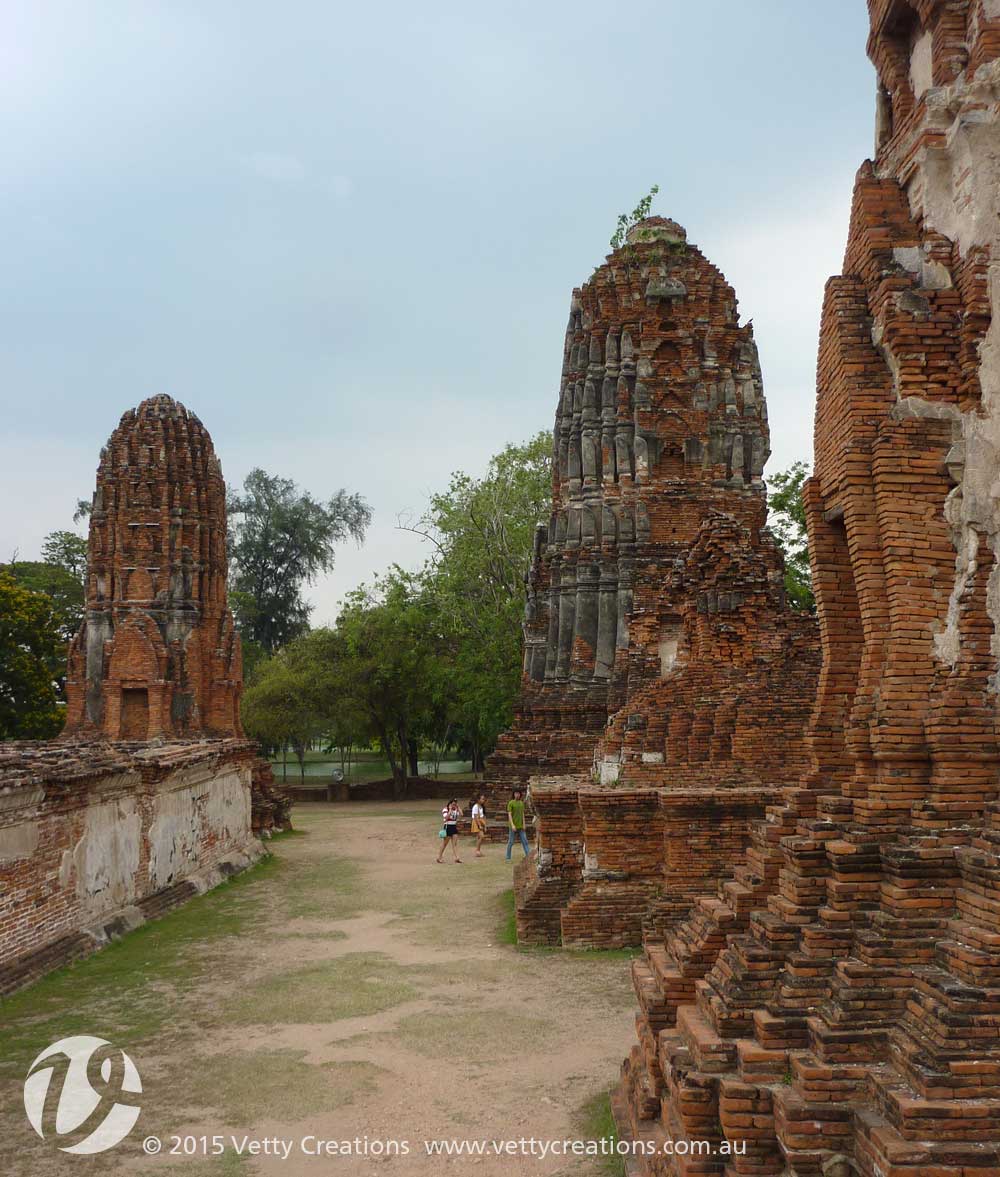
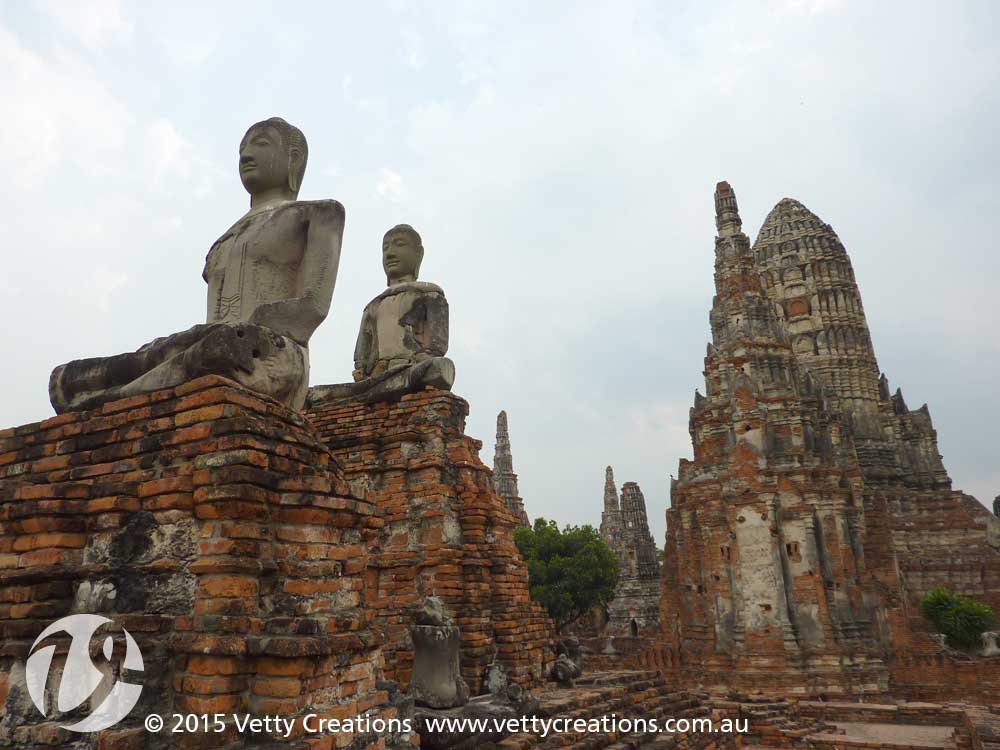
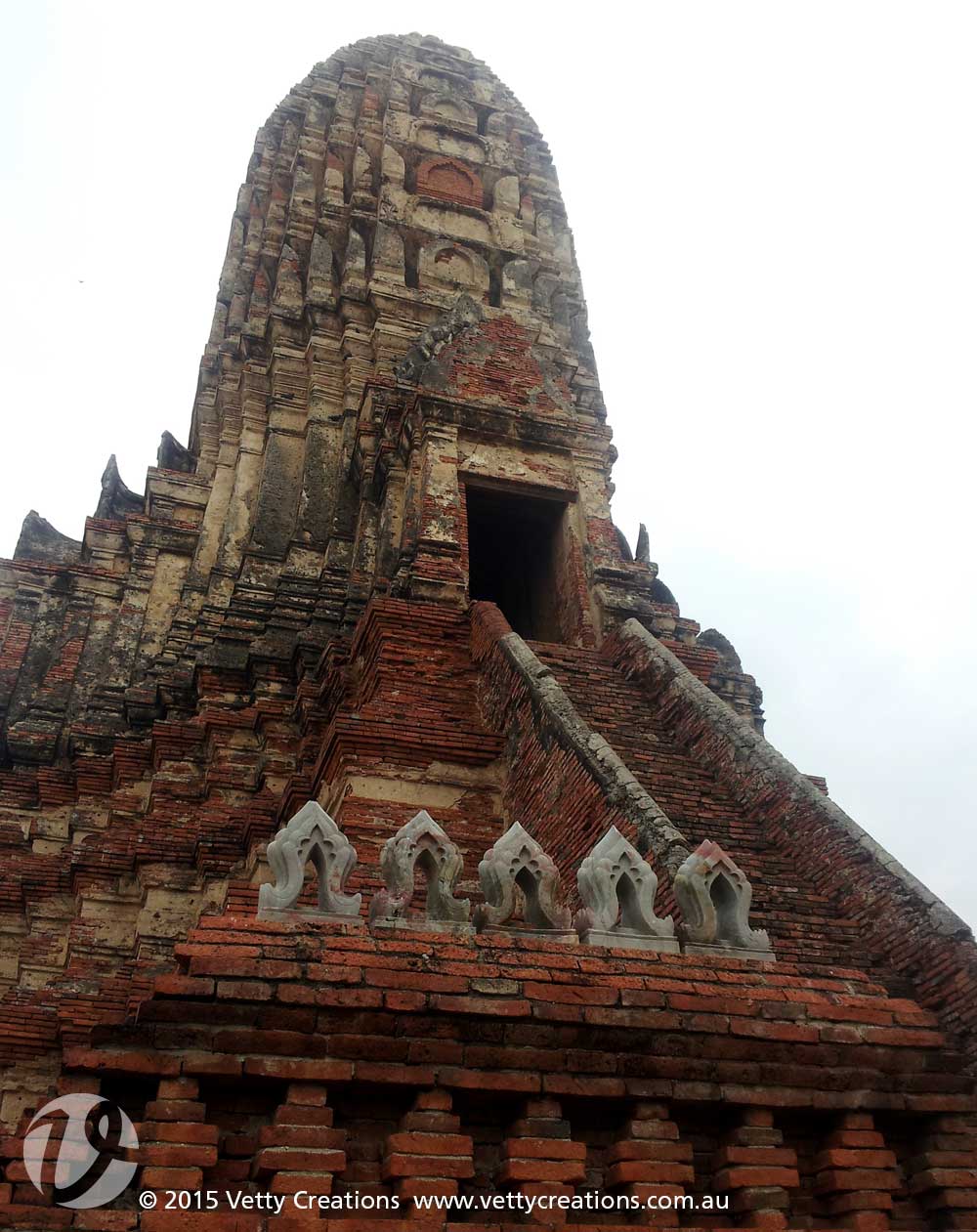
We also visited the Pahurat Textile Markets in Little India, where we saw beautiful fabrics. Some of them came home with me as souvenirs for me and the girls. There was probably much more that we could have seen in this area, but the shops were closing at 4pm and we needed to get back to our bus to take us back to the ship! 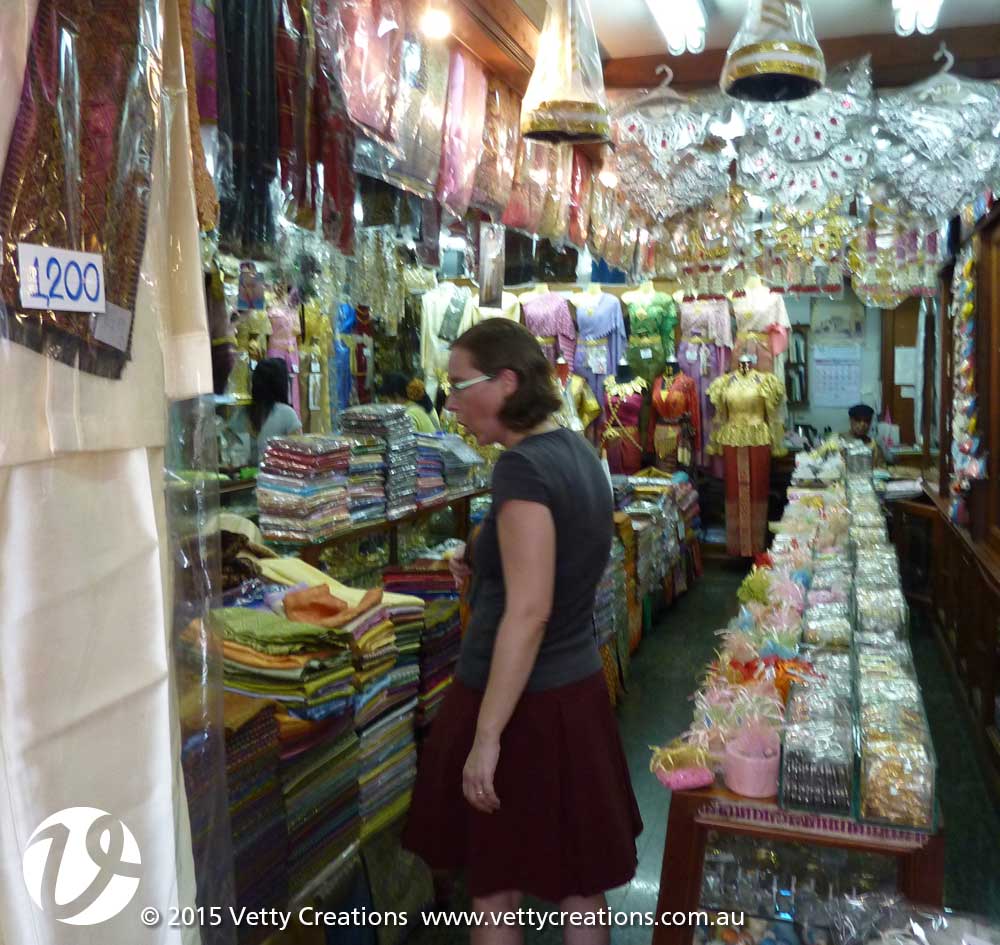 Yes, that’s me saying “Oh, wow!” as I walk in the door. On the second day in Bangkok we visited Ayutthaya north of Bangkok to see World Heritage Listed ruined temples. Ayutthaya was the Thai capital before Bangkok, and therefore it was a very important place. The temples were simply amazing, and dotted everywhere throughout the landscape of the town. 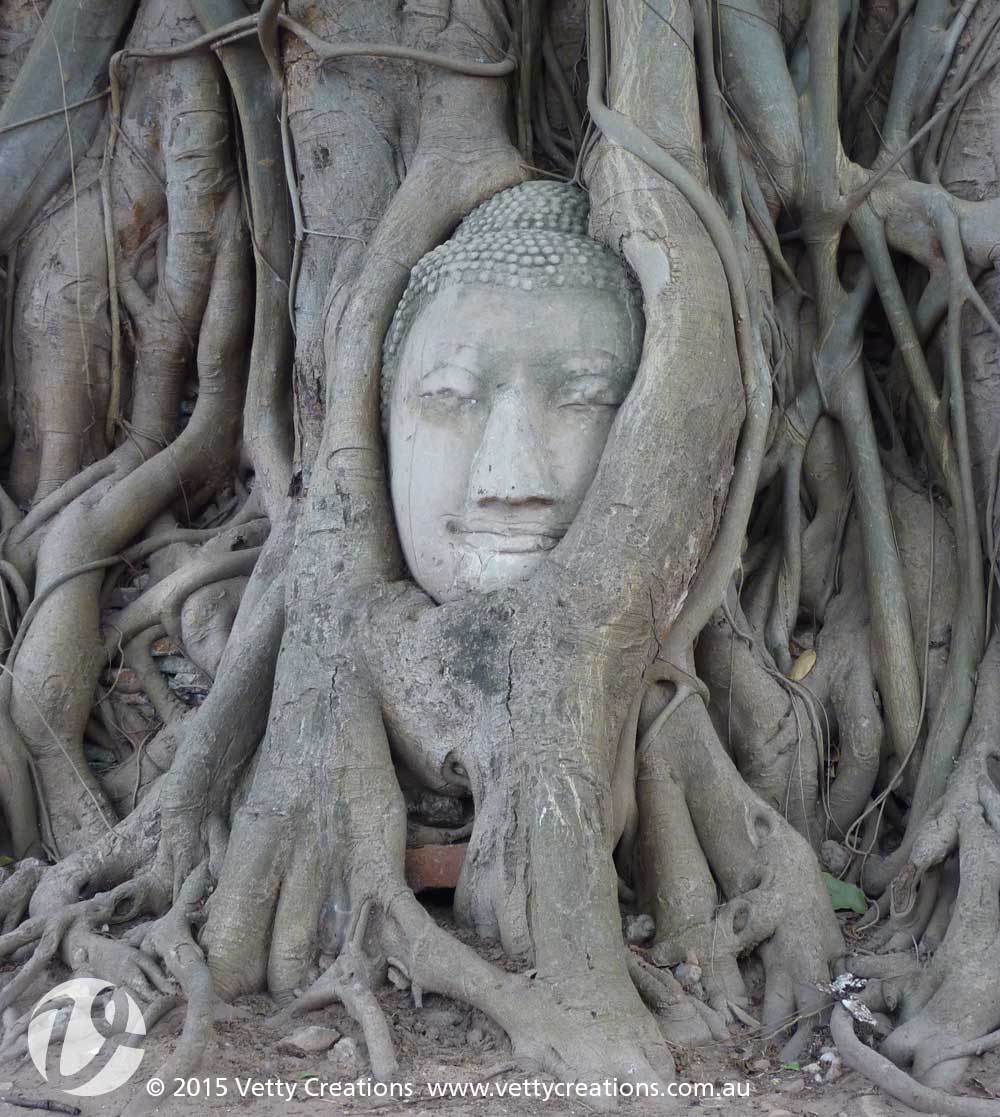 Buddha head enclosed by tree roots
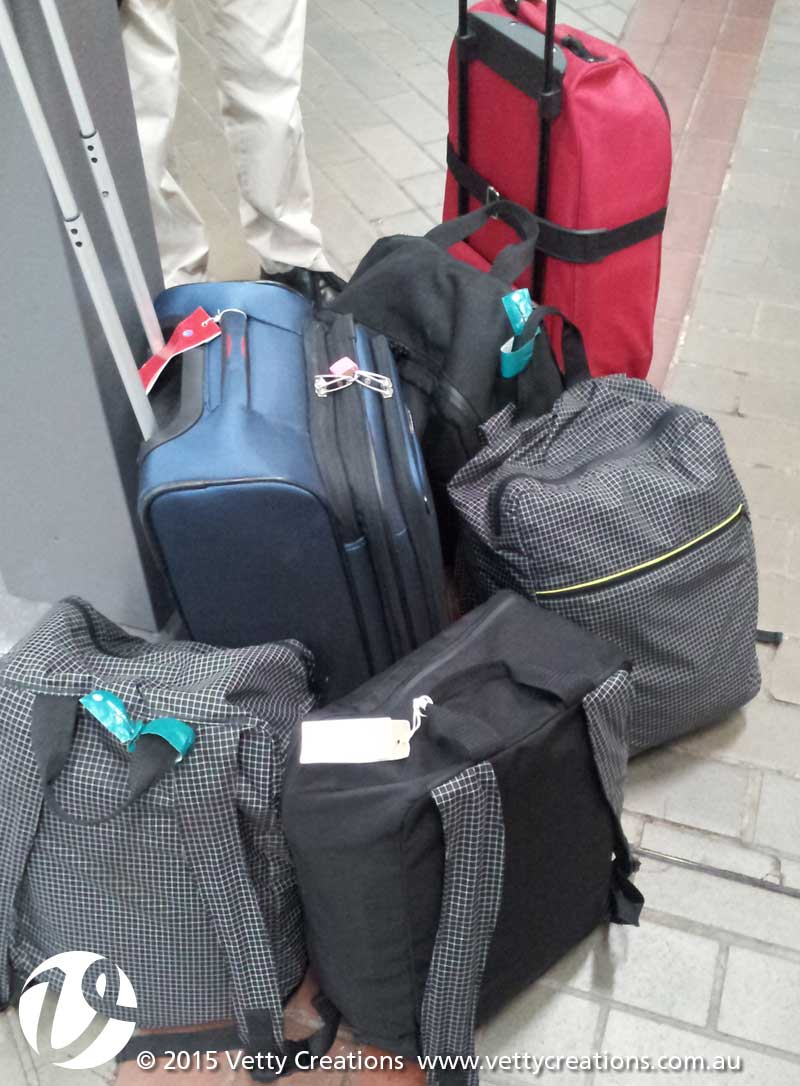
We’re back from the needlework cruise! I say we, because this time The Husband came with me, which was lovely. The Reader and The Gymnast had a holiday at Grandma and Grandpa’s house, which they did enjoy, but they missed us (and we missed them!). From the beginning, this was a different sort of travelling than we usually do. Apart from the fact that the girls weren’t with us, usually we take cabin baggage only, as it is so easy to get around that way. But look at all our luggage this time! We needed to take the kits for my classes, all my stock to sell, and all our many and varied clothes to wear. There were 21 tutors on the cruise, and each taught three projects. That meant 63 different classes for people to choose from! What a lot of choice! I taught three projects: Elizabethan Strawberries, Sardinian Whitework Hand Towel and Portuguese Whitework Biscornu.
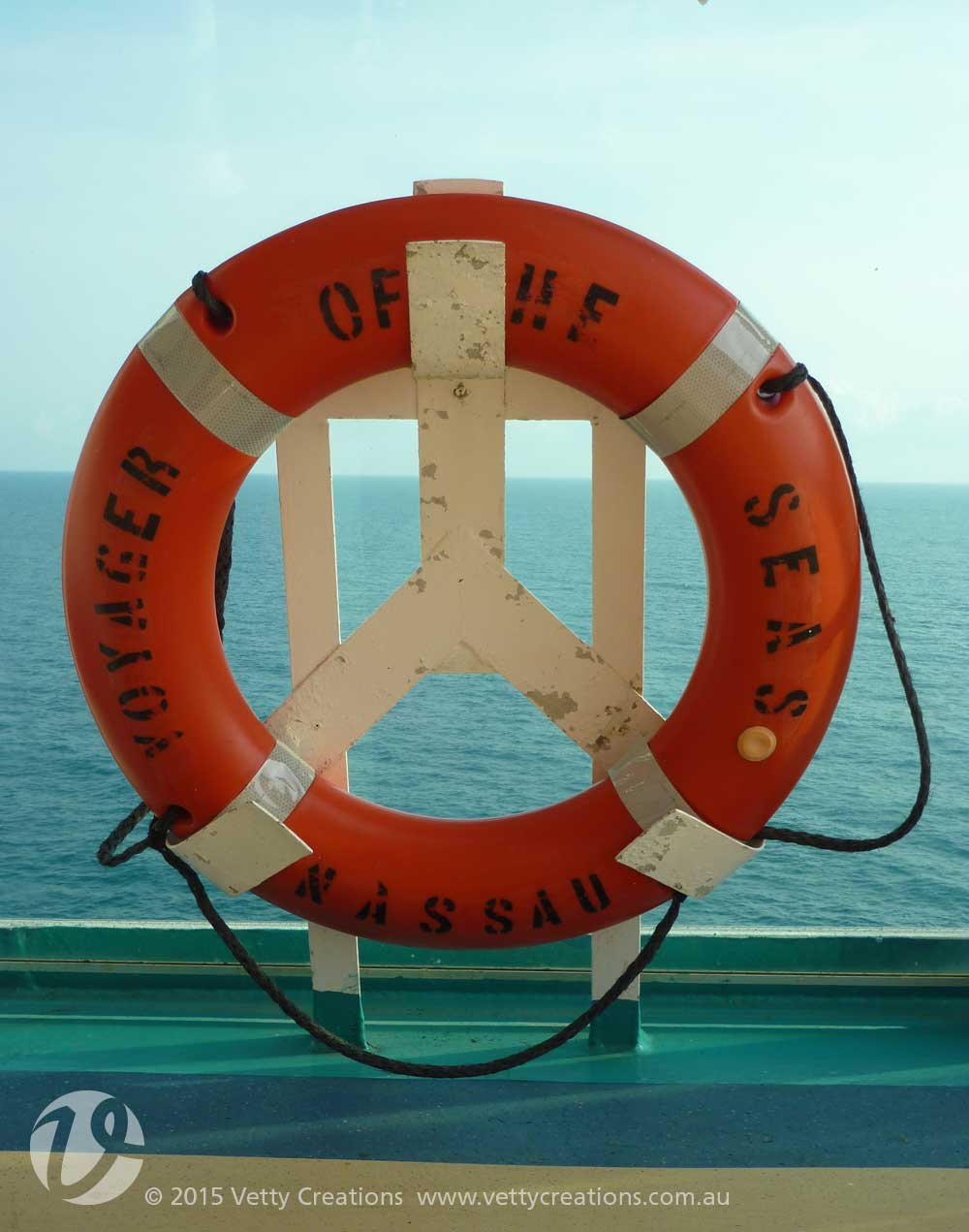
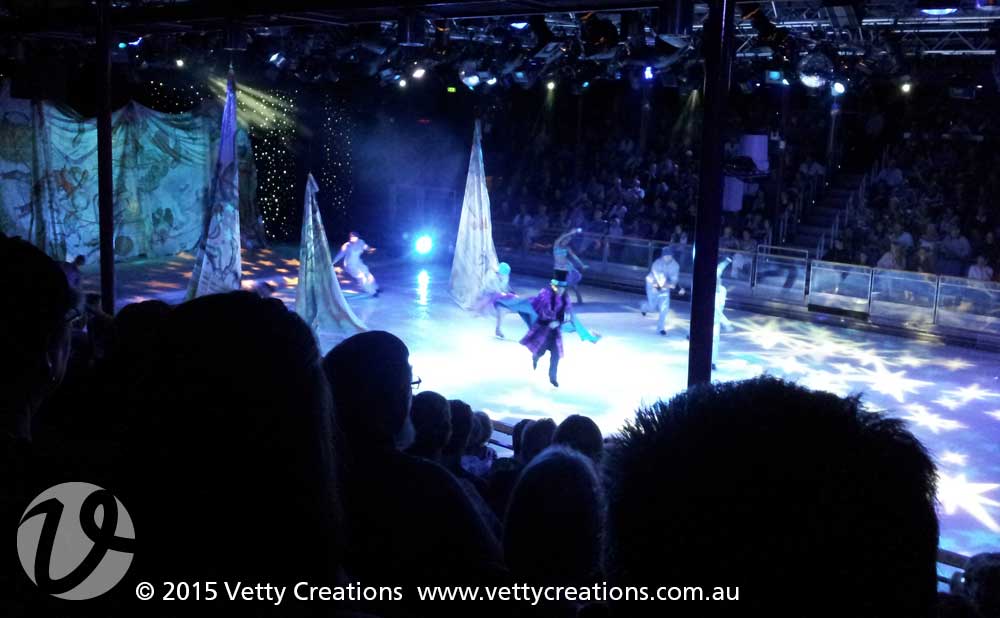
In my classes the work was quite slow, not because the students were slow, just because the work was painstaking and demanding. In both the Elizabethan Strawberries class and the Sardinian Whitework Hand Towel class there wasn’t a lot for me to teach, but there was a lot for the students to master. They did very well with the amount they got done. The Portuguese Whitework students also did well, with two students – Susan and Anne – getting quite close to finishing the embroidery for their biscornus. 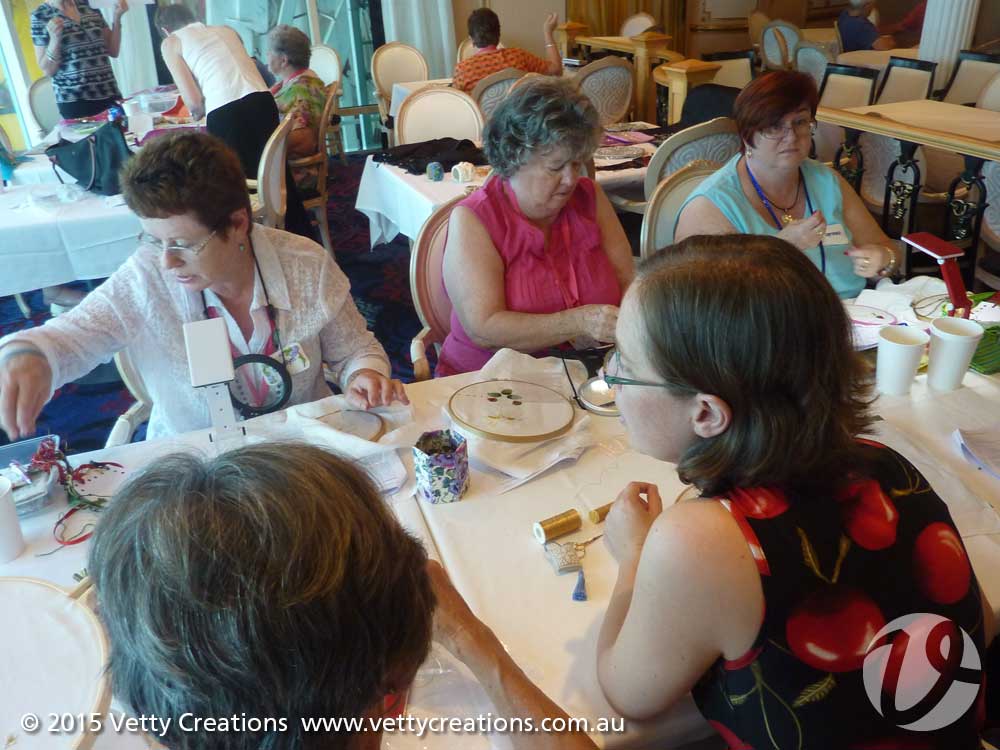 Teaching Elizabethan embroidery  Teaching Portuguese whitework  Teaching Sardinian knotted embroidery I was really pleased with how all the students went. I hope that they had a fun time and learnt new things that they will be able to take with them. It will be lovely to see some photos of finished projects in time. (Hint, hint to cruise participants!) Apart from the 6 days of classes, which were scattered throughout the cruise on the at sea days, there was also time to relax, and we had a few ports of call. As I have reported in a previous post, we visited Port Hedland, but we also had stops in Bangkok and Saigon (locals call it Saigon still, and it is quicker to write than Ho Chi Minh City!). The cruise finished in Singapore. On board, after classes I usually took the opportunity to read on a deck chair and generally ended up having a snooze! There were also shows to watch and we saw an iceskating spectacular (yes, there’s an ice rink on the ship!) and a guitar virtuoso playing classical guitar. There was a lot of eating to be done! Simon, one of the organisers of the needlework cruise arranged for all the needlework participants and their partners to visit the ship’s bridge. He was just having a chat with the ship’s captain one day and asked, and Captain Ryan said yes. I don’t think he realised that there were about 300 of us! So over two afternoons, all of us who wanted to received a 10 minute tour of the ship’s bridge. It was a wonderful opportunity! 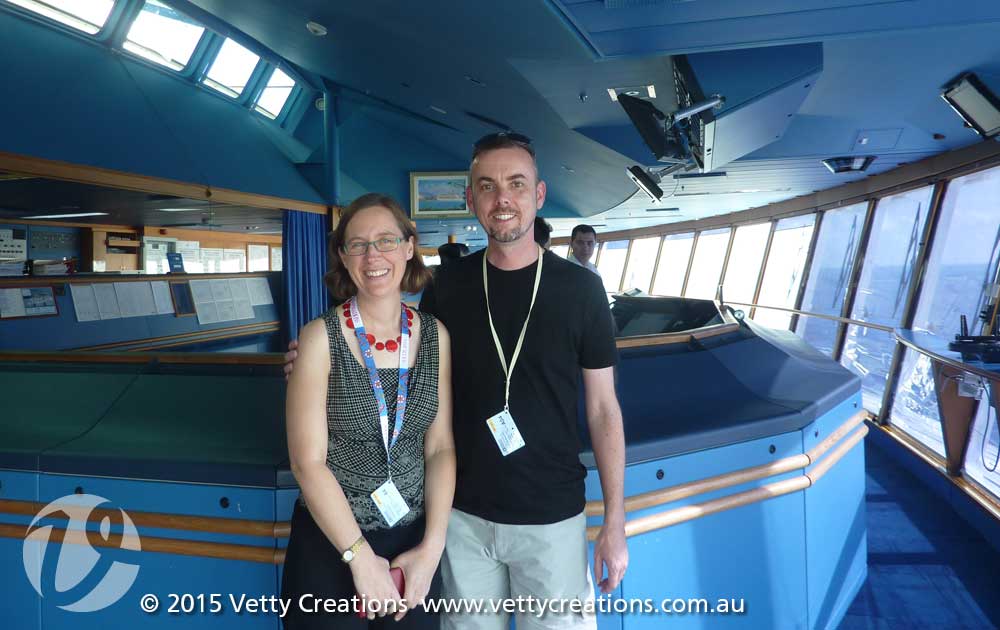 Me and The Husband on our tour. 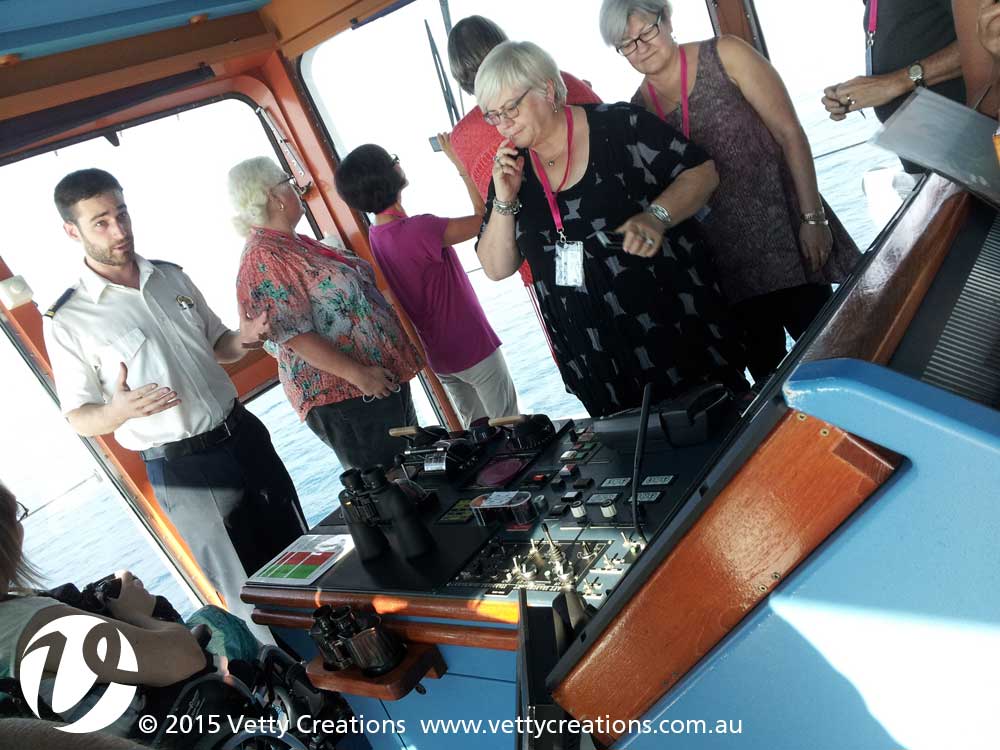
On two of the non-class sea days, we had sale events where the tutors displayed their wares – fabrics, kits, patterns, books etc – for needlework participants and general cruise people to come and buy. These were hotly anticipated, and Simon, who was manning the door outside the room had to hold people back. When the time came, they streamed in the door! 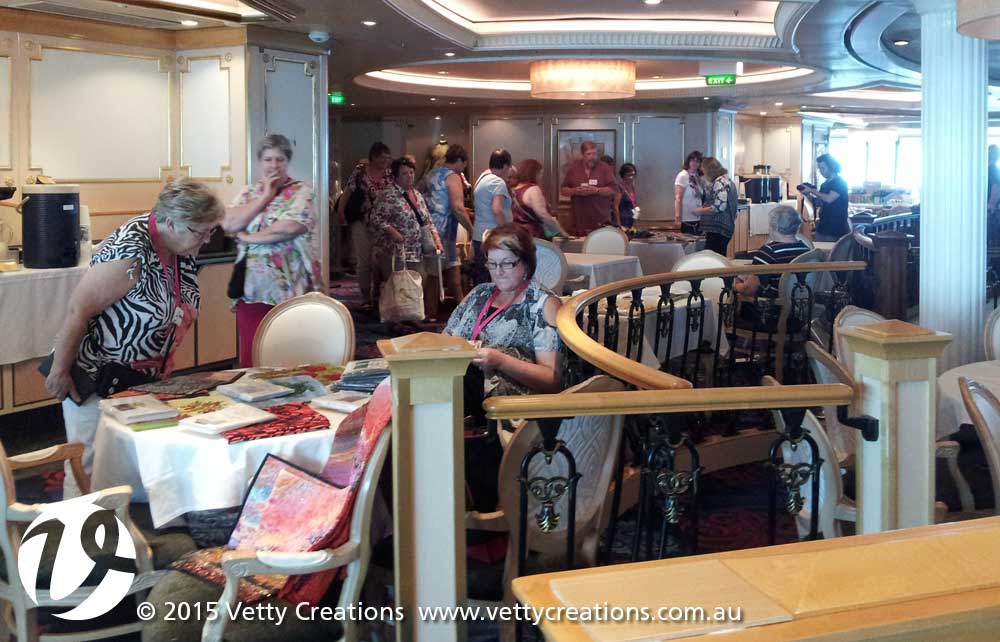 Streaming in the door, ready to purchase! Thanks so much to Simon, Maureen and Clare of Needlework Tours and Cruises for organising this fantastic needlework cruise. I was so privileged to again be part of it. If you’re interested in doing one of these needlework cruises, the 2016 cruises are ready for booking! Something you may not know about me is that I used to work as a picture framer when I was studying at uni. I spent several years doing this, in a variety of businesses, and then eventually taught picture framing at the local community college. Whenever needlework came in to be framed, they’d save them for me to do on the days I was working. I enjoyed doing it, and they knew that I would give the needlework the respect it deserved. I saw some amazing textiles during my time picture framing. This video is a sped up version of framing a piece of needlepoint. Much of the process is the same or similar to how I would do it. It gives you an insight into the labour-intensive nature of picture framing. The time it takes, coupled with the high-quality materials that can be used to preserve your precious needlework gives some idea as to why picture framing can be expensive.
The video was from Facebook. I therefore don’t know how to provide a link to it as I normally would for YouTube videos. If you’re reading the emailed version of this post and the video is missing or blank, I suggest you click on the blog post header (Framing needlework in fast-motion) near the top of the email, and that should take you to the actual blog post on the Vetty Creations website. You should be able to view it there. |
 White Threads is the blog of Yvette Stanton, the author, designer, publisher behind Vetty Creations' quality needlework books and embroidery products.
|
||