Vetty Creations header

Back to Vetty Creations website

White Threads

Mystified by McCalls

As you may remember, The Reader and I did a pattern drafting course over a couple of years. Recently, we visited Cabramatta in Sydney, where there are a good number of fabric shops. We each purchased some fabric for a dress from Sogo Fabric (in my opinion, Sogo always has the best fabric in Cabramatta). We went looking online for pattern designs that we liked to make sure we got the right quantity of fabric for the style of dress we preferred. Because we don’t have a great deal of time these days, we purchased McCalls patterns that we liked, rather than drafting our own.

McCalls dress patterns M8634 and M6883

I purchased McCalls M6834 (sizes 6, 8, 10, 12, 14) for myself, intending to make some changes to it. We purchased M6883 (sizes 6, 8, 10, 12, 14) for The Reader, knowing we would have to draft it down to fit her. The Reader is 15 years old, but still extremely petite in body size and height. Children’s patterns are inappropriate for her more mature shape and taste, however women’s sizes are too small for her. With bought patterns, we know we will always have to draft them down for her. For her though, a bought pattern is useful as she is not so experienced with dressmaking as I am, so the written instructions help her to learn how to put a garment together. Drafting your own is great, but it doesn’t teach you how to construct the garment.

On Saturday I laid out my pattern, ready to redraft the changes I wanted. The pattern had two princess line divisions on the front, with a pleat coming out the bottom of each. I only wanted the one, main princess line, with a pleat at the base, on each side. I therefore planned to redraft the two side sections into one. I also wanted to make the front into one piece, cut on a fold, and remove the centre pleat. I just didn’t need the skirt to be that full! I also thought that many seam lines would be a bit busy with the fabric I had chosen.

First though, I needed to work out which size to make. I usually buy size 8-10 (Australian sizes) clothing in the shops, and 8-10 usually work for me from patterns. Using my upper chest measurement for the bust measurement, as suggested in the pattern notes (which no pattern has ever suggested to me before), it turned out that my measurement of 84cm was less than even the size 6 pattern (89cm). WHAT?????

I was too small for the size 6??? I *am* fairly petite, but if I can easily purchase clothing that fits me (and I mean, walk in to ANY clothing shop and buy a piece of clothing that fits me with no problem at all), why isn’t there a pattern size that fits me? I’m not THAT small!

I am totally mystified by the sizing presented in this pattern. Totally. I ended up drafting the whole pattern down to size 4, and it fits very nicely. But that’s ridiculous – I’m NOT size 4!

The pattern was designed by Melissa Watson for Palmer/Pletsch. There was a whole heap of information in the pattern notes about fit, and it even referred the purchaser to a book called “Fit for Real People”. They REALLY want the pattern to fit well on the people who make it.

OK…, so why don’t they provide a pattern size that fits a real-sized person? I’m just grateful that I did have the skills to draft down the pattern! If I wasn’t able to, the pattern would have been a complete waste of my money.

This morning I checked The Reader’s pattern sizing (M6883). The pattern notes for this one do not say anything about using upper chest measurement for the bust measurement. That means I use my bust measurement (about 87cm) for choosing pattern size. That puts me at just under size 8 (88cm), which is the one I would choose to make. That seems about right for me. So, is it just M6834 that is ridiculous in its sizing?

I am totally mystified. I am grateful that I was able to draft down the pattern and make it in a size that does fit me. I loved wearing the dress yesterday and got several comments on it. It was very comfortable to wear. (The Gymnast said it made me look taller. I’m not sure about that!)

M6834-adapted-dress

Trying on the slightly crumpled dress this morning for the camera. And I’m not very good at selfies, either!

I’d love to hear if anyone else has attempted to make McCalls M6834 and run into the same problems, or if it was fine for them. I’d love to hear from McCalls about why the sizing for this pattern seems so totally off. I’d love to hear from Palmer Pletsch about the fact that if they are so obsessed with the idea of fitting clothes onto bodies, why they don’t provide a pattern size for a totally reasonably-sized person.

Next weekend we’ll probably get onto The Reader’s dress. I hope it doesn’t involve quite so much head scratching.
February 15th, 2016 | Category: dressmaking, making stuff, pattern drafting | 11 comments

gift in the mail

Look what arrived in the mail for me today!
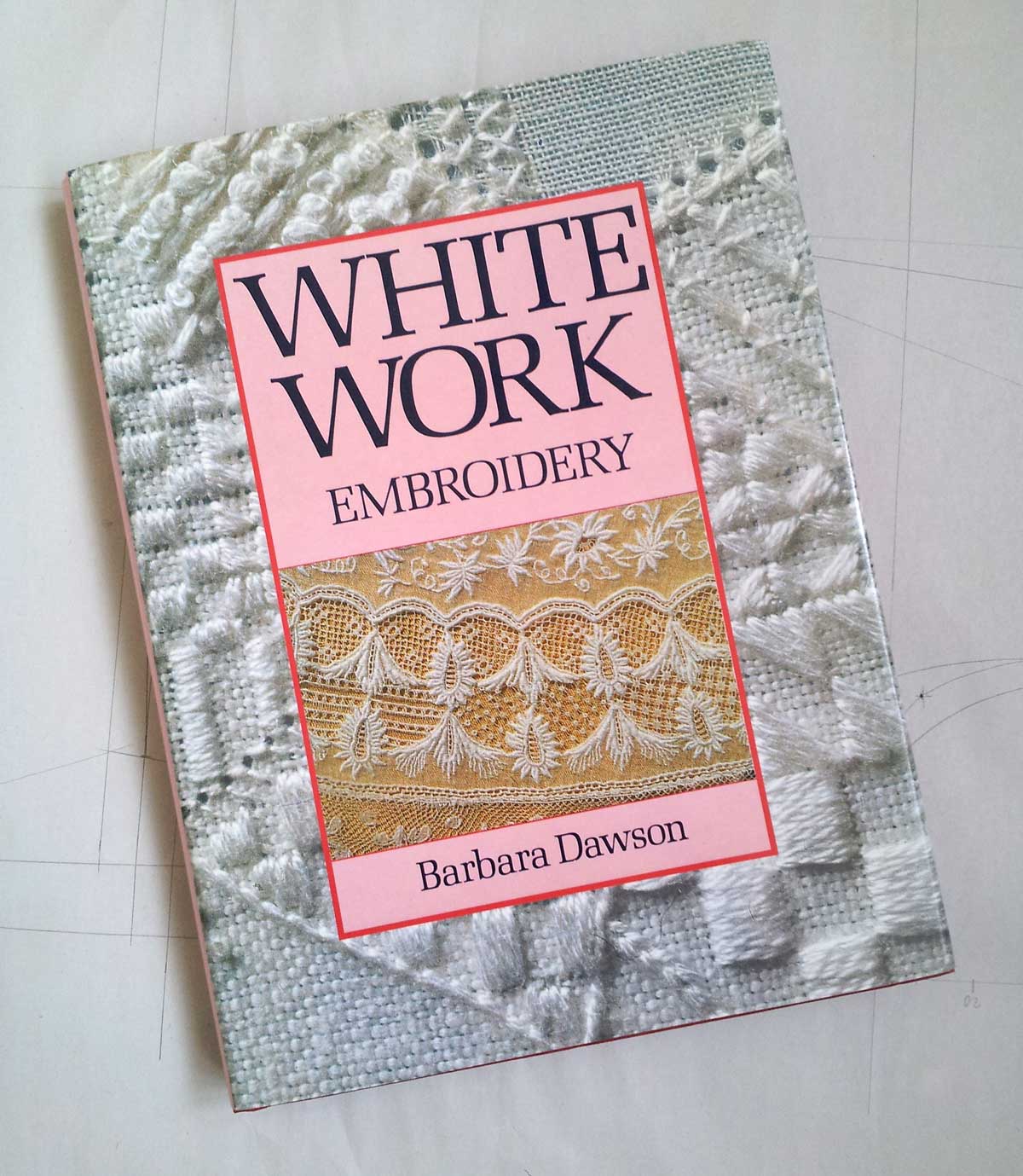
BDawson-Whitework
Elaine was having a clean out of her bookshelves and decided that her copy of “White Work Embroidery” by Barbara Dawson, was surplus to her needs. She asked me if I’d like it. Being familiar with the book, but not sure if I owned it already, I had to check my bookshelves. No, as it turned out, I didn’t have it. “Yes, Elaine, I’d love a copy, thank you!”

It arrived today. It is an excellent survey of whitework embroidery and lace. While some of the book looks dated, and it’s only in black and white, it is a great resource to have.

Thank you Elaine, for your generous gift to me!

February 5th, 2016 | Category: book reviews, whitework | Leave a comment

How not to court a designer

This is a little tale which may be instructive to thread companies who are wanting designers to use their threads. You see, sometimes, thread companies send samples to designers in an effort to entice them to use their threads. It’s one of the perks of the job. It happens rarely in these economic times, but occasionally it does happen.

“Un-named Thread Company” once sent me a skein of thread as a sample. Unfortunately they sent me the most revolting poo brown. Why they ever thought that would entice me, I have no idea.

Instead of encouraging me, it’s done exactly the opposite, because every time I see their threads I think of that awful skein. (I know that probably makes me really shallow, but there you have it.) It makes me wonder why they even bothered. Have they completely misunderstood how important appearance is to a designer? If they misunderstand that, what else are they going to misunderstand about designers?

So if you have a product that you want to send out as a sample, whatever industry you’re in, send your BEST example, not the one you simply have lying around in oversupply. If you want to encourage someone to use your product, put your best foot forward. Make them feel special, not like you’ve sent them your leftover dregs that no-one else wanted. Send them something that will be useful to them, as then they’re more likely to try it! It may mean you need to learn more about the person you’re sending it to, but surely that effort may pay off?

Maybe this has just been a chance to get something off my chest, but maybe this will be helpful advice for someone, or some thread company. I do hope so!

February 3rd, 2016 | Category: embroidery musings, hints and tips | 4 comments

Hardanger scissors

Premax 2.75in embroidery scissors

Premax 2.75in / 7cm embroidery scissors

This morning I was taking part in a discussion on the best scissors for Hardanger in a web group. I posted a link to my favourite scissors for Hardanger (Premax 2.75 inch / 7cm embroidery scissors), the ones I use, love, and therefore sell.

The conversation carried on, and then someone posted the following comment:
“The scissors shown above by Yvette Stanton are THE absolute BEST scissors for hardanger in the world. The are not pricey and therefore that is the reason so many shops won’t carry them. Not enough profit. Last that I knew they were imported into the States by Kreinik, they are made by Premax out of Italy and they are absolutely perfect. I wish that Jean Lea at the Attic would carry these.” SR

What a great recommendation! I love mine, and the people I have sold them to have consistently reported that they love theirs too.

I am happy to post to anywhere in the world. Anywhere that it is possible to post to, anyway!

While we’re talking about scissors for cutwork, here‘s a link to an article I wrote on what to look for when you’re purchasing scissors for Hardanger, merezhka, schwalm, Portuguese whitework, and any other sort of cutwork.

Because the Premax 2.75 inch / 7cm embroidery scissors are so fine, I have no problem with inserting them between the threads of the fabric, even when working with really fine fabrics such as 36 count linen, and cutting four threads in one go. Of course, they also work for cutting single threads as well.

They’re just so dainty and lovely. The people they do not work for are those with larger fingers, so if that’s you, I recommend these stork scissors which are slightly larger.

So if you’re finding that the scissors that you currently use for your embroidery just aren’t up to the job (do you get lots of whiskers when you’re cutting?), purchase your own Premax 2.75 inch / 7cm embroidery scissors today!

February 1st, 2016 | Category: favourite needlework items, hardanger, merezhka, Portuguese embroidery | Leave a comment

a brand new day

With the start of the new school year here in Australia, my little one (The Gymnast) goes off to high school today. She’s actually older than The Reader was when she went off to high school, but she just seems so young to be off and being that independent! I suppose it is a second child/youngest child thing – we see them as “younger”.

I went in to wake them both this morning, and The Reader was fast asleep and woke slowly. I went in to The Gymnast, and she said, “I’m already awake Mum! I just woke up!” I responded with, “It’s today!” (She’s been so excited!) “I know!!!!!!” and she jiggled and wriggled most excitedly!

There will be lots of new things for her today. Some of her primary school friends will be moving to the same school as her, but many are going elsewhere so it will be an opportunity to make new friends. She’s also looking forward to the wider range of school subjects.

The school has been extremely accommodating of her gymnastics training, but we’re not sure how it will all work out with a new school, although she’s been leaving early for years at her old school. There will be teething problems, but she’ll get there! We’re so impressed with what the school has been prepared to adjust for her, to help her fit both school and gymnastics in. They’re happy to help her to excel in her sporting career at the same time as her schooling. Year 7 is a year that many girls decide it is all too hard, and being a gymnast is too different to their friends, so many girls give it up at this age. We’ll just see how she goes.

The Reader moves into her senior years of high school today, so she’ll have new things too: all her own subject choices, in preparation for her post-school plans. She’s found out some of her teachers already and seems to be happy with most. She has a great group of friends that she’ll be so pleased to see again.

My beautiful daughters, I pray that this year is wonderful for you both. I pray that your friends are kind and loving, and that you are a kind and loving friend. I pray that your teachers inspire you and encourage you. I pray that you learn new things. I pray that you mature and deepen in your understanding of yourself, of God, of others and of the world around you. I pray that you will be happy, and when you’re not happy, that you’ll make it through those tough times, and come out stronger on the other side. I love you both.

January 28th, 2016 | Category: Uncategorized | 2 comments

Knitting is good for you… and needlework

"Nisser" designed by Tina Vejlø Andersen.

“Nisser” designed by Tina Vejlø Andersen, and knitted by me.


I read an article this morning on how knitting is good for you. Of course, I think we can extrapolate based on what is in the article, that needlework and any form of repetitive craft can be good for you too.

The article talks about how knitting can relax the mind and “induce a relaxed state like that associated with meditation and yoga”.

Years ago, before he died, I had the privilege of knowing a past Police Commissioner of our state. As you can imagine, being in charge of the police force for a whole state was a large, important and high-stress job. This man was a very kind man, (a grandfatherly-type figure to me and my siblings) who used to knit in his spare time. He’d do complicated fair-isle knitting. I imagine that the repetitive nature of the knitting helped him to destress and think about things other than work.

I used to find that my embroidery time was my thinking time. Unfortunately, these days my mind seems to get distracted by all sorts of things. I’d like to try to get back to that meditative state. I’d love to be able to slow down my mind again, when I’m stitching. I think that my increased use of the internet over these past years has given me a shorter attention span. I find that rather regretful. I think I will try to limit my internet time this year and try to retrain my brain a bit.

Of course, we all knew already that knitting, needlework and other crafts are good for you. No-one needs to tell us that. But it is always nice when “studies” confirm these things!

January 27th, 2016 | Category: embroidery musings, making stuff | One comment

Embroidery and textiles I visited – part 3

If you missed them, you can read parts 1 and 2.

Fotografiska, Stockholm, Sweden

On our holiday, The Husband and The Reader left about a week earlier than The Gymnast and I did, and went to Amsterdam. The Reader really enjoyed using a new camera to take lots and lots of beautiful black and white photographs. She’ll be doing Art in her senior years at school (about to start back this week!) and she really got into B/W photography, which is something she could focus on for her major work. To encourage her in this pursuit, we visited Fotografiska. It was SUCH a wonderful museum. It is a contemporary photographic museum, with changing exhibitions. Some of the ones that we saw could only be described as excellent. There was Martin Schoeller, with a large series of huge up close portraits of both famous and non-famous people. The other two that I loved were “Where the Children Sleep” (which I strangely can’t find reference to on the website, so I can’t say who the photographer was) and Thomas Wågström’s “On Earth”. While this is not a textiles museum, it’s definitely worth visiting if you love beautiful images. The bookshop is large and extensive!

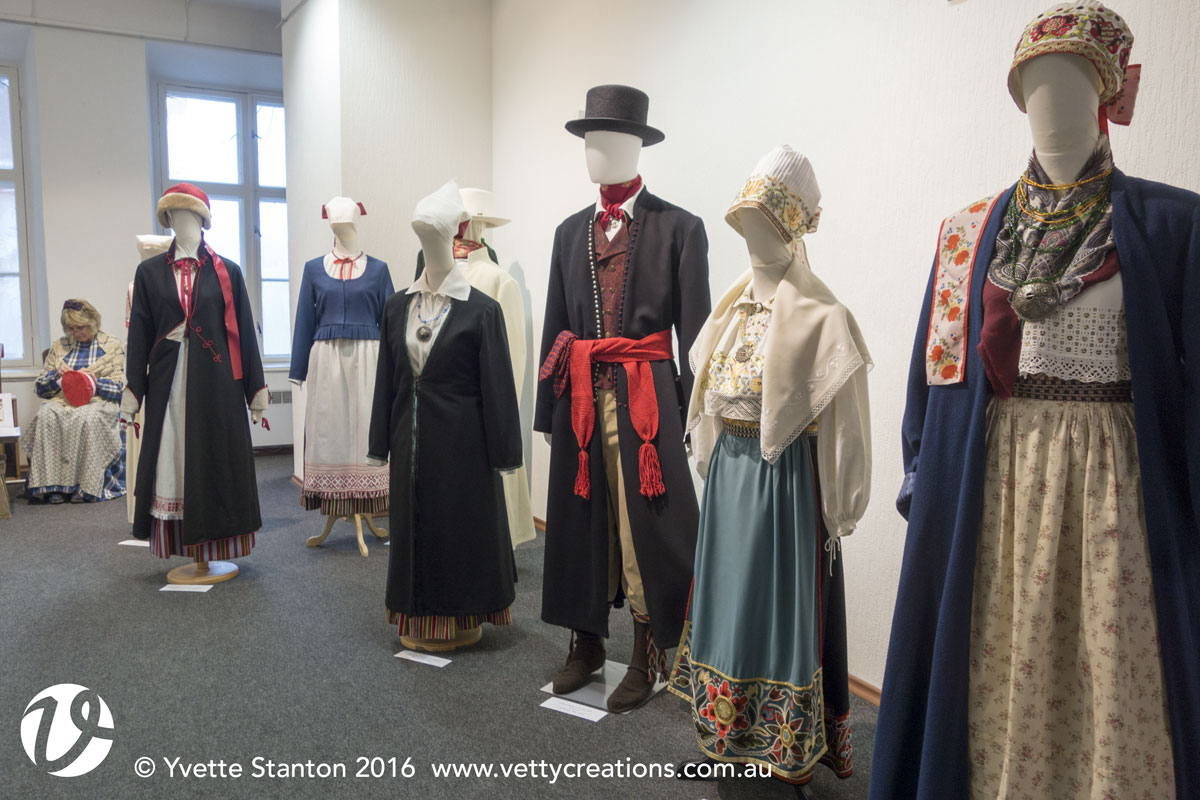
“Exploring the rich world of Estonian Folk Costume” exhibition

Estonian Handicraft House, Pikk 22, Tallinn

We have a friend with Estonian heritage, who visited relatives in Tallinn some years back. We loved seeing their photos, and made a note that we’d also like to visit Tallinn one day. Because Tallinn is just a day trip by ferry from Helsinki, we did it on this trip. We expected that we would just spend the day wandering through the old town, visiting museums (and staying out of the cold!). As it turned out, our attention was diverted by the many shops with hand crafts of many kinds, and we didn’t visit any museums at all!

We went into the Estonian Handicraft House, and I stumbled across a temporary exhibition in the back of the shop. It was an exhibition of folk costumes that have been made at a folk costume school at the Folk Culture Centre. The clothes were beautifully made, and featured lots of embroidery.
Estonian folk costumes

Estonian Folk Costume

Exhibition caption: “Halliste Naise Kostüüm. Luule Nurga 2004 Jäneda”
You can see on this woman’s costume, from Halliste in central Estonia, the drawn thread embroidery on the edges of the blouse, the wool embroidery on the skirt, and embroidery on linen on the towel/apron hanging from the waist. There is also embroidery on the woollen shawl, and on the bag.


The exhibition ran from 22nd December 2015 – 11th January 2016.

The handicraft centre itself sells fabrics, thread and other supplies for making folk costumes.Estonian folk costume supplies

Kansallismuseo – The National Museum of Finland, Helsinki, Finland

The National Museum of Finland had a display of folk costumes from various parts of Finland, some of which feature embroidery. It also had a badly captioned – no information that I could find! – display of beautiful needlework in display boards. I am still none the wiser about what types of embroidery I saw there, because there was so little information. It was most frustrating, however, it was definitely worth seeing!

Karelian woman's costume, Finland

Karelian woman. A notable feature of this costume is the embroidered “bib”. It looks a little like smocking, as it is worked on folds of fabric, but it doesn’t end up being elastic like smocking.


Needlework displays, National Museum of Finland

Needlework displays – no captions or explanatory information that I could find!


Traditional Finnish needlework

Traditional Finnish needlework. Lots of counted thread work, but not just cross stitch. Also pulled thread work.

This brings to an end my tour of the places that I saw embroidery and textiles on my trip. I saw so many new things and so many interesting things! There is so much to learn.

January 25th, 2016 | Category: Ethnic embroidery, historical embroidery, photography, travel | 2 comments

Embroidery and textiles I visited – part 2

If you missed part 1, you can read it here.

Greve Museum, Greve, Denmark

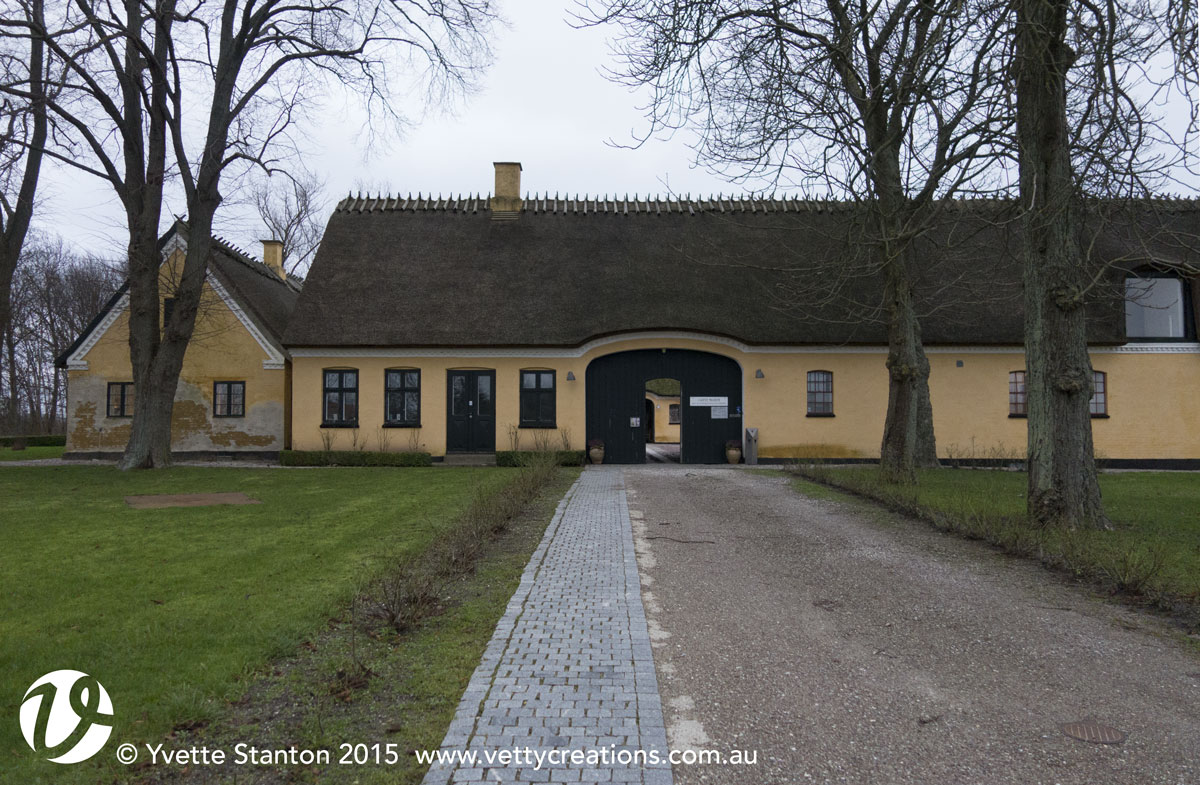
My next stop on my textiles tour was Greve Museum, 30km south of Copenhagen. It was a bitterly cold day with a biting wind the day I visited. I was deposited on a quiet, semi-rural road by the bus, to walk the remainder of the way to the museum. I think I was the coldest I had ever yet felt, later outdone by our time in Finland though!

Greve Museum

Winter is not the best time to see the beautiful rose garden…

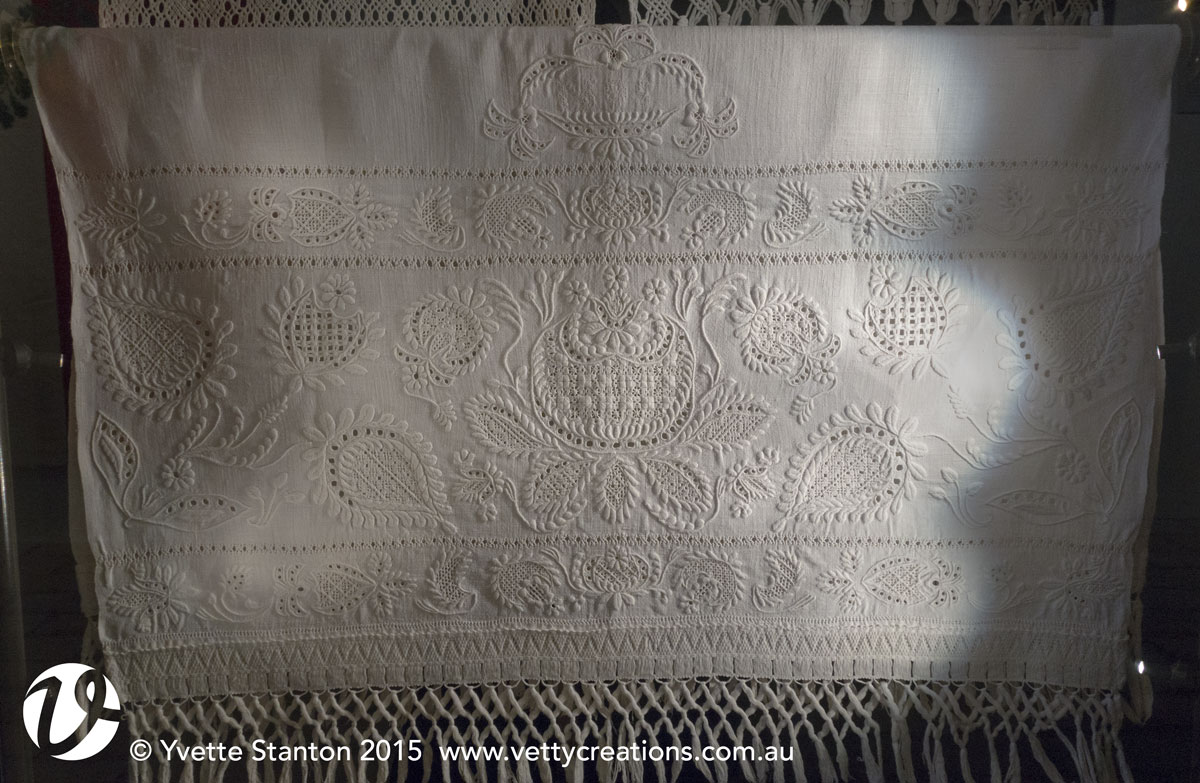
I was the only visitor to the museum that morning. There was a good display of hedebo embroidery, for which the Greve Museum is famous. There wasn’t as much as I was hoping to see, but that’s the way it was. Well prior to my visit, I had made enquiries about meeting with a curator, but no-one ever got back to me, and in my busyness, I didn’t get the chance to follow up. Fortunately there were English language explanations for the item labels, in a booklet, which meant I could understand what I was seeing, and learn more about the history of the embroidery.

Hedebo embroidery

Hedebo embroidery from the Greve Museum

I wandered through the rooms, drinking it all in. The museum does have a bookshop, with a good selection of books on hedebo embroidery. Lots of interesting reading matter!

Skansen, Stockholm, Sweden

On New Year’s Day we were in Stockholm. Not much is open on New Years Day, but we were pleased to find that Skansen museum was. Skansen is an open air museum, first set up over a hundred years ago. Its purpose is to show how life was in small villages and the like in times past. There are businesses, cottages, farms etc that you can go into and see demonstrations of how life was, from staff in period/folk costume.

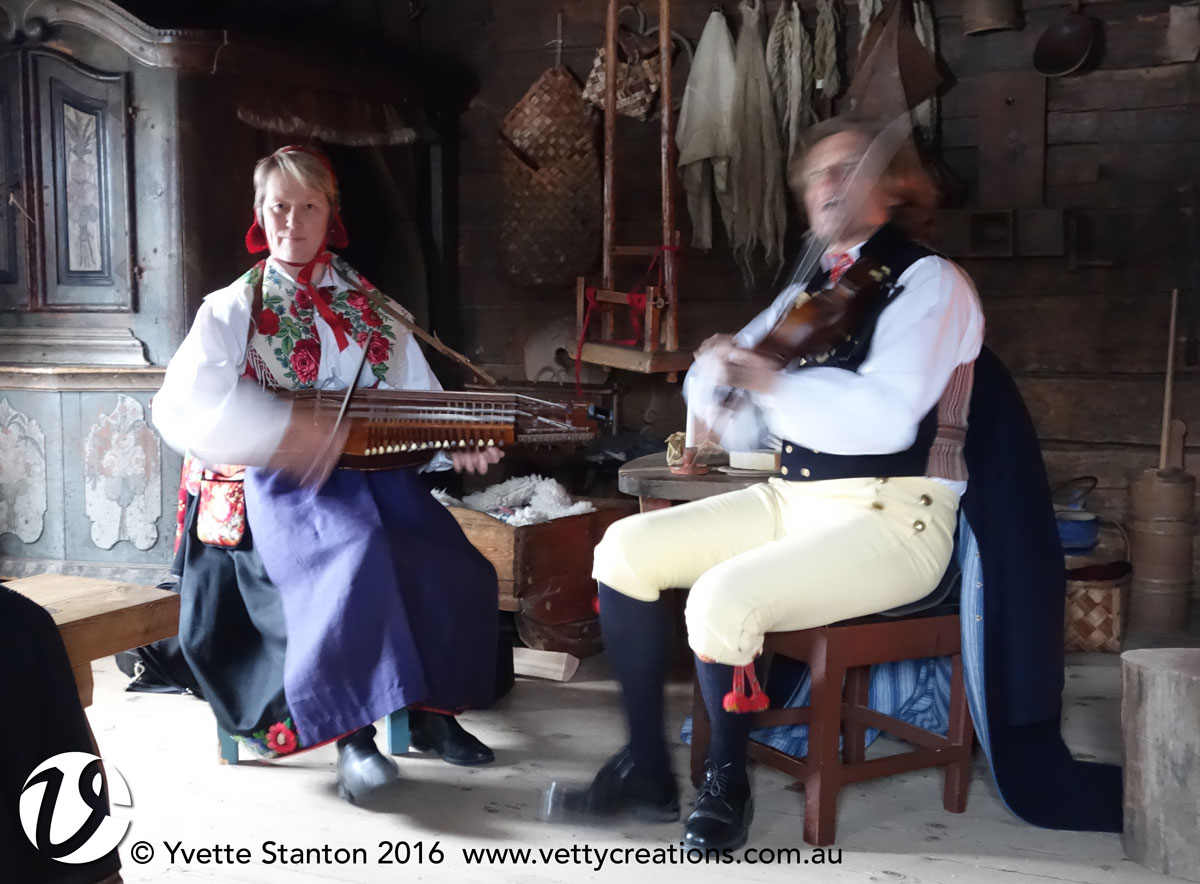
In one of the farm houses that we went into, there were two people playing their musical instruments. The man was playing a fiddle, and the lady was playing a key fiddle, an instrument which I had never seen before. They played the most gorgeous music together, which was quite enchanting. Also enchanting was the fact that the lady was wearing the most beautiful embroidered clothing. It was quite difficult to photograph them in the low light, but I did my best.
An impromptu concert, Skansen

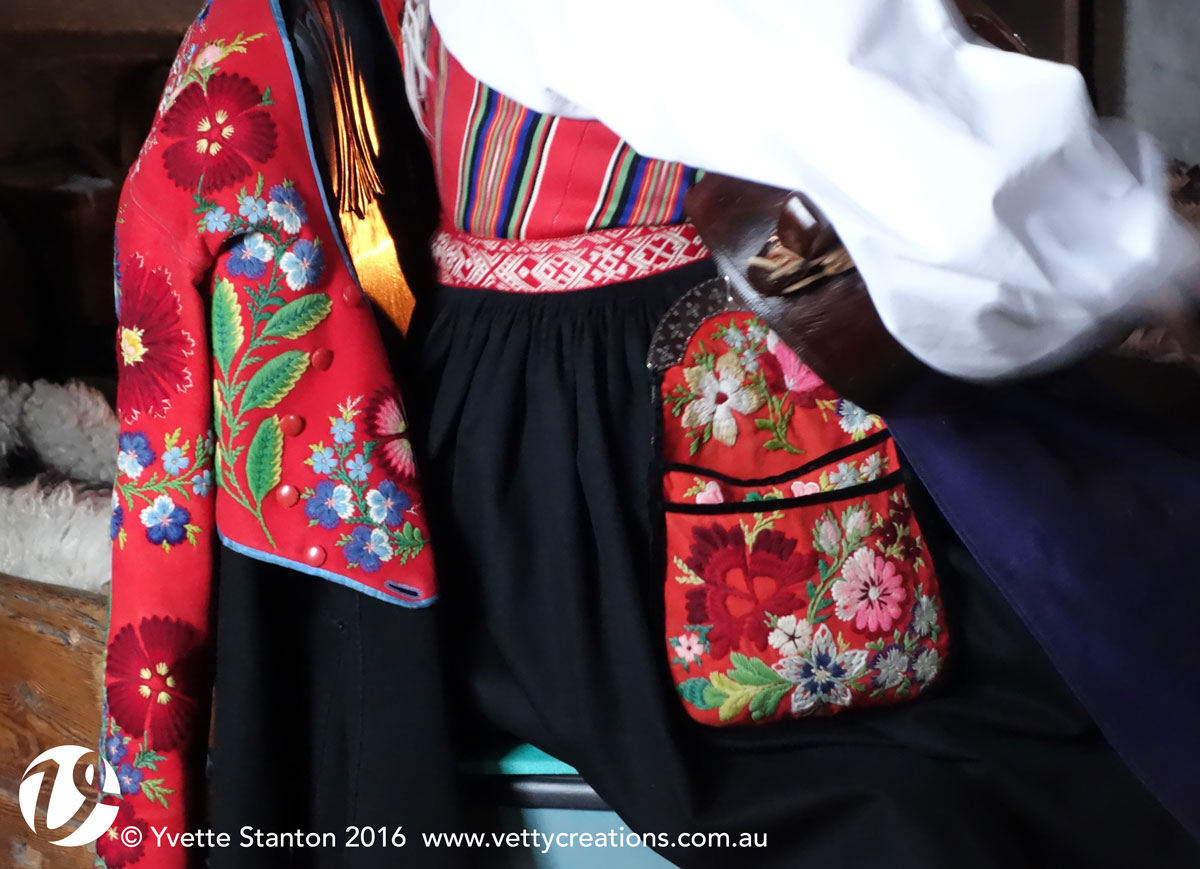
Beautiful embroidery on the clothing of a Skansen musician

Beautiful embroidery on the jacket and bag of a Skansen musician

Outside the entrance to Skansen is a museum shop which has a selection of interesting books and attractive, quality souvenirs. The Reader bought a Swedish cookbook here, which she has enjoyed reading (she’s been learning Swedish for some time).

Nordiska Museet – Nordic Museum, Stockholm, Sweden

Nordiska Museet had several collections that I wanted to see. They have a textiles collection, of which much is available to be seen, and a Swedish Folk Art gallery.

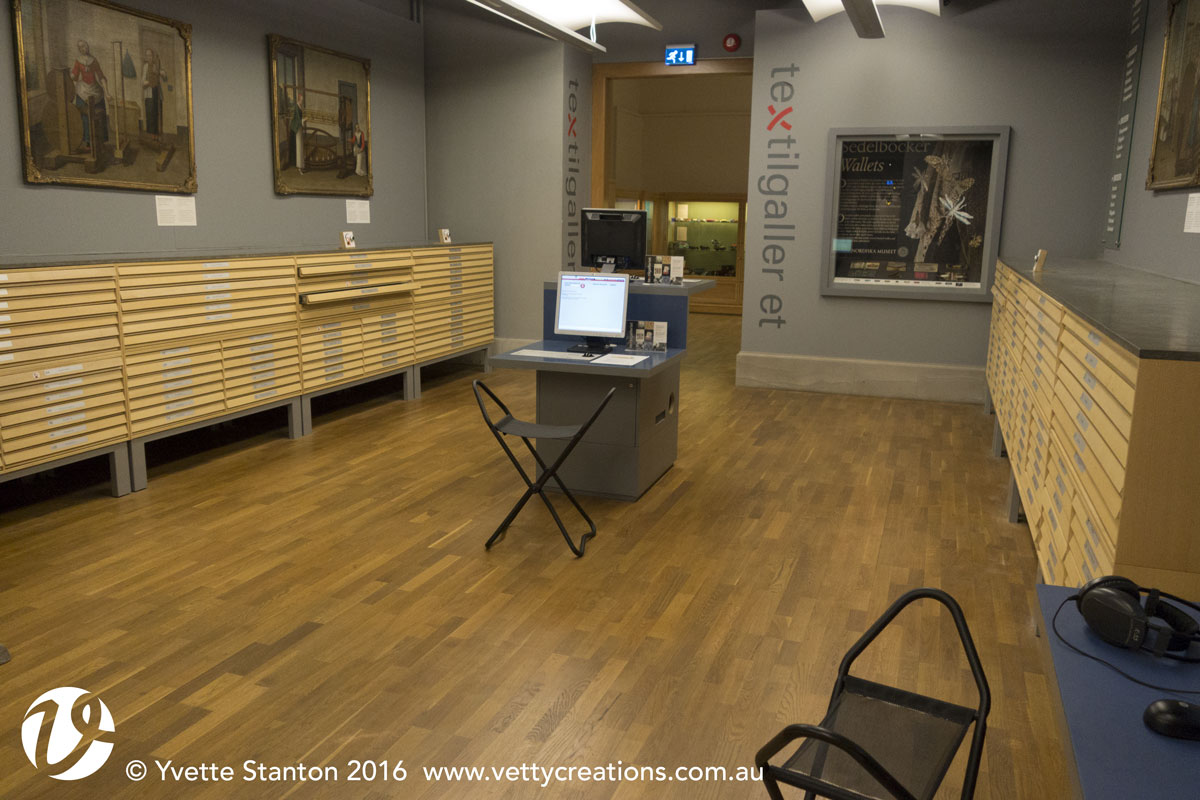
The textiles room at Nordiska Museet

The textiles room at Nordiska Museet


In the textiles room, there are banks of drawers which contain many articles of embroidery, lace, weaving, knitting and crochet. I saw some beautiful examples of whitework, coloured embroidery (yllebroderi), sprang, nalbinding, and weaving. Given my interest in whitework, I was expecting to see some examples of näversöm, the most well-known form of Swedish whitework. Surprisingly, there was only one example, and it wasn’t completely white as it also had pink as well.
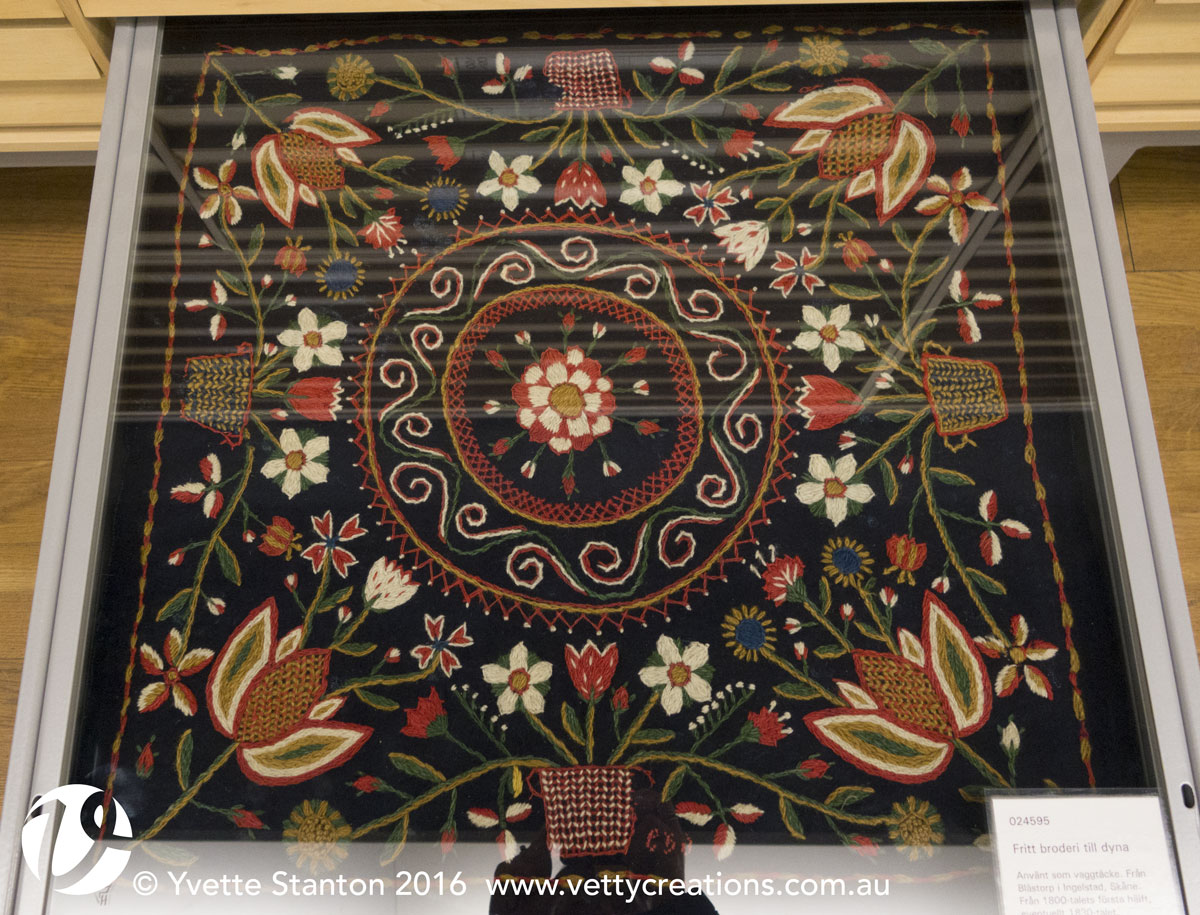
yllebroderi on a cushion

Yllebroderi on a cushion. The stripes are reflections of the drawers above.


The Folk Art exhibition had many beautiful embroideries, on clothing and household linens. They were bright, colourful and gorgeous. In another gallery, there were some examples of Saami tin embroidery.
Wrist muffs, from the collection of Nordiska Museet, Stockholm.

Embroidered wrist muffs, from the collection of Nordiska Museet, Stockholm.


While the museum does have a shop, it is within the museum itself and can only be accessed during a paid visit to the museum. It had a selection of books and souvenirs.

January 21st, 2016 | Category: exhibitions, historical embroidery, travel | 5 comments

Embroidery and textiles I visited – part 1

While on my holiday, I saw as much embroidery and textiles as I could reasonably squeeze in. There were a few places that I had to pass on seeing, such as folk costume museums that were not in the capitals, and therefore a long way away from where I was going to be. 🙁

So, where did I go?

Landesmuseum Zurich – Swiss National Museum, Zurich, Switzerland

According to their website, they have the largest reference collection of Swiss traditional costumes. Well, that may be so, but it was not evident in what was on display. There seemed to be very few traditional costumes on display. Maybe they’re all in storage somewhere. It was disappointing to go there in order to see this, and find that they weren’t on display, but there were other gems that surprised me that I enjoyed seeing, such as some very fine whitework, tapestries, and samplers.

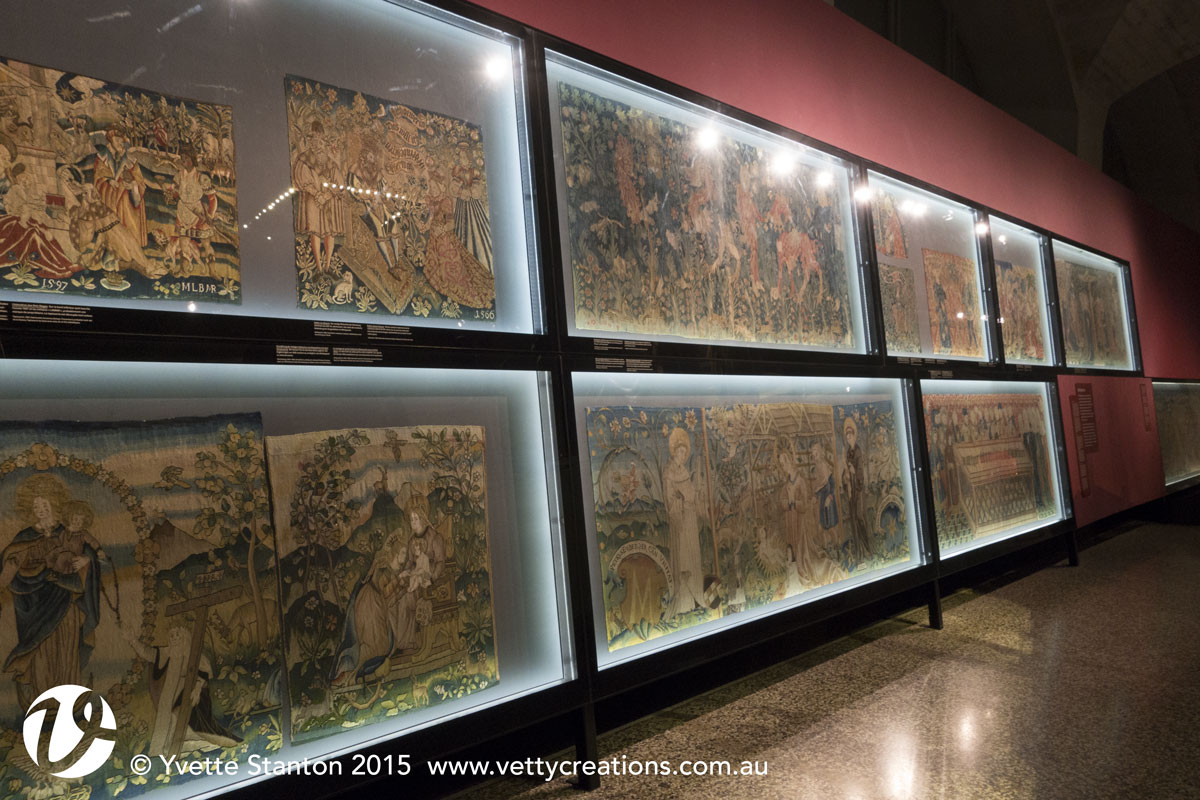
Zurich Landesmuseum

Tapestry display, Landesmuseum

Münster, Freiburg, Germany

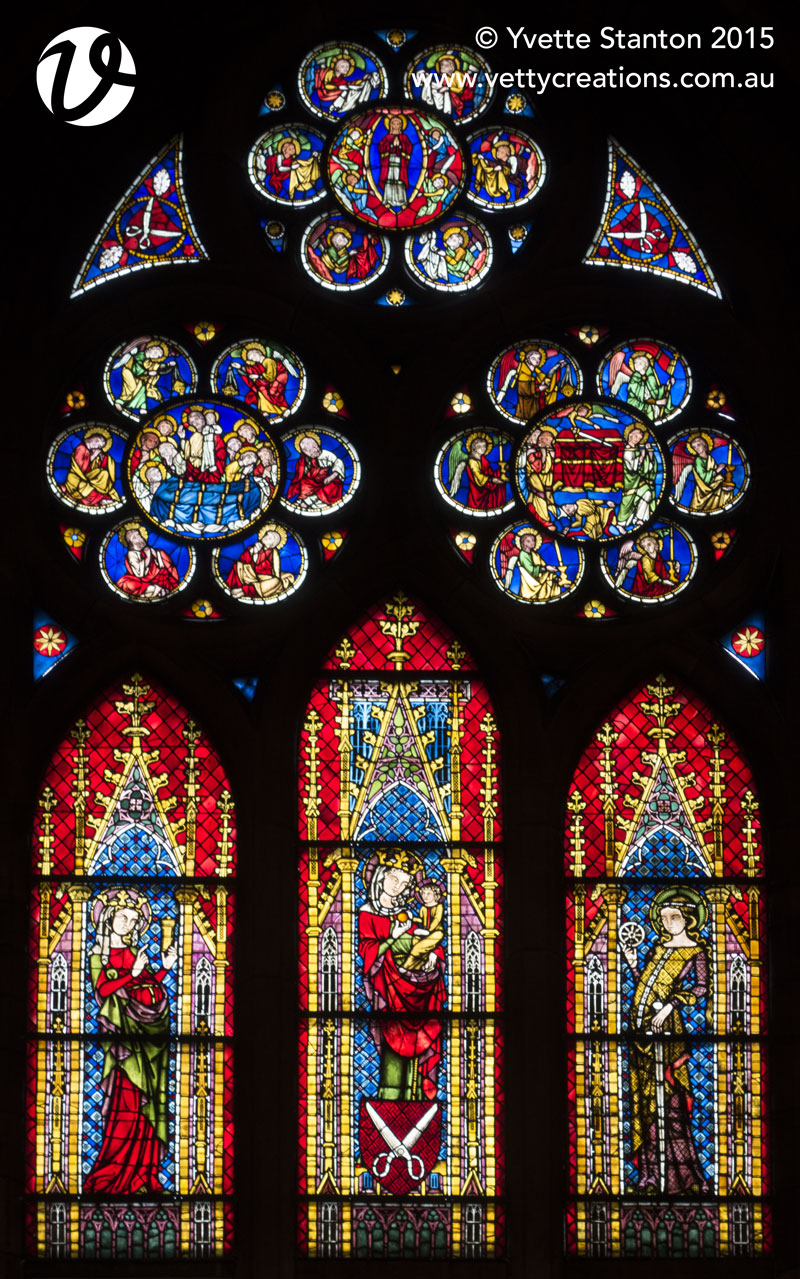
This wasn’t actually an embroidery stop, however in the huge Gothic cathedral in Freiburg, when the war was on, someone had the foresight to arrange for the stained-glass windows to be hidden and saved before they were bombed. Because of this, we can still enjoy their beauty. Some of the windows were funded by the different guilds of the city, including one by tailors. You can see this in some of the imagery that is used in the window, such as the big shears.
Munster-794

Musée de l’Impression sur Etoffes – Museum of Printed Textiles, Mulhouse, France

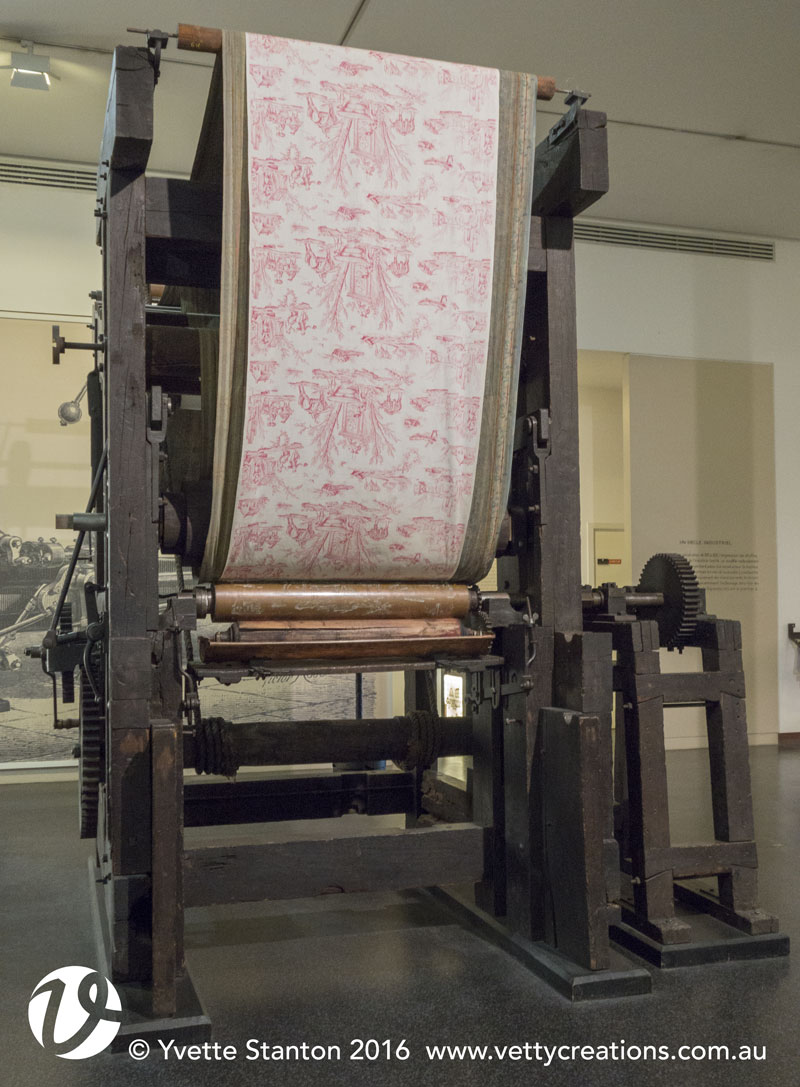
My main interest in Mulhouse is actually that it is the birthplace of DMC. There is a DMC museum, but unfortunately it is not open to the general public. However, the Museum of Printed Textiles is! This museum showed the history of printed textiles in the area, with displays of different classifications of textile decoration, and the different types of printing processes for fabric, including wood blocks right through to various machines on which the textiles were printed. There was also historical information about the people who were involved in the industry, including some of my relatives! The museum also houses temporary exhibitions, in addition to the permanent displays. I have quite an interest in museum shops, because often they stock interesting books on the subject matter of the museum, and sometimes they have high quality design souvenirs. This museum’s shop didn’t really take my fancy.

Press for printing toile fabric

Press for printing toile fabric.

Design Museum Danmark – Design Museum Denmark, Copenhagen, Denmark

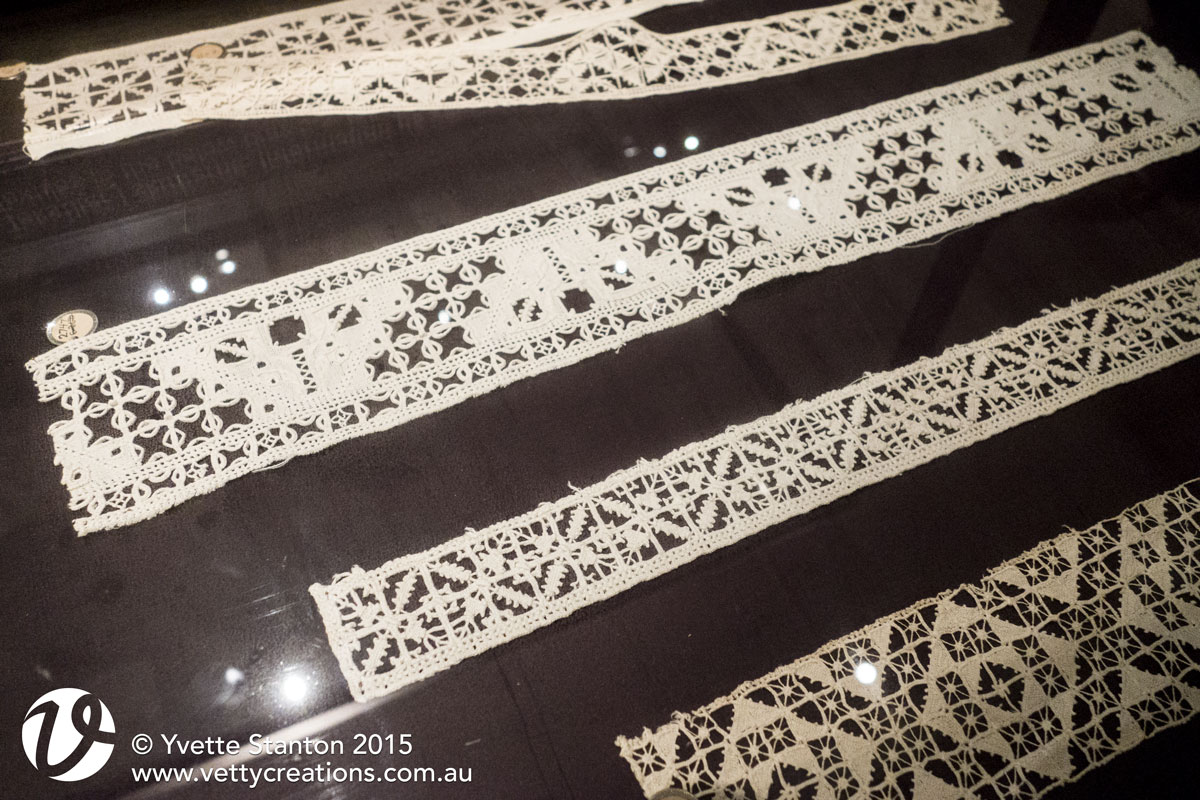
The Design Museum Denmark has an excellent textiles collection, and while much of it is in storage, they also have an excellent Fashion and Textile exhibit in the museum. We saw clothing – embroidered and non-embroidered, purses, household linen etc. But the part that I like best were the cabinets with drawers. The labelled drawers held flat embroideries within them, including lots of whitework. Denmark’s most famous whitework embroidery style would have to be hedebo, and they had a few examples of that on display. The museum’s shop is excellent, with many interesting books and quality design souvenirs. I was a little disappointed that there were no books on textiles or embroidery though.

reticella bands

reticella bands in one of the drawers in the Fashion and Textiles exhibit

January 20th, 2016 | Category: exhibitions, historical embroidery, travel, whitework | 4 comments

Danish souvenirs

When I was in Copenhagen, I visited a couple of fabric-y, embroidery-y type stores. I had done a bit of investigating beforehand and had marked a map with places I thought that I might like to visit. All textiley, design type shops.

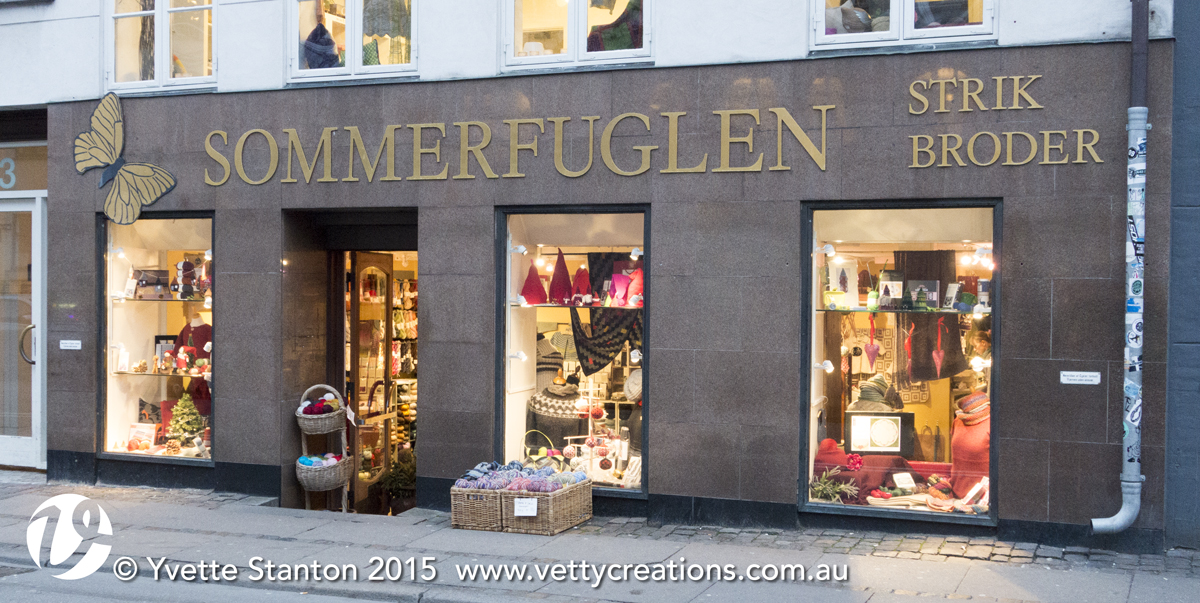
The first day we arrived in Copenhagen was a Sunday. Of course all the shops were shut, however, we found where Sommerfuglen (which means “butterfly” in Danish) was located, incidentally quite close to where we were staying. While I couldn’t go inside, I could see in their windows that it was a craft shop with a focus on knitting. Their window displays were very enticing, so I would definitely need to come back on another day when they were open!
Sommerfuglen, Copenhagen

I made my way back there another day, and enjoyed choosing myself a souvenir. They had a range of kits for making cute little knitted things. The kits were designed by Tina Vejlø Andersen, and there were a few that really caught my eye. The one that ended up coming home with me was Nisser, which translates as pixies/gnomes/elves. With the wool that was included in the kit, I thought I might be able to make myself a couple to hang on the Christmas tree as decorations.

Now that I’m home I’ve been knitting them in the evenings. First, though, I had to translate the instructions from Danish! Fortunately Google Language tools was very helpful in that regard. My expected two gnomes turned into six, and then I finished the red wool. I finished putting them all together last night, and then hand-felted them in the bathroom sink today. They’re very cute. I enjoyed making them, and I’ll enjoy having them on the tree this year.

"Nisser" designed by Tina Vejlø Andersen.

“Nisser” designed by Tina Vejlø Andersen. Each one is about 10cm tall.

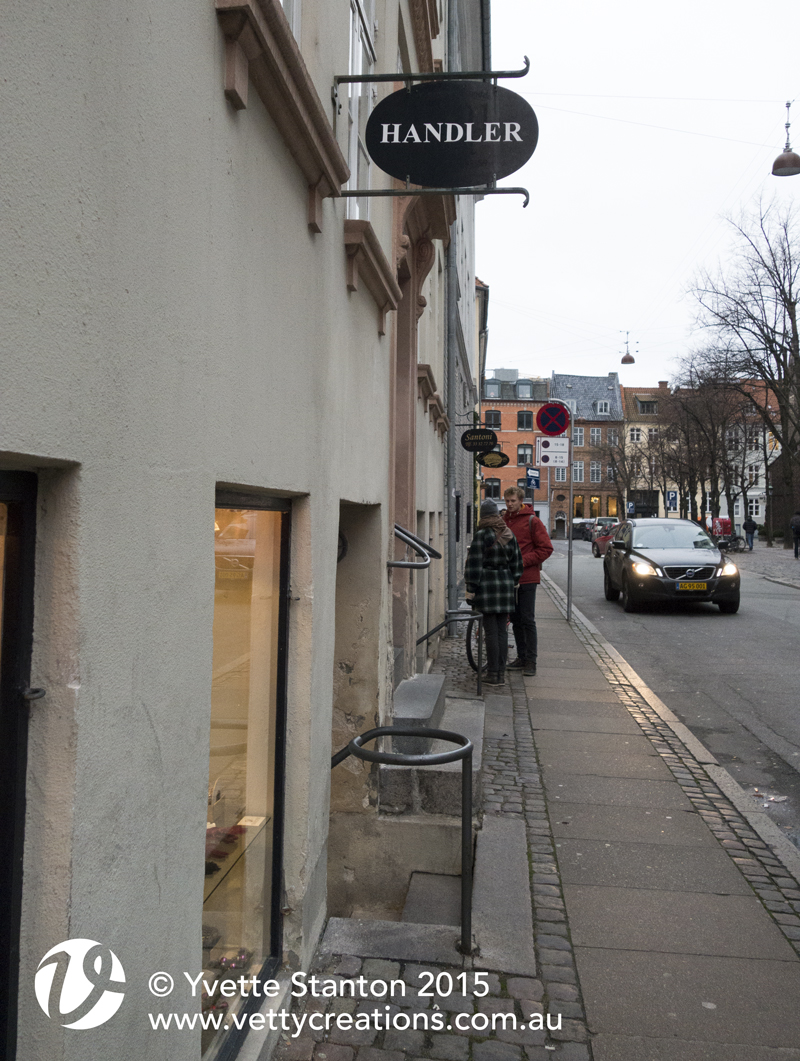
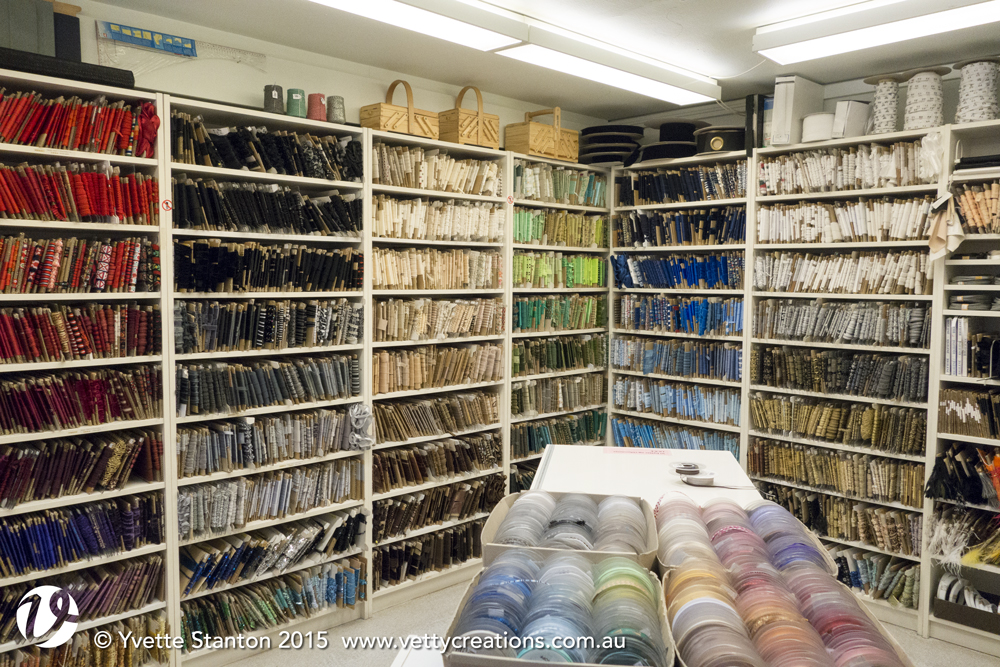
On another day, I had a few hours when my family was off elsewhere and had the key to the apartment, so I had to amuse myself. And amuse myself I did! I visited Handler, at Vingårdstræde 19. This is a shop that sells ribbons, braids, elastics, zips and other haberdashery. And they have a very very large range! There are two rooms and they’re both full of lots of fun stuff!
Handler, Copenhagen

I had spent nearly all the Danish kroner that I had with me earlier that day on books at Greve Museum, and had precisely 26 kroner left. That’s not much. 🙂

I selected a number of ribbons and purchased a metre of each, totalling exactly 26 kroner. Before I let the lady cut them, I asked her to check the coins I had, seeing I wanted to make sure I could pay for the ribbons she was about to cut me. She probably thought I was mad!
souvenir ribbons

I asked permission to photograph the shop. Some shop owners are really weird about that sort of thing, and do not like it at all. However, some are very happy for you to go ahead and post on your blog or Facebook (which let’s face it, that’s what you’re likely to do if you want to photograph in a shop! I can’t see all that many people blowing the photo up huge and sticking it on their wall to admire every day…) Anyway, this shop owner was very happy for me to take a photo, and as I went out the shop door, she shoved a business card in my hand to make sure I had ALL their details! That’s good business sense!

Handler, Copenhagen

The ribbon and braid room

I like the idea of sewing/embroidery/craft supplies as souvenirs. They’re the sorts of things that are generally small and light, depending on what you choose! And it’s a nice way of working vacation memories into something you make.

January 18th, 2016 | Category: making stuff, travel | 6 comments
« Newer Entries  
  Older Entries »
Yvette Stanton White Threads is the blog of Yvette Stanton, the author, designer, publisher behind Vetty Creations' quality needlework books and embroidery products.

New book now available!

Hardanger Filling Stitches
Hardanger Filling Stitches by Yvette Stanton. Order your copy today!
Find us on Facebook

Archived posts

Categories

  • book reviews (88)
  • Christmas ornament swap (13)
  • colour (6)
  • crazy hair (6)
  • customer embroidery (49)
  • designing (119)
  • dressmaking (26)
  • Early-Style Hardanger (91)
  • Elegant Hardanger Embroidery (42)
  • Elizabethan embroidery (25)
  • Embroidery classes (189)
  • embroidery musings (436)
  • embroidery stitches (206)
  • errata notices (11)
  • Ethnic embroidery (49)
  • exhibitions (111)
  • exploring the needlework internet (10)
  • favourite needlework items (69)
  • FlossTube (102)
  • Frisian whitework (73)
  • goldwork (12)
  • hardanger (232)
  • Hardanger Filling Stitches (72)
  • Hardanger Filling Stitches (1)
  • hints and tips (114)
  • historical embroidery (119)
  • how-to videos (34)
  • illustration (1)
  • Inspirations (25)
  • Introducing… (90)
  • left handed embroidery (78)
  • magazines (10)
  • making stuff (271)
  • merezhka (35)
  • mountmellick embroidery (176)
  • Mountmellick Embroidery: Inspired by Nature (60)
  • mountmellick supplies (49)
  • new products (104)
  • online book previews (7)
  • pattern darning (19)
  • pattern drafting (11)
  • photography (2)
  • Portuguese embroidery (166)
  • Portuguese Whitework: Bullion Embroidery from Guimarães (74)
  • public thanks (32)
  • published projects (27)
  • Punt 'e Nù (32)
  • Sardinian Knotted Embroidery (77)
  • sewing tips (9)
  • Smøyg (41)
  • Smøyg: Pattern Darning from Norway (39)
  • soapbox (6)
  • stitch along (44)
  • stitch dictionary (45)
  • teaching embroidery (192)
  • The Left-Handed Embroiderer's Companion (104)
  • The Right-Handed Embroiderer's Companion (70)
  • travel (172)
  • Ukrainian Drawn Thread Embroidery (35)
  • Uncategorized (169)
  • video previews (5)
  • White Threads Blog (91)
  • whitework (364)
  • writing books (306)