Vetty Creations header

Back to Vetty Creations website

White Threads

recording historical stitch methods

Following on from yesterday’s post about the right way to make stitches, if there are so many *right* ways to make the one stitch, how do I decide which methods to include in my books?
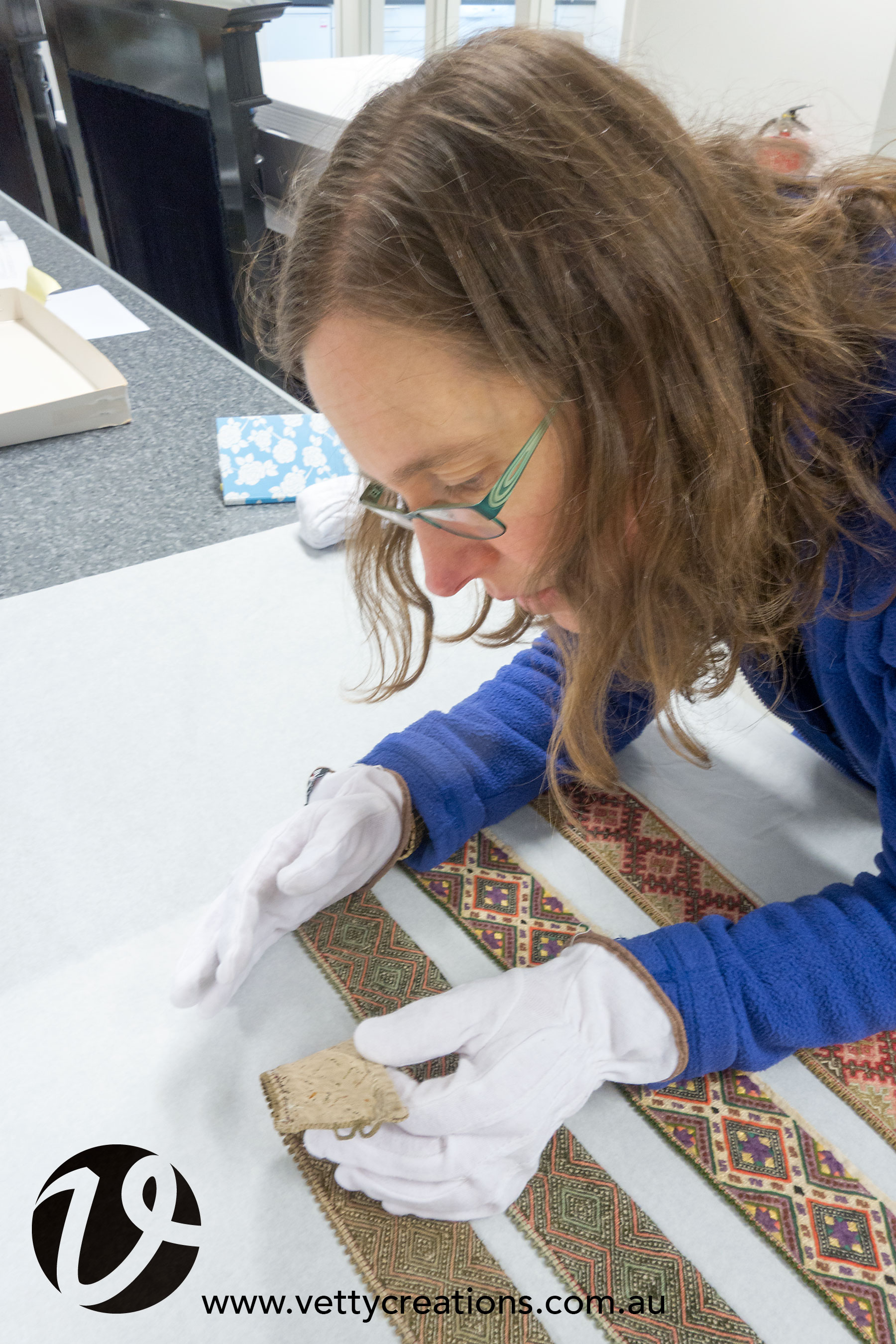
Studying old smøyg collars at a museum in Norway


I generally choose the method that was the most common across the historical examples that are still available to us to study. Sometimes I will include more than one, because more than one method seems important to the style, on the basis of the historical record. For example, it may be that two methods are used about as much as each other, when you survey the historical examples.

And then we have the outlier stitches: the stitches we only see turning up once or twice across all the studied examples of the style. I have to weigh up why those stitches are there on the piece. Was the stitch likely a mistake? Was the stitcher a rule breaker? Did the stitcher just like “doing their own thing”? Could it have been a common stitch but the other examples that included it have been lost to us? I can only assess these things on the basis of the examples we still have available to us. Usually, I cannot go back to the original stitchers and ask them, because they’re long gone.

If there is a method that I come across only once, but I feel it is important for the sake of historicity to record it, I will, but I will also note that it is not a common method. If I don’t know of anywhere the stitch is documented in a book, I will likely include it. I might choose to leave out a stitch method that I only find once on historical examples and it is well documented elsewhere.

The thing for me is that with each new book I do, I see myself more and more as an embroidery historian. I see my job as to record how these things were done, for the sake of preserving the method of doing them.

And so, there is a tension between “do I include the most common way?”, “do I include some ways?” and “do I include all the ways?” I want to be as accurate as possible, so as to make the cultural custodians of the embroidery proud of their embroidery and the way I have presented their embroidery to the wider world.

February 15th, 2019 | Category: embroidery musings, embroidery stitches, writing books | 2 comments

Making stitches the “right” way

When you look at stitches on old embroideries, you come to realise something: there is often more than one way to make a particular stitch.

For something as simple as cross stitch, there is more than one way to do it. Basically, you just need to make a cross.

You can do \ first, and / second.

You can do / first, and \ second.

You can do all the / / / / / / stitches first, and then come back along the line with the \ \ \ \ \ \ stitches.

You can do all the \ \ \ \ \ \ stitches first, and then come back along the line with the / / / / / / stitches.

You can have them crossing any which way. (The cross stitch police haven’t always existed! I have seen lovely old examples of cross stitch in museums that have the stitches crossing any way they please.)

All of these variations make cross stitch. All of them *can* be said to be right (though some people’s sensibilities do not like the any-which-way version). Sometimes one will be better in a certain situation than others.

And so it is when I am looking at old embroideries, trying to identify stitches. I may find a stitch that has a few variations on how it is made. Which one is correct? And how could I know?

I can’t really know for sure, but what I can do is look at the historical examples that exist and see which method was used the most. This might be the “correct” version. Or it might not.

Why might they differ?

In times past, most people were probably learning the stitches from someone else. That person would have learned it from someone else, and they would have from yet another person. Very few people would have had access to a stitch dictionary to teach them the “correct” way to do it (though even a stitch dictionary would have what I call *a* correct way, not necessarily *the* correct way). And so, like whispers that change as they pass along the line of people, the stitch method may have also changed a little as it passed along the line of people. And each time, the stitch method would have been passed on to the next person as the “correct” way.

This still happens today. Students take their teachers word as gospel (as fallible as we teachers are!). The number of times I have heard “[insert name of respected embroidery teacher] taught me to always do it like this”…! And for that student, the way they were taught becomes the “correct” way.

Personally, for me, the “best” way to do a stitch is the one that creates the “best” result. And even that is subjective. When I’m working Hardanger embroidery, I like my needlewoven bars to be very narrow. I like them to be this way because having studied many old historical pieces, I know that this is the way they were historically done. So the way I teach them is to make them nice and narrow.

Many of my students, however, have had previous teachers who have taught them to make them as wide as the kloster block they are adjacent to. And so, for them, this is the correct way.

So how do you know what is the “right” way, and which method you should use?

If you want to be true to an historical style, use the method that best emulates the historical appearance. If you are just “being creative” with little regard to any historical roots, then use the method that most suits the effect you are trying to achieve. The “right” way is the one that most suits your purpose.

February 14th, 2019 | Category: embroidery musings, embroidery stitches | 2 comments

The front and the back are important

When I research for a book, I spend a lot of time looking at the front and back of embroideries. I don’t look at the backs to see how neat or how messy they are (though many are surprisingly messy, and we could do well to realise that the neat-back-police haven’t always existed!). I look at both front and back because it helps me to learn how the stitches were made. If I only have the front, I have to make assumptions about how it was made.

Take long armed cross stitch and herringbone stitch, for example.

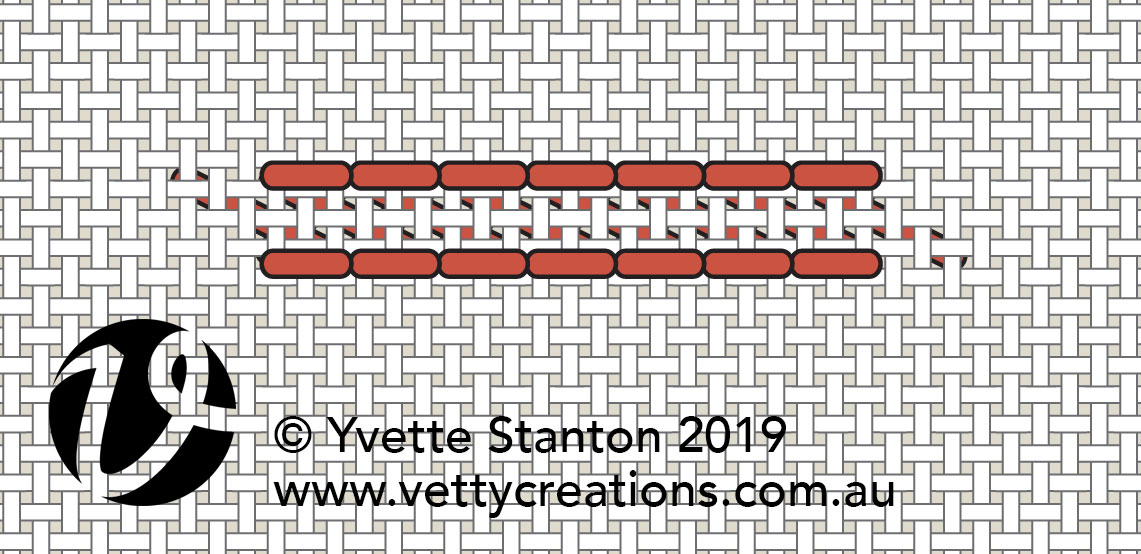
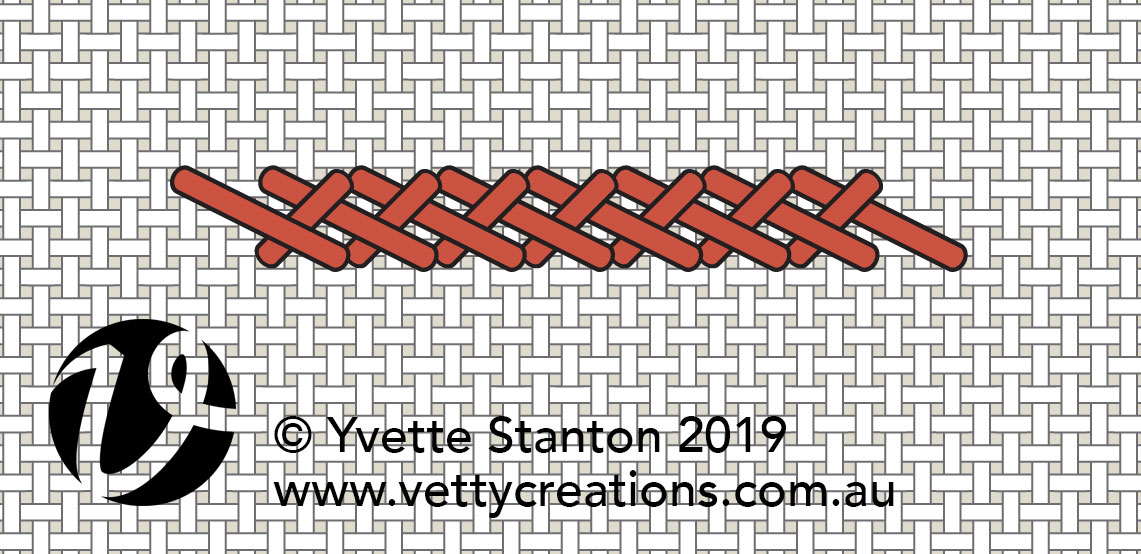
This is long armed cross stitch.
long armed cross stitch

This is herringbone stitch.
herringbone stitch

See the difference? No? That’s because there isn’t any difference on the front.

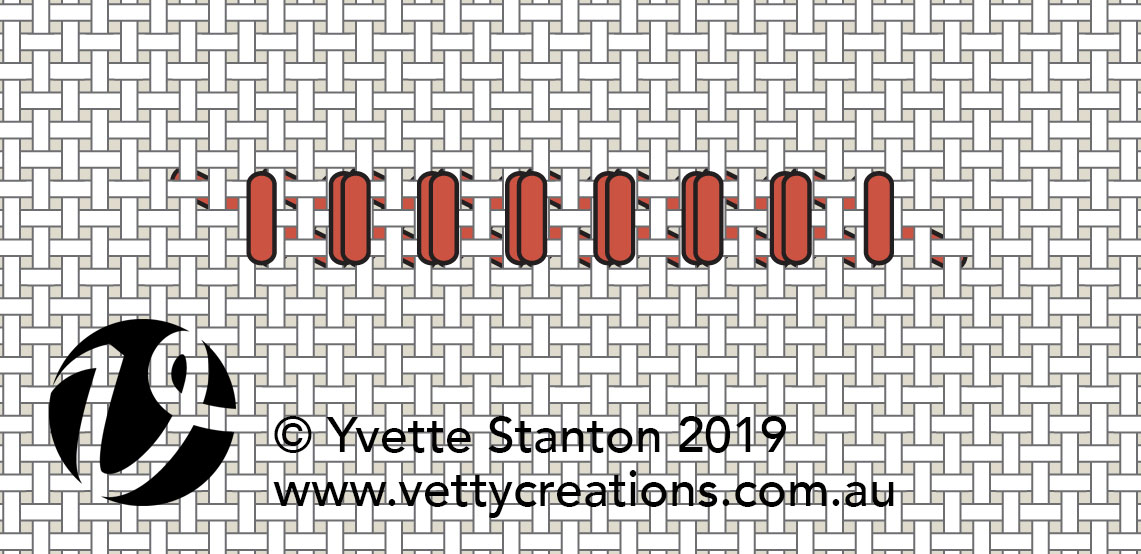
This is the back of long armed cross stitch.
the back of long armed cross stitch

This is the back of herringbone stitch.
the back of herringbone

See the difference now?

This is why it is important to look at both the front and the back of a stitch when trying to figure out how to recreate it.

February 12th, 2019 | Category: embroidery musings, embroidery stitches, writing books | 3 comments

Cuffs and collar from Early-Style Hardanger

Yesterday I received some photos from Cathinka in Norway, who has my book Early-Style Hardanger.

“Thank you for making Hardanger understandable to me. I started learning in March last year and now it sits in my head and I’m beginning to feel confident.”

This is a beautiful shirt that Cathinka has created using the collar and cuff design from Early-Style Hardanger. She’s obviously a highly accomplished stitcher if she only started learning this technique less than a year ago!
Cathinka acknowledges that while there are very specific ways of creating bunads (traditional folk dress) in Norway, she does not follow those rules. Instead she’s having fun using the styles and techniques to create beautiful clothes of her own imagining.

Thanks for sharing your beautiful creations with me, Cathinka. I hope this inspires others to make their own beautiful embroidered clothing to wear.

January 10th, 2019 | Category: dressmaking, Early-Style Hardanger, hardanger, whitework | 3 comments

New Sotema linen

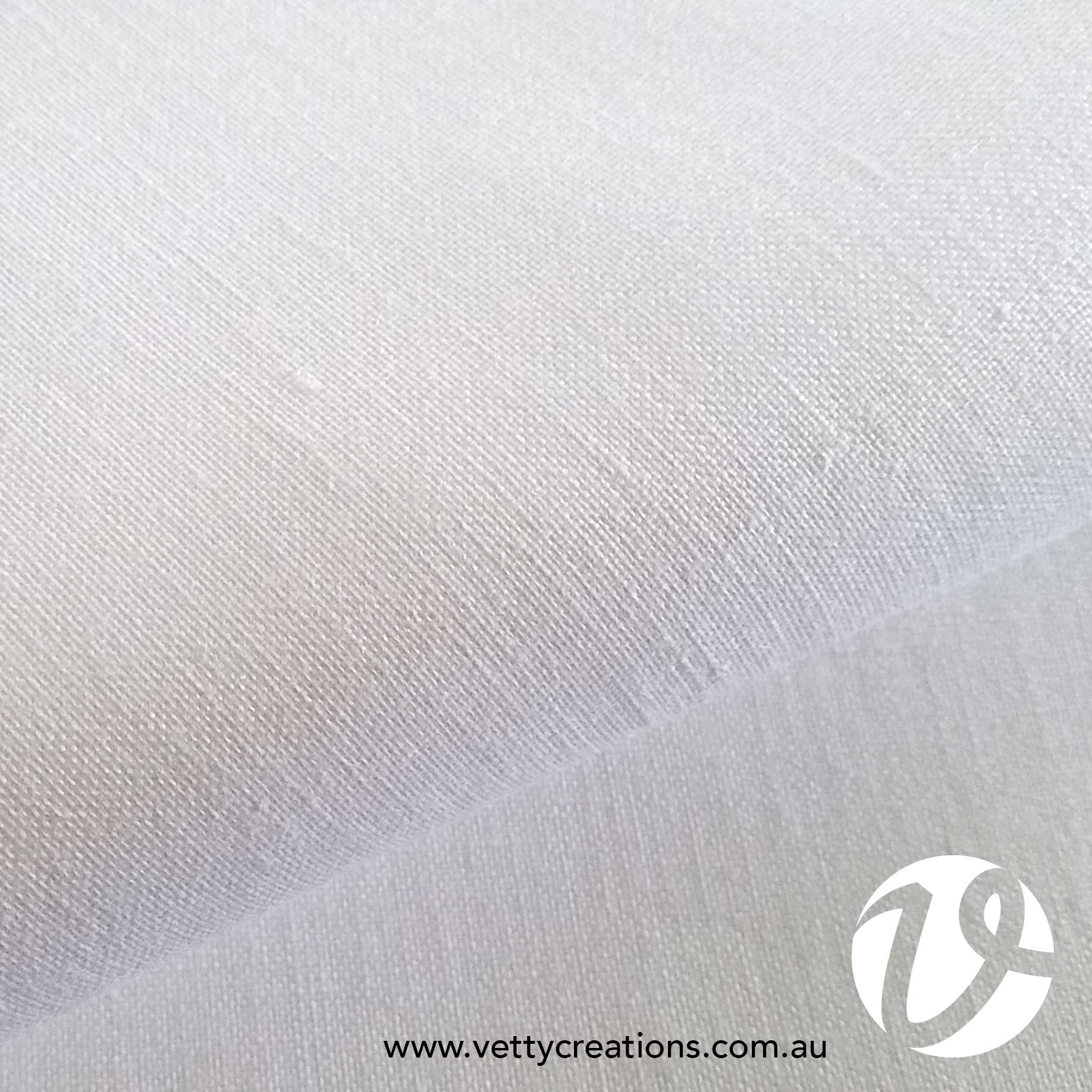
Sotema 20L linen

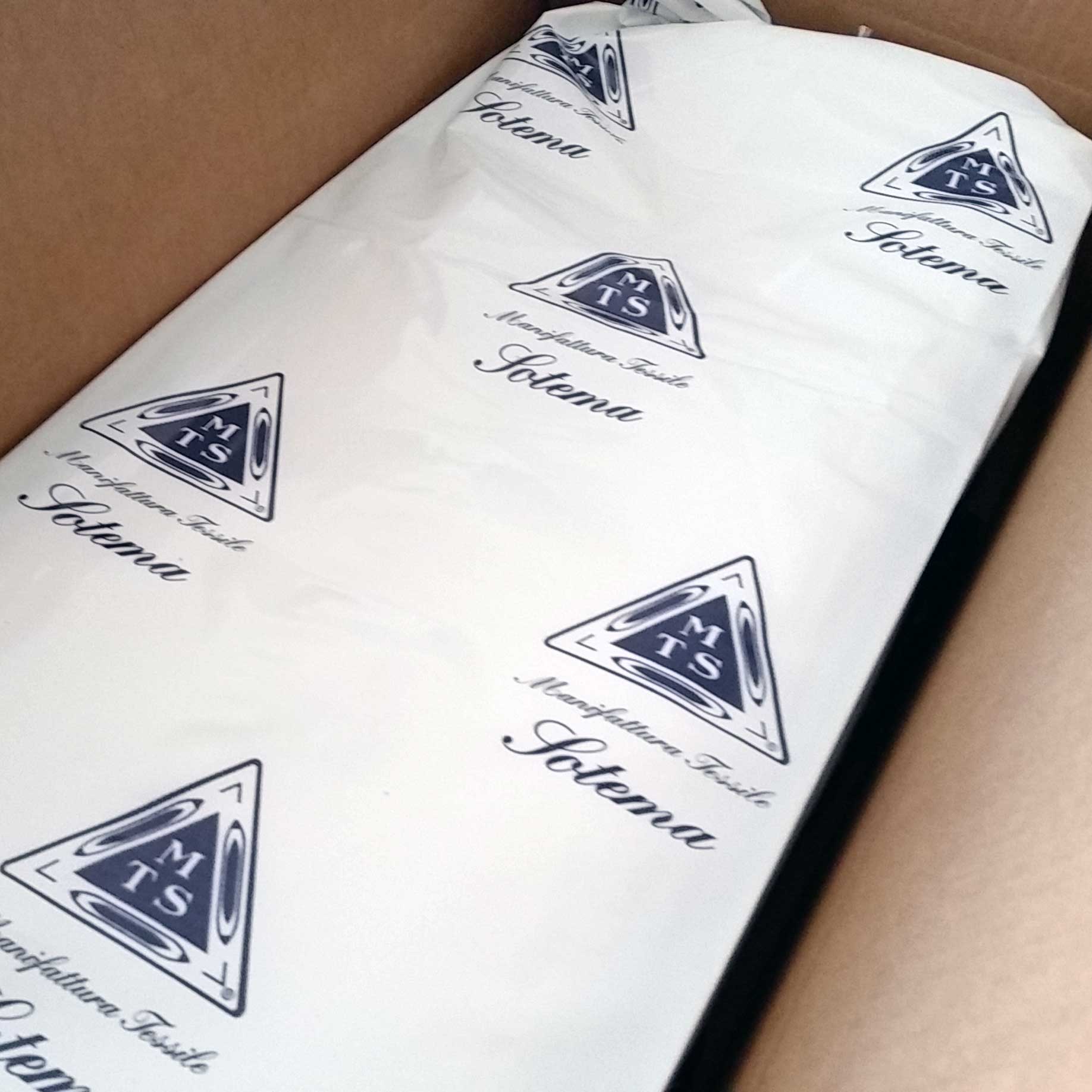
Opening the box.


Today we welcome a new product to the Vetty Creations range: Sotema 20L linen. Sotema 20L linen is a lovely, high quality, Italian, 38 count linen. It is the fabric that we are now recommending and stocking for Portuguese whitework, or any other embroidery where a 38 count linen is recommended.
Sotema 20L linen

Sotema 20L linen, 38 count, 180cm wide, optical white.

We used to stock Graziano Pronto Ricamo, but after many attempts to restock this fabric, I realised that it just wasn’t going to happen. Sotema 20L linen is a perfect substitute.

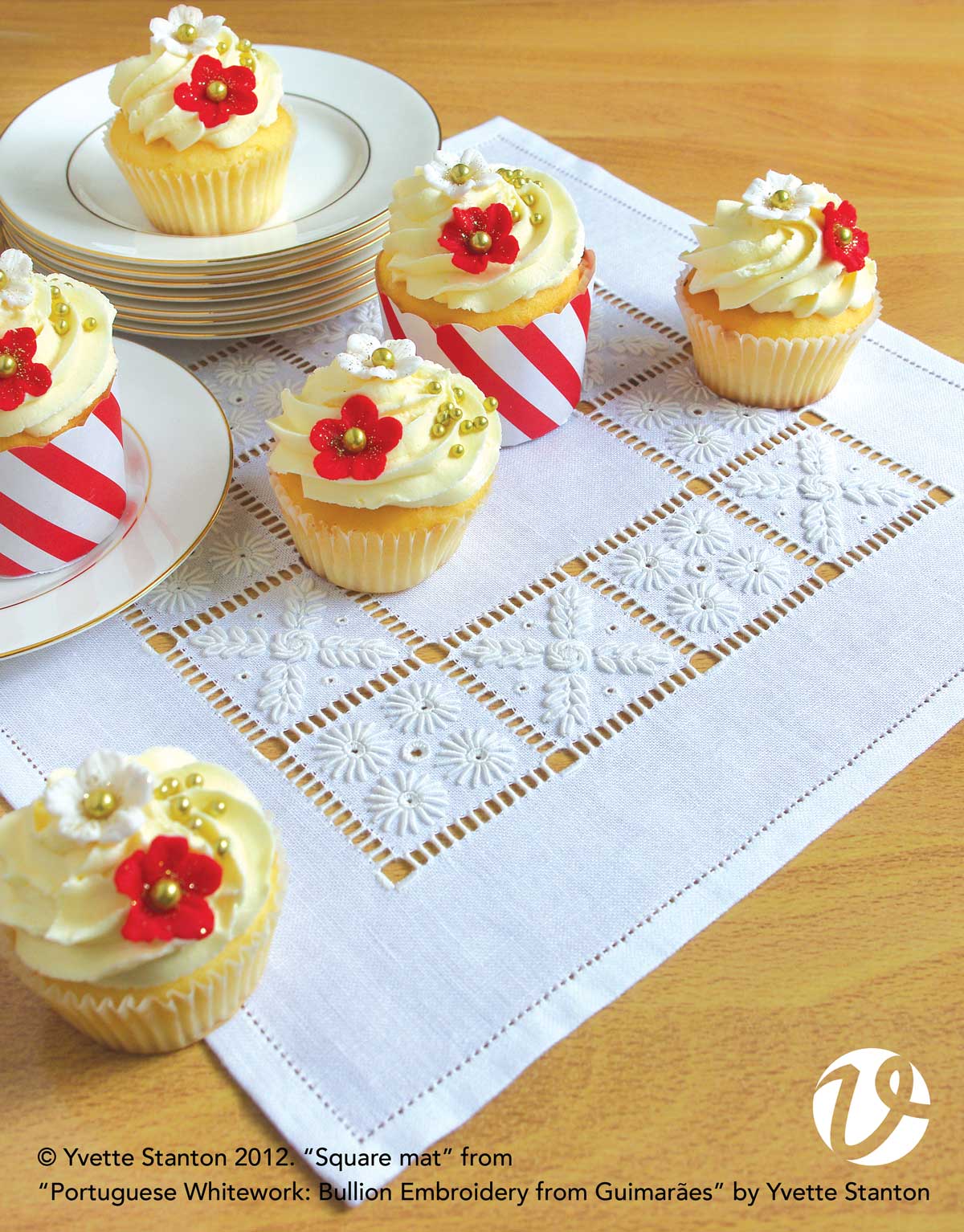
Portuguese Whitework square mat by Yvette Stanton

Portuguese Whitework square mat by Yvette Stanton

I actually used Sotema linen for the Square Mat project in Portuguese Whitework: Bullion Embroidery from Guimarães and it was a lovely linen to work with. I couldn’t get it here in Australia at the time, hence my decision to stock the Graziano fabric. Now, times have changed and I can no longer get the Graziano, but Sotema is available to me.

The two fabrics are both lovely, and I’m very happy to now be stocking Sotema 20L linen. It comes in at a lower price point than the Graziano did, which is not a reflection on its quality, rather just the import process.

Sotema 20L linen is 180cm wide, 38 count. We are stocking the Optical White colour, which is a lovely bright white. You can purchase Sotema 20L linen at the Vetty Creations website.

November 27th, 2018 | Category: Introducing..., new products, Portuguese embroidery, Portuguese Whitework: Bullion Embroidery from Guimarães, whitework | Leave a comment

My class at EGA 2019 Seminar

I don’t think I’ve mentioned here yet that I’ll be teaching at the EGA (Embroiderers Guild of America) 2019 Seminar. This is more than a little bit exciting for me, as it’s the first time I’ll be teaching in the USA! The seminar will be held from October 30 to November 3, 2019 in St. Louis, Missouri.

The class I’ll be teaching is a Whitework Cube Sampler. This project came about because I was thinking of making an embroidered cube. I was thinking that 6 different Portuguese whitework designs (one for each face) would make an interesting project, but my husband suggested putting different styles of embroidery on the faces. What a great idea! The three different techniques we will learn are Holsaum (Norway), Punt ‘e nù (Sardinia), Guimarães embroidery (Portugal). There will be two faces of each style, each with a different design. It’s a fourth day class, so we’ll have one day for each style, and then the fourth day will be continuing with any or all of the embroideries, and a demo of the construction of the cube.

Whitework cube sampler with Yvette Stanton EGA 2019

Currently enrolments are only open to EGA members. If you’re not a member, one presumes you could become one and enrol now. Otherwise, non-member enrolments will open on 16th March 2019.

Whitework cube sampler with Yvette Stanton EGA 2019

To see the full listing of classes, with details of my class, go to the classes listing, and either scroll down to class 407, or use the search feature near the top of the page to choose “4 day classes” from the drop down menu and type in “Stanton” in the search field. To sign up for the class, go to the EGA website.

If you have any questions about the class, please just ask. I look forward to meeting so many new people at the EGA 2019 Seminar!

October 10th, 2018 | Category: Embroidery classes, Portuguese embroidery, Punt 'e Nù, Sardinian Knotted Embroidery, teaching embroidery, travel, whitework | 3 comments

Mary Corbet has reviewed Smøyg

A book review from Mary is like a generous gift. We all know she writes such wonderful book reviews, and I think we really do trust her recommendations. So when Mary reviews your latest book, it quite simply changes your day in a magnificent way!

Two days ago I woke to a flurry of orders in my inbox, and then I realised why: Mary Corbet of Needle’nThread had reviewed my book Smøyg: Pattern Darning from Norway.

So if you’re wanting a reliable, and non-biased opinion on my latest book, hop on over to Needle’nThread and see what Mary has to say about it.

You can order your copy from me here, or support your local needlework store by asking them to get it in for you. Supporting small business is always appreciated by small business owners.

smøyg project supplies packsAnd when you’ve had a good look through come back to me at Vetty Creations and order the supplies pack for the project/s you’ve decided to make. Of particular note is that the Misti bookmark supplies pack comes in a few extra colours not shown in the book.

Thank you again, Mary, for your generous review!

September 15th, 2018 | Category: book reviews, pattern darning, Smøyg, Smøyg: Pattern Darning from Norway | 2 comments

How to pronounce smøyg

Smøyg - Pattern Darning from Norway by Yvette Stanton
A question I’ve had a lot in the last few months since publishing my book Smøyg: Pattern Darning from Norway is, “how do you pronounce smøyg?”

While that’s really difficult to explain in words and without you actually hearing me, I’ll have a go!

First, sm as in small. The ø sound is like the ir in bird. Then you have the y sound as well, which is like the ee in see. Finally, g as in go. So it’s sort of sm-ir-ee-g.

With it spelled out like that, chances are you’ll pronounce it slowly, however it is quite fast. And of course, as we probably all pronounce those sounds differently around the world, we’ll all have our own interesting spin on it…

September 14th, 2018 | Category: Ethnic embroidery, hints and tips, pattern darning, Smøyg, Smøyg: Pattern Darning from Norway | 2 comments

French translation of Portuguese Whitework book

La Broderie Blanche PortugaiseWhile I was away in New Zealand, a parcel turned up on my doorstep. It was a little unexpected, though not totally. It contained copies of my first foreign language publication: “La Broderie Blanche Portugaise”.

Portuguese Whitework: Bullion Embroidery from Guimarães by Yvette Stanton
When I was in Paris at the beginning of the year, I met with the general manager of Les Editions de Saxe, a large French craft book publisher. (You probably thought the Paris trip was a bit of a junket, but there was actually a business purpose to it!) They were interested in doing some French language editions of some of my books. On my return home, we made an agreement for the first one – Portuguese Whitework: Bullion Embroidery from Guimarães, under the new title of “La Broderie Blanche Portugaise”.

Some time ago I sent them all the projects from the book, so that they could rephotograph them according to their house style. Let me tell you, it was pretty nerve-wracking sending my precious embroideries off to the other side of the world. Whenever I travel with any of my embroideries, they go in my cabin luggage, and never in my checked bags, such is my desire not to lose them! They have since been returned safely!

Obviously they beavered away in France much quicker than I expected, because I certainly wasn’t expecting the book to already be done. But then, I suppose that while it takes me two years to write a book, a team of people translating and repackaging an existing book in a new format doesn’t take nearly so long!

tea towel project

Beautiful new photography of the projects, though I can’t say that I was thrilled about food being placed on my embroidery!

stitch instructions

Still the same step-by-step stitch instructions you love in my English language books

“La Broderie Blanche Portugaise” by Yvette Stanton is now available in French, from Editions de Saxe and in all the places you can normally purchase your favourite French embroidery books.

If you have a particular request for any of my books to be translated into French, please let the editorial team at Editions de Saxe know. There are plans for them to do more.

If you’re French or French-speaking, please enjoy my first book in your mother tongue. And if you have French friends who would be interested, please let them know!

August 7th, 2018 | Category: Portuguese embroidery, Portuguese Whitework: Bullion Embroidery from Guimarães, published projects, whitework | 7 comments

Book review – Smøyg: Pattern Darning From Norway

This morning my daughter and I head to New Zealand for the ANZEG National Conference. I’ll be teaching two classes and giving a lecture. Vetty Creations will have a stand in the merchants mall. I’ll have all the projects from “Smøyg: Pattern Darning from Norway” on display, as well as a selection of my products for sale.

Smøyg Pattern Darning from Norway has arrived!While waiting in the airport for our flight I’ve had the chance to read the first review of my new book, with the review written by Jessica Grimm, a very talented, Royal School of Needlework trained embroiderer and embroidery designer.

You can read her review at her blog. Thanks Jessica, for the wonderful things you say about “Smøyg: Pattern Darning from Norway”! I know you’re already addicted because you keep making new things from and inspired by the book!

July 11th, 2018 | Category: book reviews, Ethnic embroidery, Smøyg, Smøyg: Pattern Darning from Norway | 3 comments
« Newer Entries  
  Older Entries »
Yvette Stanton White Threads is the blog of Yvette Stanton, the author, designer, publisher behind Vetty Creations' quality needlework books and embroidery products.

New book now available!

Hardanger Filling Stitches
Hardanger Filling Stitches by Yvette Stanton. Order your copy today!
Find us on Facebook

Archived posts

Categories

  • book reviews (88)
  • Christmas ornament swap (13)
  • colour (6)
  • crazy hair (6)
  • customer embroidery (49)
  • designing (119)
  • dressmaking (26)
  • Early-Style Hardanger (91)
  • Elegant Hardanger Embroidery (42)
  • Elizabethan embroidery (25)
  • Embroidery classes (189)
  • embroidery musings (436)
  • embroidery stitches (206)
  • errata notices (11)
  • Ethnic embroidery (49)
  • exhibitions (111)
  • exploring the needlework internet (10)
  • favourite needlework items (69)
  • FlossTube (102)
  • Frisian whitework (73)
  • goldwork (12)
  • hardanger (232)
  • Hardanger Filling Stitches (72)
  • Hardanger Filling Stitches (1)
  • hints and tips (114)
  • historical embroidery (119)
  • how-to videos (34)
  • illustration (1)
  • Inspirations (25)
  • Introducing… (90)
  • left handed embroidery (78)
  • magazines (10)
  • making stuff (271)
  • merezhka (35)
  • mountmellick embroidery (176)
  • Mountmellick Embroidery: Inspired by Nature (60)
  • mountmellick supplies (49)
  • new products (104)
  • online book previews (7)
  • pattern darning (19)
  • pattern drafting (11)
  • photography (2)
  • Portuguese embroidery (166)
  • Portuguese Whitework: Bullion Embroidery from Guimarães (74)
  • public thanks (32)
  • published projects (27)
  • Punt 'e Nù (32)
  • Sardinian Knotted Embroidery (77)
  • sewing tips (9)
  • Smøyg (41)
  • Smøyg: Pattern Darning from Norway (39)
  • soapbox (6)
  • stitch along (44)
  • stitch dictionary (45)
  • teaching embroidery (192)
  • The Left-Handed Embroiderer's Companion (104)
  • The Right-Handed Embroiderer's Companion (70)
  • travel (172)
  • Ukrainian Drawn Thread Embroidery (35)
  • Uncategorized (169)
  • video previews (5)
  • White Threads Blog (91)
  • whitework (364)
  • writing books (306)