

If you missed part 1, you can read it here.
Greve Museum, Greve, Denmark
My next stop on my textiles tour was Greve Museum, 30km south of Copenhagen. It was a bitterly cold day with a biting wind the day I visited. I was deposited on a quiet, semi-rural road by the bus, to walk the remainder of the way to the museum. I think I was the coldest I had ever yet felt, later outdone by our time in Finland though!
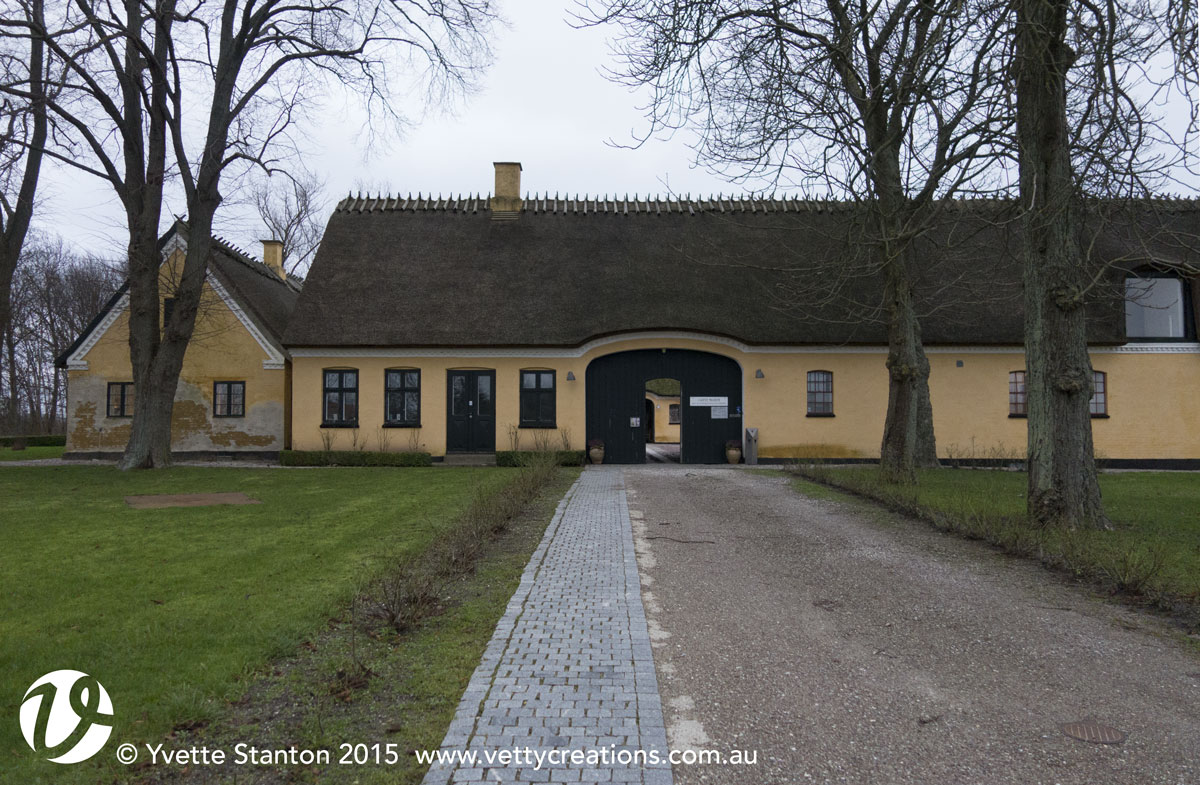
Winter is not the best time to see the beautiful rose garden…
I was the only visitor to the museum that morning. There was a good display of hedebo embroidery, for which the Greve Museum is famous. There wasn’t as much as I was hoping to see, but that’s the way it was. Well prior to my visit, I had made enquiries about meeting with a curator, but no-one ever got back to me, and in my busyness, I didn’t get the chance to follow up. Fortunately there were English language explanations for the item labels, in a booklet, which meant I could understand what I was seeing, and learn more about the history of the embroidery.
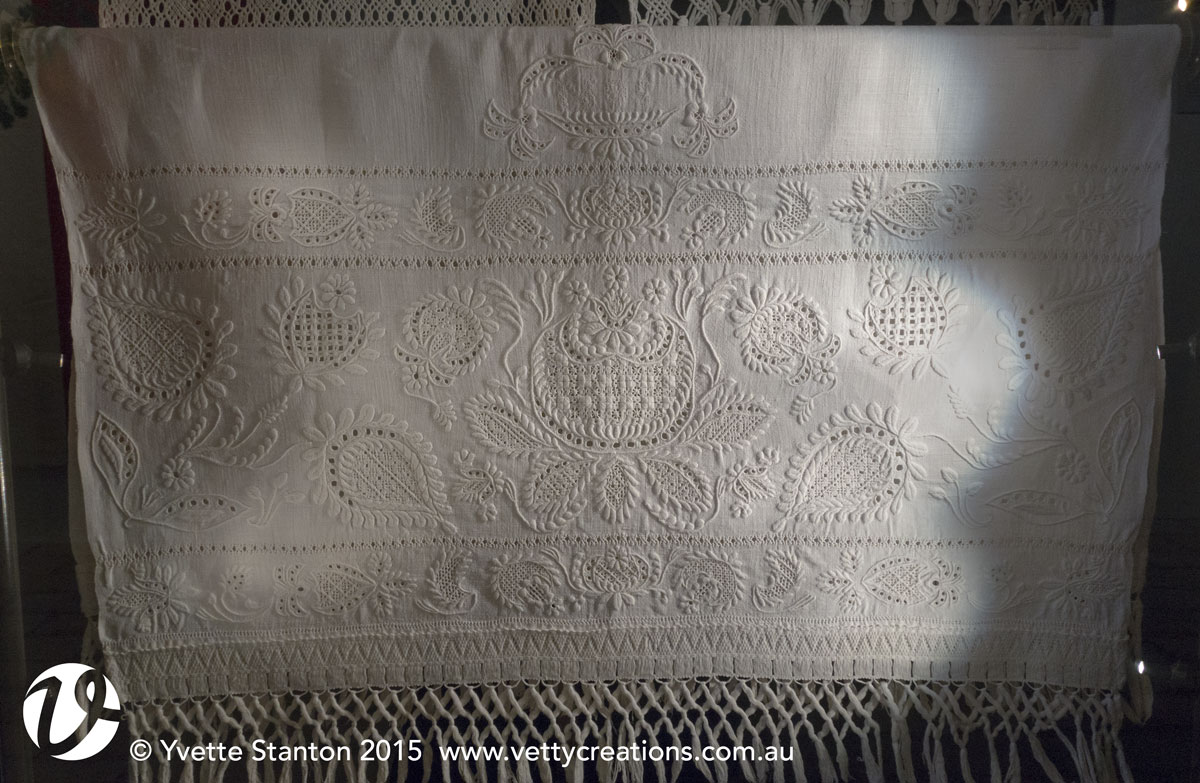
Hedebo embroidery from the Greve Museum
I wandered through the rooms, drinking it all in. The museum does have a bookshop, with a good selection of books on hedebo embroidery. Lots of interesting reading matter!
Skansen, Stockholm, Sweden
On New Year’s Day we were in Stockholm. Not much is open on New Years Day, but we were pleased to find that Skansen museum was. Skansen is an open air museum, first set up over a hundred years ago. Its purpose is to show how life was in small villages and the like in times past. There are businesses, cottages, farms etc that you can go into and see demonstrations of how life was, from staff in period/folk costume.
In one of the farm houses that we went into, there were two people playing their musical instruments. The man was playing a fiddle, and the lady was playing a key fiddle, an instrument which I had never seen before. They played the most gorgeous music together, which was quite enchanting. Also enchanting was the fact that the lady was wearing the most beautiful embroidered clothing. It was quite difficult to photograph them in the low light, but I did my best.
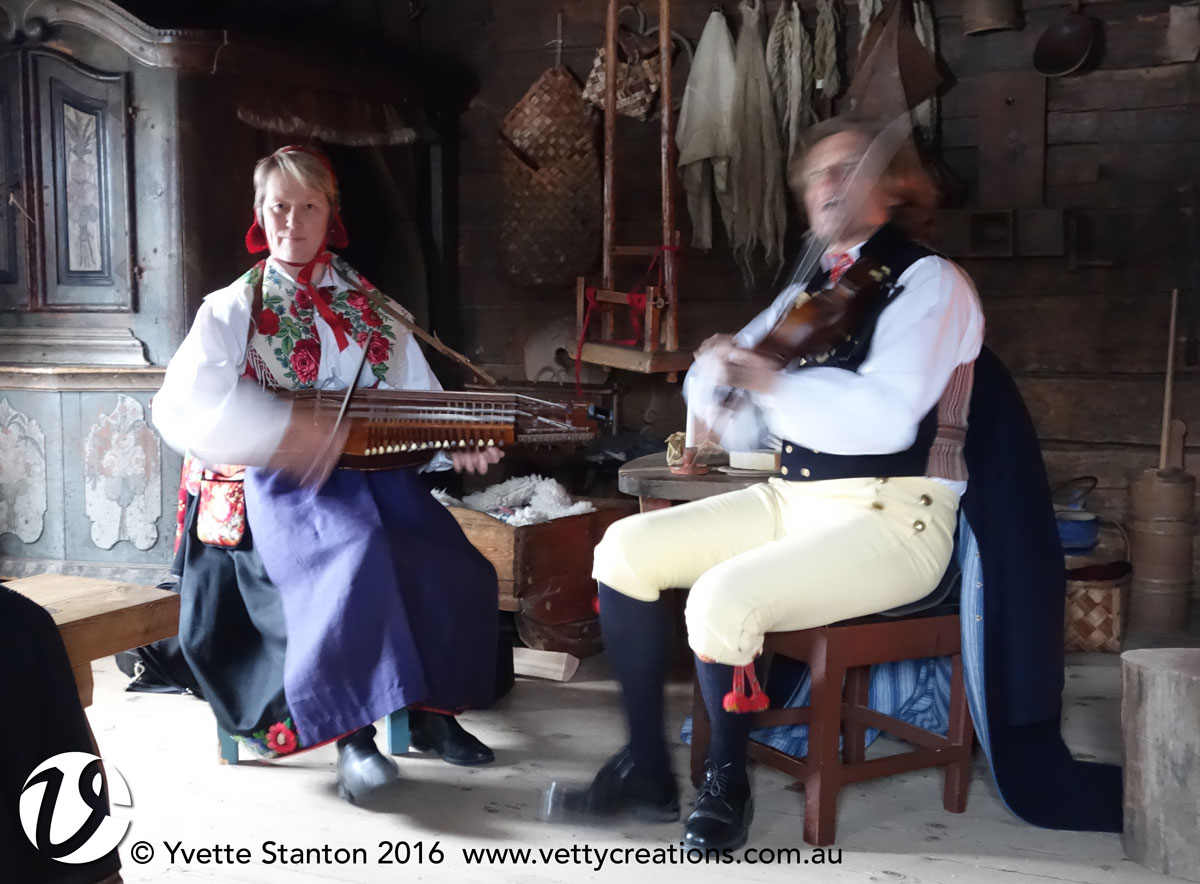
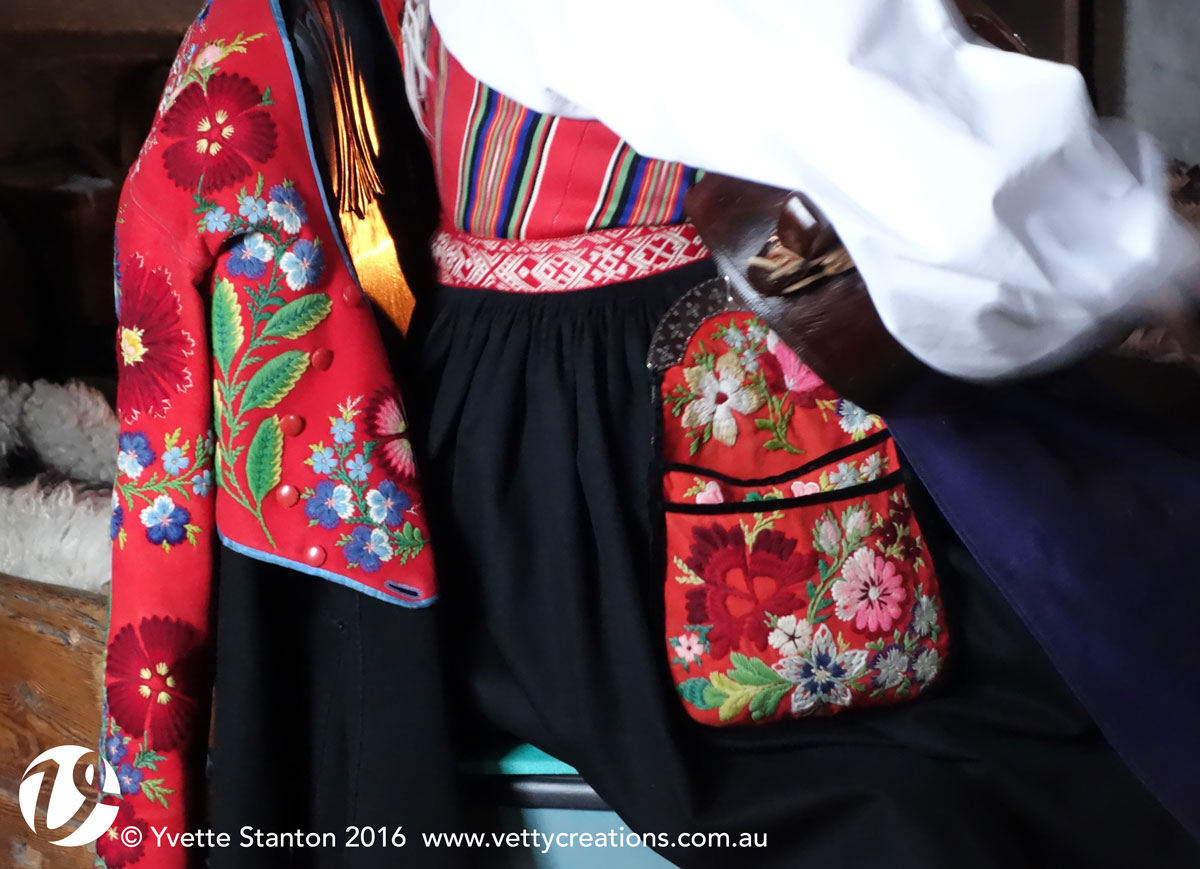
Beautiful embroidery on the jacket and bag of a Skansen musician
Outside the entrance to Skansen is a museum shop which has a selection of interesting books and attractive, quality souvenirs. The Reader bought a Swedish cookbook here, which she has enjoyed reading (she’s been learning Swedish for some time).
Nordiska Museet – Nordic Museum, Stockholm, Sweden
Nordiska Museet had several collections that I wanted to see. They have a textiles collection, of which much is available to be seen, and a Swedish Folk Art gallery.
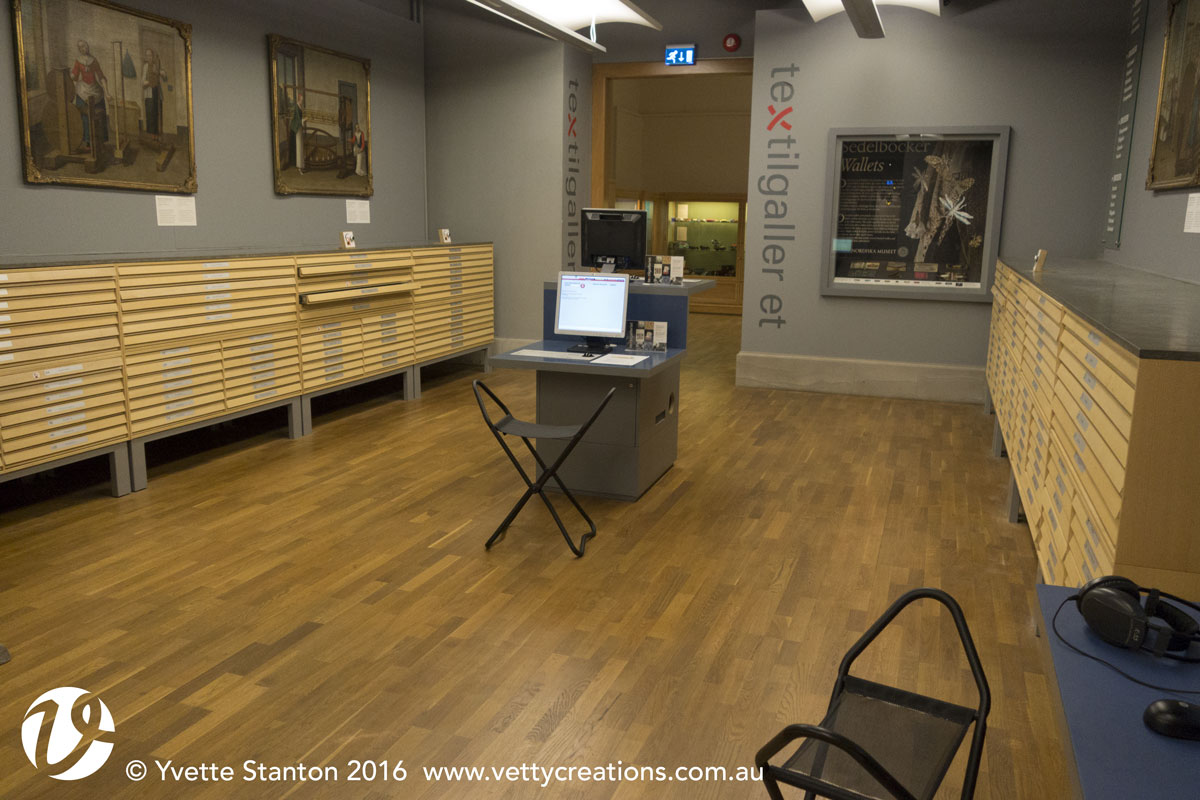
The textiles room at Nordiska Museet
In the textiles room, there are banks of drawers which contain many articles of embroidery, lace, weaving, knitting and crochet. I saw some beautiful examples of whitework, coloured embroidery (yllebroderi), sprang, nalbinding, and weaving. Given my interest in whitework, I was expecting to see some examples of näversöm, the most well-known form of Swedish whitework. Surprisingly, there was only one example, and it wasn’t completely white as it also had pink as well.
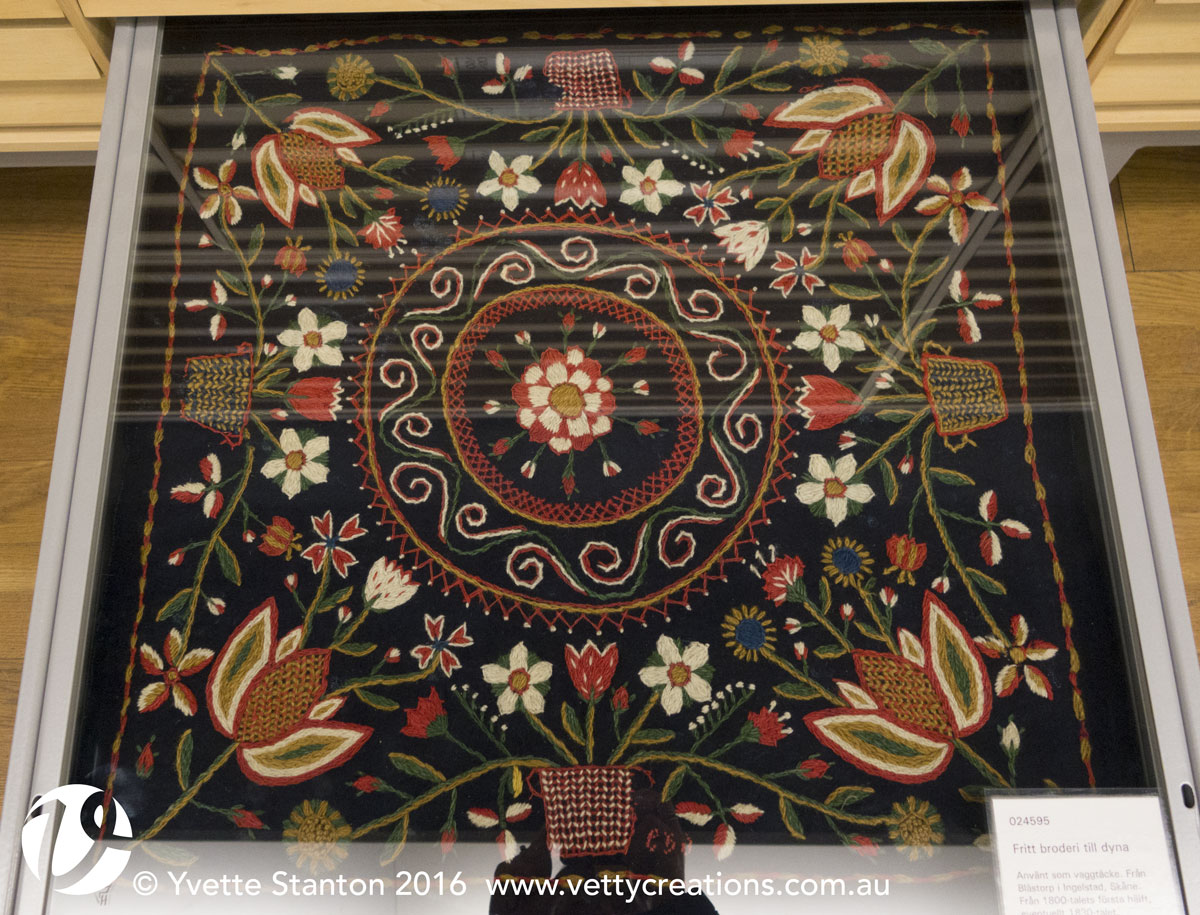
Yllebroderi on a cushion. The stripes are reflections of the drawers above.
The Folk Art exhibition had many beautiful embroideries, on clothing and household linens. They were bright, colourful and gorgeous. In another gallery, there were some examples of Saami tin embroidery.

Embroidered wrist muffs, from the collection of Nordiska Museet, Stockholm.
While the museum does have a shop, it is within the museum itself and can only be accessed during a paid visit to the museum. It had a selection of books and souvenirs.
 White Threads is the blog of Yvette Stanton, the author, designer, publisher behind Vetty Creations' quality needlework books and embroidery products.

You brought back a memory with your mention of Skansen. I’d forgotten all about visiting there in 1984(!!). We were on holiday in Denmark and took the hovercraft to Sweden for a day trip. Happy days! (My only visit to Finland was in 1963 so I look forward to your photos from there!!)
🙂 Pleased to provide a memory aid for you, Sandra! I hope my Finland report lives up to your hopes!
Please please please do a book about hedebo!
LOL! Aren’t there enough already?!
Nothing like your books, actually, that I can find. Looking at United States library holdings, I find Dover and Lacis books, which I find impossible to work from, and books from the first part of the twentieth century, which are also hard to use. I must not have the background that these books all assume is in place.