

When I was in Norway last year, I spent some time with Agnete Sivertsen, curator at Hardanger Folkemuseum in Utne. Agnete is very knowledgable and we spent some enjoyable hours talking about Hardanger embroidery and about teaching people how to do it the traditional way. Things like that the needle woven bars should be NARROW, not wide, as so many people stitch them!
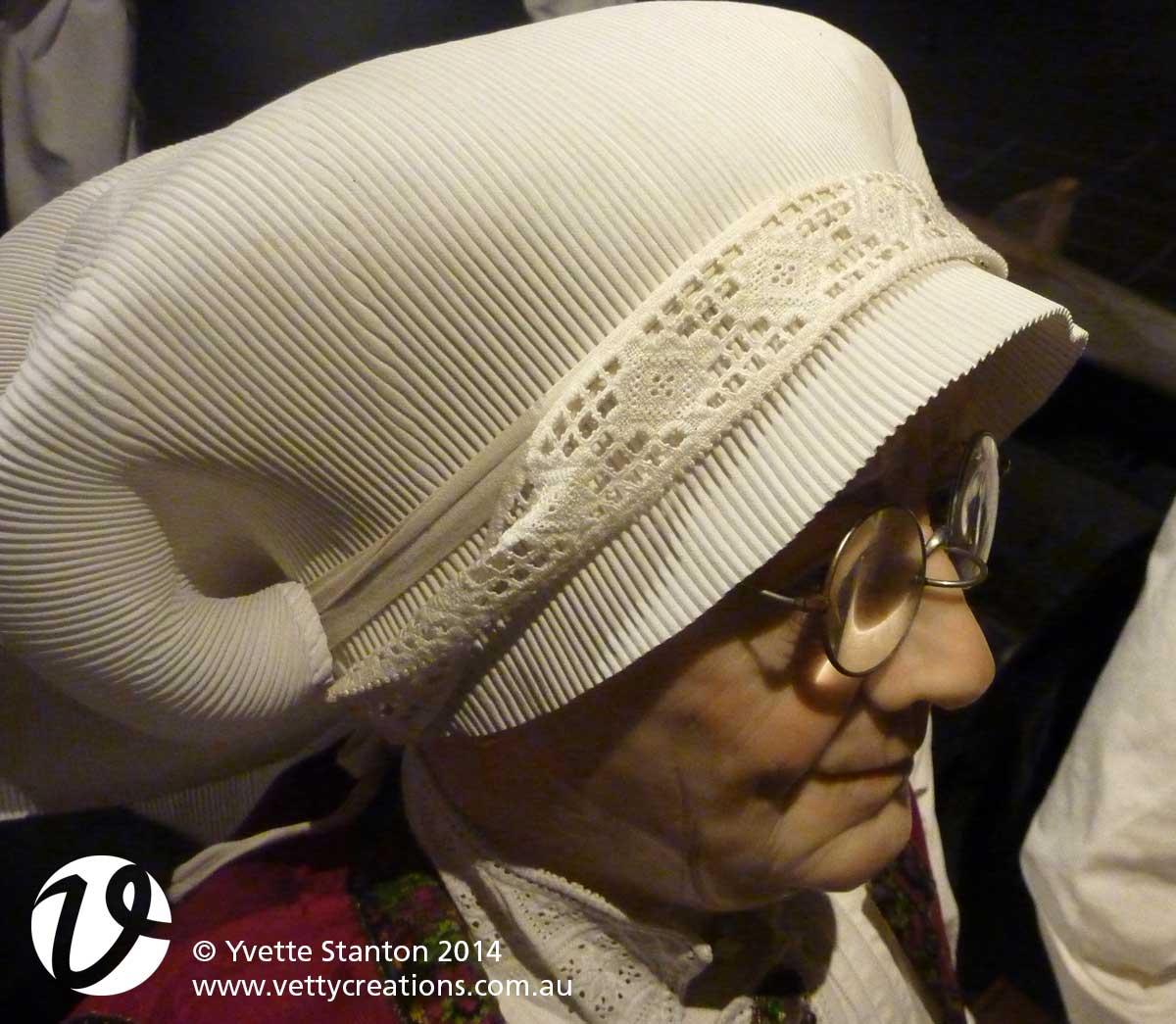
Close up of the pleated headdress on a wax display dummy.
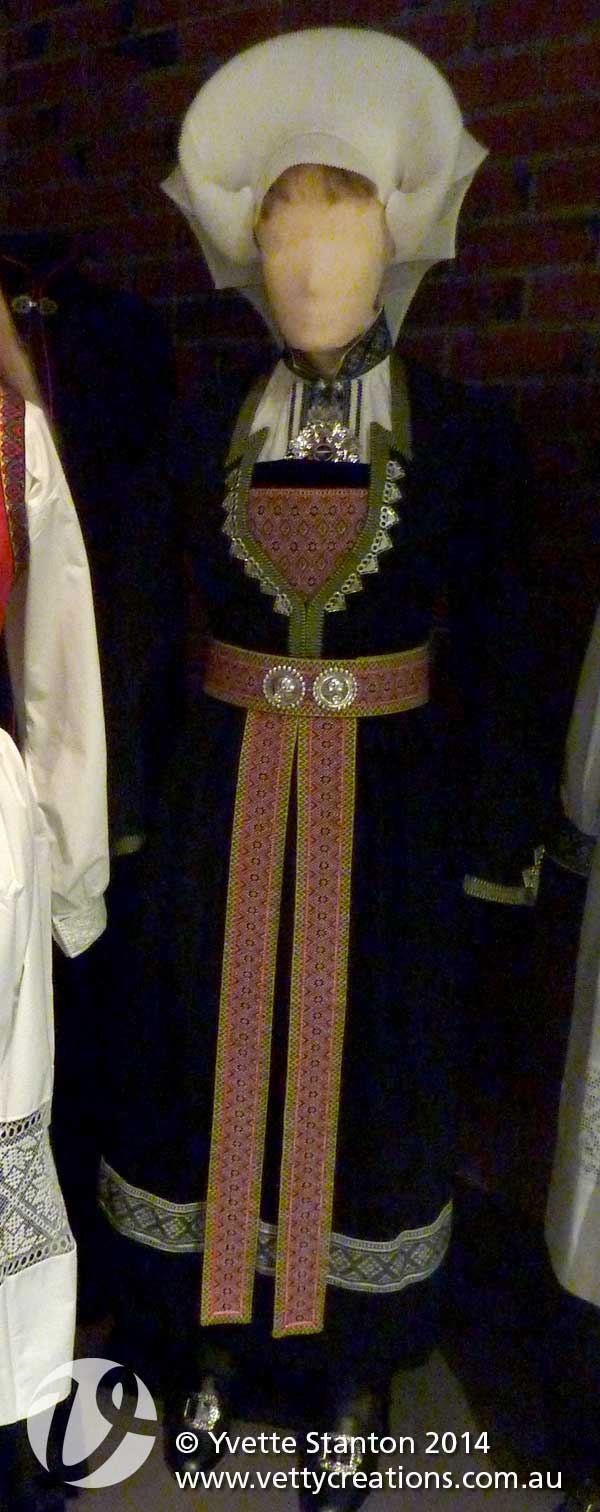
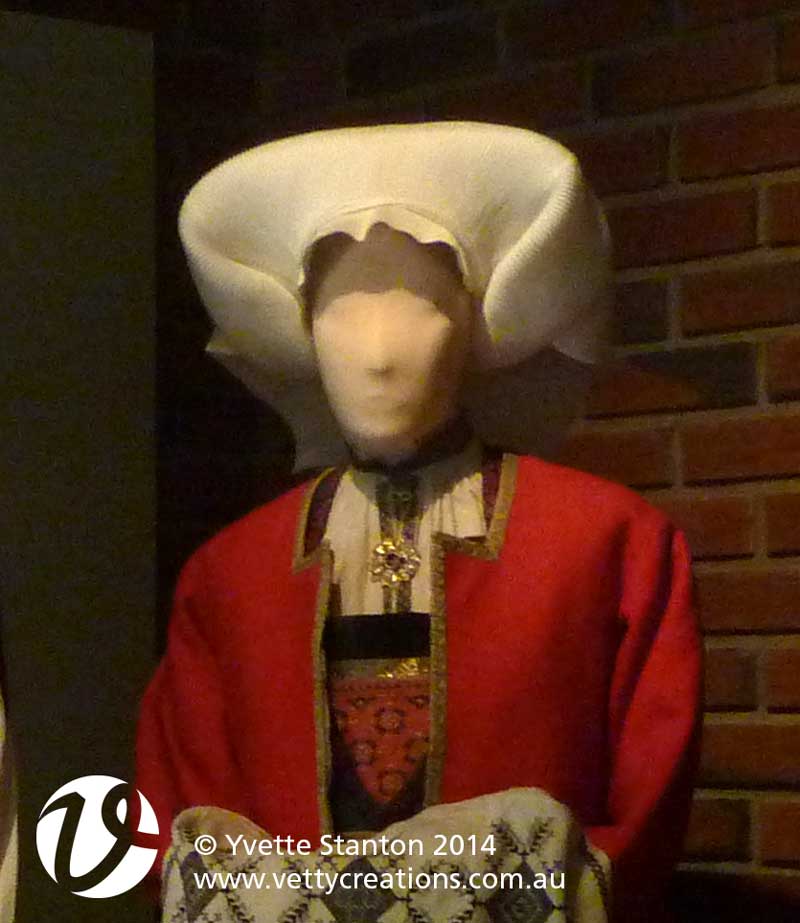 We also talked about the value in preserving traditional skills by teaching them to others, so that the techniques are passed on as living skills. She mentioned to me that one of her huge concerns is that the technique of creating the specially starched and pleated headscarves, that are part of the local costume in the Hardanger region, may soon die out. There are very few women who are still able to do the starching and pleating properly.
I saw this article the other day and was reminded of this issue. (The article is in Norwegian, and you will need a translator to read it, but it is worth the read and also for the photos which show fabric in the process of being starched, with the boards that are used as guides.)
The fabric is starched and pleated in a very particular way. According to the article, while it can be taught to those who are willing, it is difficult to get right. This is part of the dilemma in passing these skills along. They will take years of practice and persistence to get it right.
Once pleated, the headdress is arranged and manipulated over a padded board that sits on the head, to create the large voluminous shape shown in the pictures. In old times, married women used to wear these to church every week. Because the pleating is only held in place with starch, if the headdress was rained on, it would collapse as the starch softened. Unfortunately, the region is known for its rain!
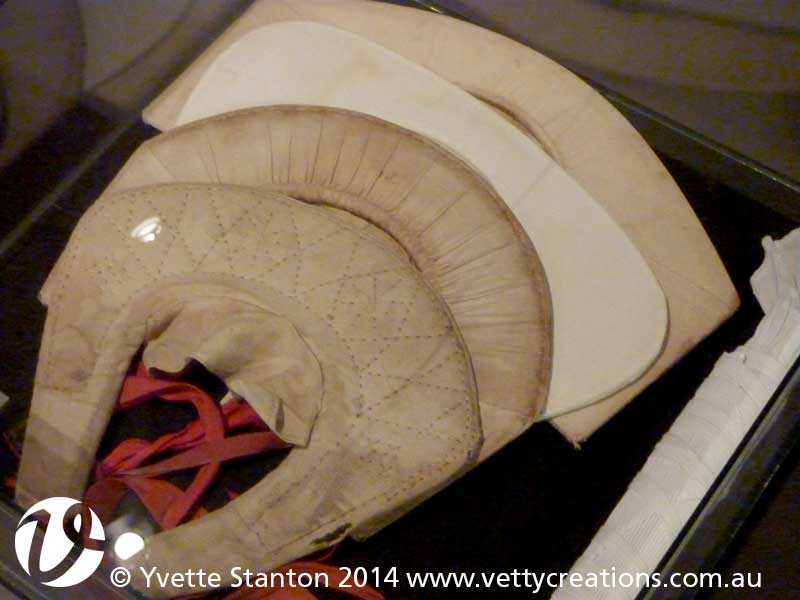
padded headboards
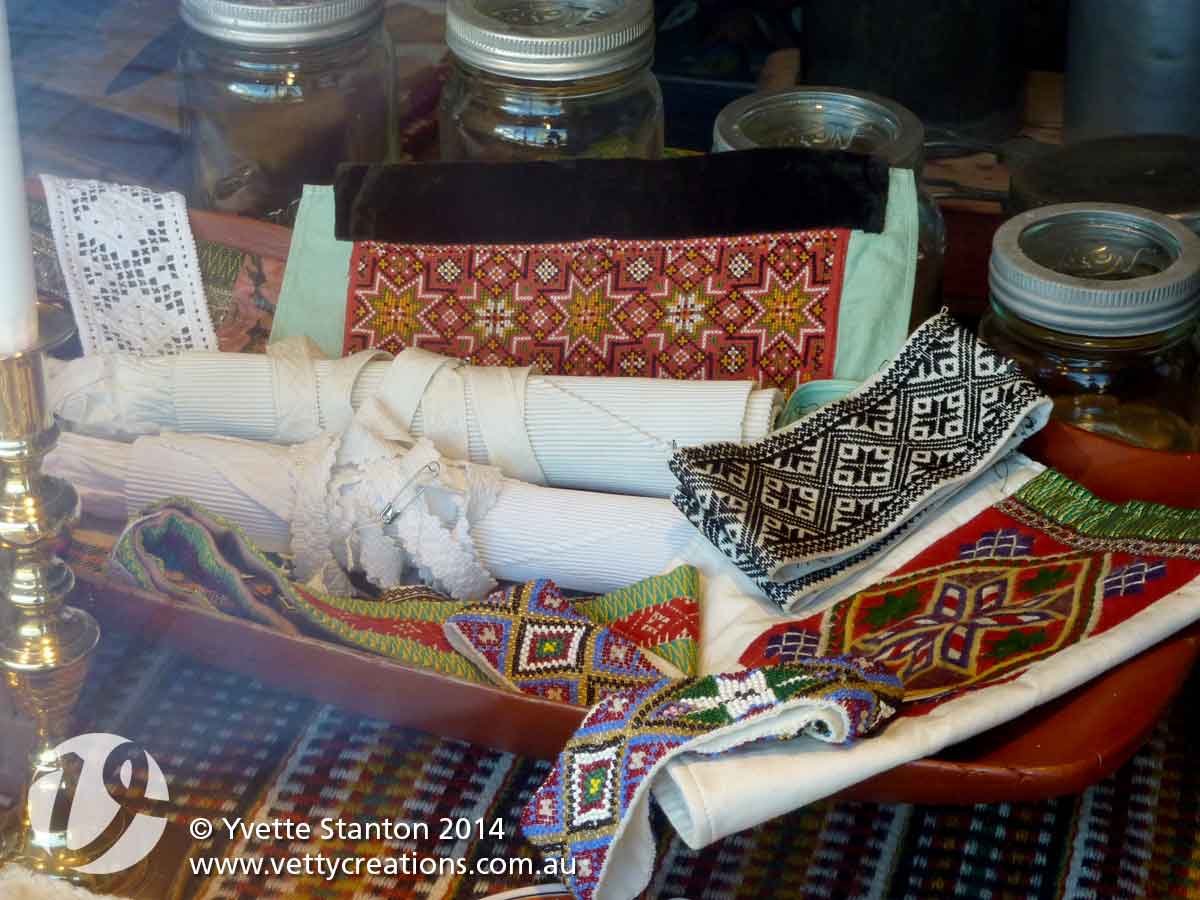
Taken in the window of an antique shop in Norheimsund, Norway. Unfortunately it wasn’t open on the day I was there which was probably good for my bank account… The rolls of pleated white fabric are how the headdresses are stored.
I really hope that in years to come there are a good number of younger people learning and perfecting the skills of creating the starched headdresses. It is an important part of the region’s cultural dress and would be a real shame if the skills were lost. They are so difficult that would never be able to be resurrected again.
Photo credit: All photos by Yvette Stanton. All photos except the one at the antique shop are of articles in the collection of the Hardanger Folkemuseum, Utne, Norway.
 White Threads is the blog of Yvette Stanton, the author, designer, publisher behind Vetty Creations' quality needlework books and embroidery products.

Leave a Reply